Nobody becomes calm and spiritually enlightened when faced with a huge life decision. People overthink or panic slightly; ask friends for advice, ignore the advice, and then panic again. That’s basically the human decision-making process in 2026.
Whether it’s changing careers, committing to a relationship, moving cities, starting a business, or saying yes to marriage, uncertainty can make even confident people feel mentally scrambled. And honestly? That’s normal. When the future feels unclear, most people react in surprisingly similar ways.
They Replay Every Possible Outcome
The brain suddenly becomes a full movie production studio. One imaginary future looks amazing. You’re successful, emotionally stable, financially thriving, and somehow waking up naturally at 6 a.m. without suffering.
The second scenario? Absolute chaos. Now you’re regretting everything while dramatically staring out of windows during rainy weather.
People do this because uncertainty makes the mind search for control. If the brain can imagine every outcome, it feels “prepared.” Except usually it just creates emotional exhaustion. And honestly, overthinking has never once solved a problem at 2 a.m.
They Ask Everyone Around Them
This stage happens fast. Suddenly, everybody becomes a life consultant. Friends give motivational speeches, parents give practical warnings, coworkers casually analyze your future while eating lunch, and even relatives who still struggle with smartphone settings somehow have strong opinions about your career and relationships.
The issue is that most advice comes from personal experience, fear, or bias.
- Someone who hates risk says stay comfortable.
- Someone impulsive says take the leap immediately.
- Someone emotionally unavailable gives relationship advice like they’re hosting a podcast.
After a while, all the opinions start sounding like background noise.
They Pretend They’re “Fine”
Classic human behavior. On the outside, it’s always, “Yeah, I’m just thinking things through,” but internally it’s a complete mental traffic jam. Suddenly, that one decision starts following them everywhere—during showers, while eating, before sleeping, and somehow even in the middle of completely unrelated conversations. And for some reason, nighttime always makes uncertainty feel ten times more dramatic. Honestly, the brain after midnight deserves absolutely zero trust.
They Start Looking For Signs
This part gets interesting. People begin assigning meaning to random things. A quote appears online, and suddenly it feels deeply personal, or a song lyric sounds suspiciously accurate. Someone sees repeating numbers twice and now believes the universe opened direct communication.
Humans naturally search for reassurance when life feels uncertain. That’s one reason many people explore spiritual guidance during confusing phases. A free 5 minutes astrology chat can feel comforting because sometimes people don’t need someone to “predict” their future. They just want a perspective that helps organize their thoughts.
They Delay The Decision Hoping Clarity Arrives Automatically
A lot of people think waiting guarantees better answers, but sometimes patience helps. Other times, avoidance quietly turns into fear of wearing comfortable clothes. People keep saying, “I’ll decide next week.” Then next week becomes next month. Now six months have passed, and the situation still lives inside their brain rent-free. The truth is, some decisions become harder the longer they’re avoided because emotional pressure keeps building in the background.
They Romanticize Familiar Situations
When uncertainty becomes uncomfortable, people suddenly start glorifying things they were unhappy with earlier.
- A stressful relationship becomes “not that bad.”
- An emotionally draining job becomes “secure.”
- A boring routine suddenly feels “safe.”
Humans naturally cling to familiarity because unknown situations feel risky. Even when the familiar thing is slowly exhausting them. That’s why people often stay stuck longer than they should. Not because they’re happy but because uncertainty feels scarier than discomfort.
They Want Guarantees Before Taking Action
This is probably the biggest reason people feel stuck. Everyone wants certainty before making a move. But life rarely works like that. There’s no magical email from the universe saying, “Congratulations. This decision is 100% correct with zero emotional side effects.” Every major choice carries risk, such as:
- Relationships involve risk.
- Career changes involve risk.
- Business decisions involve risk.
- Even staying exactly where you are involves risk.
Confident people aren’t fearless. They’ve just accepted that uncertainty is part of growth.
They Start Looking Inward Eventually
After enough overthinking, most people slowly realize something important: external opinions can only help so much. At some point, clarity comes from understanding yourself better. That’s why many individuals turn toward self-reflection, spiritual practices, or astrology during uncertain phases.
A free 5 minutes astrology chat can sometimes help people understand emotional patterns, timing, compatibility, or personal strengths from a fresh perspective. Not because astrology removes free will. But self-awareness makes decision-making feel less emotionally chaotic. And honestly, when your brain feels like twenty tabs crashing simultaneously, even small clarity feels valuable.
Final Thoughts
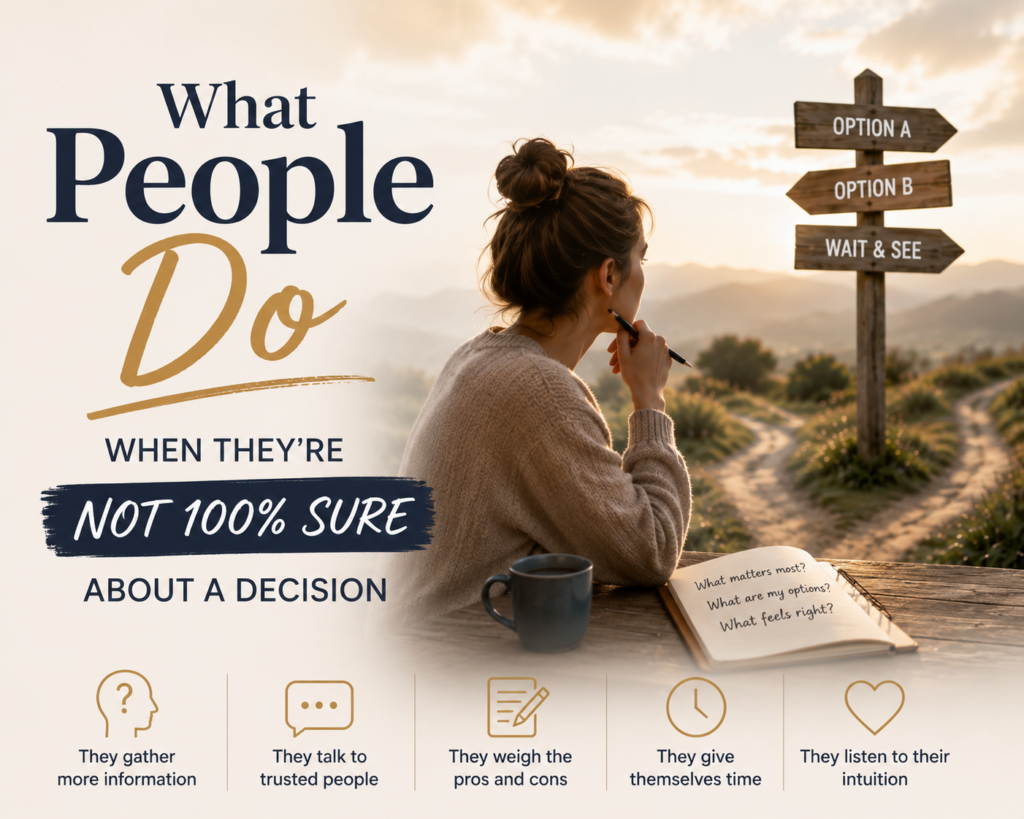
When people aren’t fully sure about a decision, they usually overthink, seek reassurance, delay action, imagine worst-case scenarios, and search for signs that they’re making the right move. It’s completely human. The important thing is learning how to balance emotions, logic, timing, and self-awareness without becoming trapped inside endless mental loops.
A free 5 minutes astrology chat may help bring perspective during emotionally confusing situations, especially when someone feels mentally stuck between fear and possibility. Because clarity rarely arrives through panic. Most of the time, it appears quietly once you stop trying to predict every possible outcome and start trusting yourself a little more.