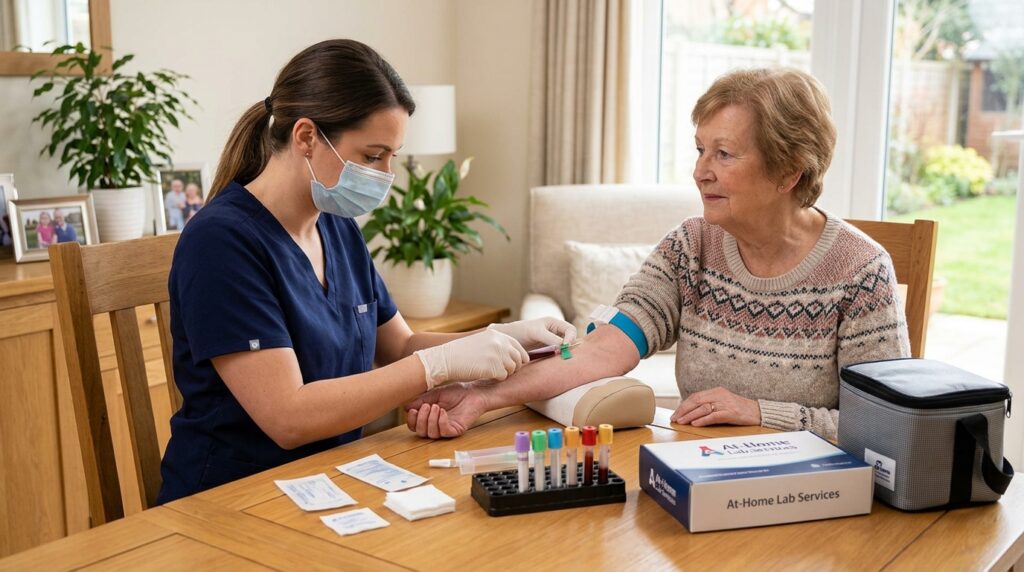
The healthcare landscape in Bangalore has undergone a seismic shift by mid-2026. What was once a convenience reserved for senior citizens or the bedridden has now become the primary mode of diagnostic care for the city’s fast-paced tech workforce. The ability to book a Blood Test at Home in Bangalore with a two-hour window has moved from being a luxury to a baseline consumer expectation.
However, as the market matures, the challenge for residents is no longer finding a service provider but identifying one that guarantees accuracy and sample integrity. With over three lakh diagnostic labs operating across India, fewer than 1% are currently accredited by the National Accreditation Board for Testing and Calibration Laboratories (NABL). In a city where traffic congestion and rising temperatures can compromise biological samples within minutes, understanding the technical side of home collection is vital for your health.
This guide explores the critical factors you must evaluate before booking your next home blood test, from cold chain logistics to the latest 2026 data privacy regulations.
1. Understanding NABL Accreditation and ISO 15189:2022 Standards
The most significant indicator of a lab’s reliability in 2026 remains its NABL accreditation. This certification, based on the updated ISO 15189:2022 standards, ensures that the laboratory follows rigorous quality management systems. For a consumer in Bangalore, an accredited lab means that the equipment is calibrated, the reagents are high-quality, and the phlebotomists are trained in specific “pre-analytical” protocols to prevent sample contamination.
In the current diagnostic market, many aggregators act as middle-men, collecting samples and sending them to unorganized labs. Always verify if the parent lab is NABL-certified. By 2026, the Delhi High Court and the Union Health Ministry have tightened mandates, requiring collection centers to be an official extension of the main laboratory. This holds the parent lab legally accountable for every sample collected at your doorstep, ensuring a “chain of custody” that protects your results from human error.
Key Quality Benchmarks to Verify
| Feature | Importance in 2026 | What to Look For |
| :— | :— | :— |
| NABL Certification | Gold standard for clinical accuracy. | Current certificate with a valid expiry date. |
| ISO 15189:2022 | Modernized risk management for labs. | Mention of “Medical Lab Quality & Competence.” |
| Pathologist Signature | Mandatory for clinical validation. | Reports must be signed by an MD Pathologist. |
| Internal Quality Control (IQC) | Ensures daily precision. | Ask if the lab participates in EQA programs. |
2. The Logistics Barrier: Cold Chain Technology and Smart Tracking
The “pre-analytical phase”—the time between drawing blood and putting it into a machine—accounts for nearly 70% of all diagnostic errors. In Bangalore, this phase is particularly risky due to the city’s infamous traffic and rising urban heat. By 2026, top-tier services have transitioned to using IoT-enabled smart bags. These containers use real-time sensors to monitor the internal temperature, ensuring it remains between 2°C and 8°C throughout the transit from your home in Whitefield to the lab in Ramamurthy Nagar.
Furthermore, leading labs now offer real-time tracking of your sample. Similar to tracking a food delivery, you can see when your “eMedic” or phlebotomist has left your home and exactly when the sample reaches the testing facility. This transparency is crucial because certain parameters, such as potassium levels or blood glucose, can fluctuate if the sample sits in a non-refrigerated bike box for too long.
Why Cold Chain Integrity is Non-Negotiable
- Preventing Hemolysis: Heat causes red blood cells to rupture (hemolysis), which can lead to falsely elevated results for potassium and liver enzymes.
- Enzyme Stability: Many proteins and enzymes are highly sensitive to temperature; a 2-degree shift can render a specialized hormone test inaccurate.
- Real-Time Alerts: 2026-grade logistics systems alert the lab immediately if a cooling pack fails, allowing for immediate sample recollection before a false report is generated.
- Time-to-Machine (TTM): Reliable services aim for a TTM of under 180 minutes, even in high-traffic corridors like the Outer Ring Road.
3. Top Health Tests for Bangaloreans: Tackling Urban Lifestyle Deficiencies
Living in India’s Silicon Valley comes with unique health challenges. Research in 2026 indicates that nearly 92% of urban residents in Bangalore suffer from Vitamin D deficiency, despite the sunny climate. This “urban epidemic” is largely attributed to indoor lifestyles and high levels of atmospheric pollution, which can interfere with UV absorption. When booking a blood test at home in Bangalore, most residents now prioritize comprehensive packages that include bone health and inflammatory markers.
Metabolic syndrome is another rising concern, affecting 1 in 3 adults in the city. High stress, sedentary desk jobs, and irregular sleep cycles have led to a surge in pre-diabetes and lipid imbalances. Modern checkups now often include “HbA1c” for three-month sugar averages and “CRP” (C-Reactive Protein) to detect silent inflammation, which is a key predictor of cardiovascular issues in younger tech professionals.
Essential Tests for the 2026 Urban Professional
- Vitamin D & B12: Essential for nerve health and immunity; the most common deficiencies found in Bangalore.
- Lipid Profile with Apolipoprotein: A more advanced heart health marker than basic cholesterol, reflecting risks from a sedentary lifestyle.
- HbA1c: Vital for monitoring long-term glucose control in a city where early-onset Type-2 diabetes is trending.
- Thyroid Panel (T3, T4, TSH): Imbalances are increasingly linked to the high-stress environments of the IT and startup sectors.
- Inflammatory Markers (hs-CRP): Detects low-grade systemic inflammation caused by urban pollution and chronic stress.
4. Data Privacy and the DPDP Act 2026: Your Rights as a Patient
With the full enforcement of the Digital Personal Data Protection (DPDP) Act in 2026, how a diagnostic lab handles your blood data is now a matter of legal compliance. Your diagnostic report is classified as “Sensitive Personal Data,” and providers must obtain explicit, informed, and withdrawable consent before processing it. In 2026, a reliable service will provide you with a digital dashboard where you can see exactly who has accessed your reports and exercise your “Right to Erasure” if you choose to move to another provider.
Privacy breaches in healthcare are no longer just an annoyance; they can have real-world implications for insurance premiums and employment. Top-tier labs in Bangalore have responded by implementing two-factor authentication (2FA) for report access and masking patient identities in the lab to ensure that technicians see only a barcode, not your personal details. When choosing a service, check if they are ISO 27001 certified for information security.
Understanding Your Rights Under the DPDP Act 2026
| Patient Right | Description | Lab Responsibility |
| :— | :— | :— |
| Right to Consent | You must be told exactly why your data is collected. | Itemized notices in regional languages. |
| Right to Erasure | You can request the permanent deletion of your records. | Secure data wiping protocols. |
| Data Fiduciary Accountability | The lab is legally liable for data leaks. | Compulsory reporting of breaches within 72 hours. |
| Right to Correction | You can demand the correction of inaccurate personal info. | Easy digital update workflows. |
5. Cost vs. Value: Comparing Diagnostic Packages in Bangalore
In 2026, the price of a full-body checkup at home in Bangalore varies wildly. While some aggregators offer “loss-leader” packages for as low as ₹99 to acquire users, premium medical-led services typically range from ₹1,500 to ₹7,500. The difference often lies in the “value-adds”: the quality of the phlebotomy kit, the use of vacuum-sealed tubes (Vacutainers) that prevent contamination, and the depth of the final report analysis.
Advanced services now integrate AI into their reporting. Instead of a static PDF with numbers, you receive an interactive health trend report. These AI tools compare your current results with previous tests to highlight longitudinal trends—such as a slow creep in your LDL cholesterol over three years—rather than just checking if you are within the “normal” range today. This predictive approach to health is the hallmark of a high-value diagnostic partner in the modern era.
What to Expect in a High-Value Health Package
- Single-Use Sterile Kits: Every collection should happen with a fresh, sealed kit opened in front of you.
- Smart Reports: Reports that use AI to explain what the numbers mean for your specific age and lifestyle.
- Doctor Consultations: Integration with tele-health services for a post-test review of your results.
- Trend Tracking: Visual graphs showing how your health parameters have moved over the last 12-24 months.
6. Specialized Home Services: Elderly Care and Chronic Management
Bangalore’s “Silver Economy” is booming in 2026, with an increasing number of startups focusing on geriatric care. For the elderly, frequent trips to a lab are not just inconvenient but physically taxing. Reliable home blood test services have adapted by offering specialized “Geriatric Phlebotomy.” These technicians are trained to handle “difficult veins” and use pediatric needles to minimize pain and bruising for senior citizens.
For those managing chronic conditions like kidney disease or autoimmune disorders, consistency is key. Leading services now offer subscription-based models where a phlebotomist visits on a fixed schedule (e.g., the first Monday of every month). These programs often include home-based Point-of-Care (PoC) testing for immediate results in emergency scenarios, such as checking electrolyte balance or cardiac markers at the bedside.
Features of a Reliable Elderly Care Diagnostic Service
- Senior-Specialized Technicians: Staff trained in empathy and the technical challenges of geriatric blood draws.
- At-Home ECG/TMT: Expansion of services beyond blood to include portable cardiac monitoring.
- Paper-to-Digital Assistance: Helping seniors navigate app-based reports through WhatsApp or physical printouts.
- Coordinated Care: Automatically sharing reports with the family doctor or a designated caregiver via secure links.
Choosing a service for a Blood Test at Home in Bangalore is no longer a simple matter of finding the lowest price. In 2026, the reliability of your healthcare depends on a lab’s technological backbone—its NABL credentials, its IoT-driven cold chain, and its commitment to data privacy. By prioritizing these factors, you ensure that the convenience of your living room never comes at the cost of diagnostic accuracy.