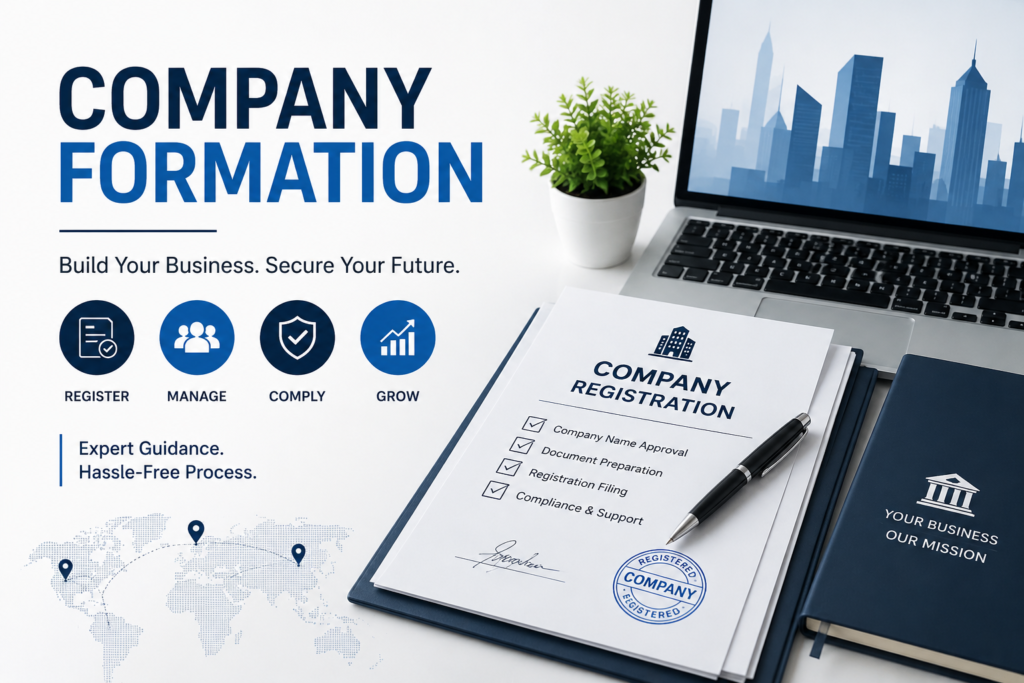
Company formation is the legal process of establishing a new business entity. Whether you’re an entrepreneur with a groundbreaking idea or an investor looking to launch a venture, understanding the fundamentals of company formation is crucial to your success. This guide walks you through the essential steps, considerations, and best practices for forming a company that aligns with your business goals and regulatory requirements. If you plan to operate internationally, it’s essential to comply globally with laws and regulations in each jurisdiction where you conduct business.
What is Company Formation?
Company formation refers to the process of creating a new legal entity that operates as a separate organization from its owners. This involves registering your business with government authorities, obtaining necessary licenses and permits, and establishing the legal framework that will govern your operations. The formation process transforms a business idea into a recognized legal entity capable of entering contracts, hiring employees, and conducting commerce.
Types of Business Entities
Before initiating the formation process, you must choose the appropriate business structure for your needs. Each option has distinct legal, tax, and liability implications.
Sole Proprietorship
A sole proprietorship is the simplest business structure, where one individual owns and operates the business. The owner and business are legally considered the same entity, meaning personal assets are not protected from business liabilities. While easy to establish with minimal paperwork and costs, this structure offers no liability protection. Sole proprietors operating internationally must comply globally with regulations in each country where they conduct business activities.
Partnership
A partnership involves two or more individuals sharing ownership of a business. There are two main types:
General Partnership (GP): All partners share liability and management responsibilities.
Limited Partnership (LP): Consists of general partners who manage the business and limited partners who invest but have no management role or personal liability.
Partnerships are relatively simple to establish but require clear partnership agreements outlining roles, profit distribution, and dispute resolution.
Limited Liability Company (LLC)
An LLC is a hybrid structure combining the liability protection of a corporation with the tax flexibility of a partnership. Owners, called members, have limited personal liability for business debts and obligations. LLCs offer simpler administration than corporations while providing personal asset protection.
Corporation
A corporation is a separate legal entity owned by shareholders. It provides the strongest liability protection, as shareholders are typically not personally responsible for business debts. However, corporations involve more complex formation procedures, regulatory compliance, and typically face double taxation (corporate and individual levels). There are two main types: C Corporations and S Corporations, each with different tax treatments.
Pre-Formation Considerations
Business Planning
Before forming your company, develop a comprehensive business plan that outlines your business model, market analysis, financial projections, and operational strategy. This plan serves as your roadmap and is often required by lenders, investors, and regulatory bodies.
Name Selection and Availability
Choose a unique business name that reflects your brand and complies with local regulations. Most jurisdictions require that the name be distinguishable from existing registered businesses. Conduct a thorough name search at the state or national level to ensure availability.
Location and Jurisdiction
Decide where your company will be incorporated. Consider factors such as:
Tax implications in different states or countries
Regulatory requirements and compliance costs
Proximity to your market and operations
Availability of resources and infrastructure
Registered Agent Appointment
Most jurisdictions require companies to appoint a registered agent—an individual or service that accepts legal documents on behalf of the company. The registered agent must have a physical address in the jurisdiction of incorporation.
Key Steps in Company Formation
Prepare Formation Documents
The primary document required for company formation is the Articles of Incorporation (for corporations) or Articles of Organization (for LLCs). These documents include:
Company name and address
Registered agent information
Business purpose
Share structure (for corporations)
Ownership details
File Formation Documents
Submit your formation documents to the appropriate government agency, typically the Secretary of State’s office. Pay the required filing fees, which vary by jurisdiction and business type.
Obtain an Employer Identification Number (EIN)
Apply for an EIN from the Internal Revenue Service (IRS) if your company will have employees, operate as a corporation, or maintain business bank accounts. This unique nine-digit number is essential for tax purposes.
Open a Business Bank Account
Establish a separate bank account for your business to keep personal and business finances separate. This is important for accounting, tax reporting, and legal protection.
Secure Necessary Licenses and Permits
Depending on your industry and location, you may need to obtain:
Business licenses
Industry-specific permits
Health and safety certifications
Professional licenses (if applicable)
Establish Corporate Governance
Regardless of your business structure, establish clear governance practices:
Draft bylaws or an operating agreement
Hold initial meetings of directors or members
Document important decisions
Maintain compliance records
Register for Taxes
Register with relevant tax authorities at the federal, state, and local levels. Depending on your structure and industry, you may need to register for:
Income tax
Sales tax
Payroll tax
Industry-specific taxes
For businesses expanding internationally, ensure you comply globally by registering with tax authorities in each country where you operate and understanding foreign tax obligations and treaties.
Legal and Compliance Requirements
Compliance is a critical aspect of company formation, and if you operate across multiple countries, you must comply globally with international regulations, data protection laws, and trade requirements. Understanding and adhering to these obligations from the start protects your business and ensures smooth operations.
Bylaws and Operating Agreements
Bylaws (for corporations) and operating agreements (for LLCs) are internal documents that establish how your company will be governed. They outline:
Meeting schedules and procedures
Voting rights and procedures
Officer roles and responsibilities
Profit and loss distribution
Compliance Obligations
Once formed, companies must Comply Globally with ongoing requirements:
Annual reports and renewals
Tax filings and payments
Record-keeping and documentation
Regulatory compliance in your industry
Employment law compliance
Intellectual Property Protection
Consider protecting your company’s intellectual property through trademarks, copyrights, and patents. Register your business name and logo as trademarks to prevent others from using them.
Financial Considerations
Startup Costs
Company formation involves various expenses:
Government filing fees ($100-$500+)
Professional services (legal, accounting)
Business license and permit fees
Registered agent services
Initial equipment and supplies
Capitalization
Determine how your business will be capitalized, whether through owner investments, bank loans, or investor funding. Proper capitalization ensures your company has sufficient resources to operate and demonstrates seriousness to lenders and investors.
Insurance
Obtain appropriate business insurance to protect against liability, property damage, and other risks. Common types include:
General liability insurance
Property insurance
Professional liability insurance
Cyber liability insurance
Timeline and Timeline
The time required for company formation varies by jurisdiction and complexity:
Simple formations may take 1-2 weeks
More complex structures may take 4-8 weeks
Expedited filing options are often available for an additional fee
Several factors can affect the timeline, including application completeness, government processing times, and the need for additional approvals or licenses.
Professional Assistance
When to Hire Help
Consider hiring professionals for company formation:
Business Attorneys: Guide you through legal requirements and structure selection
Accountants: Help with tax planning and financial setup
Business Formation Services: Handle paperwork and filing for a fee
Cost-Benefit Analysis
While professional services add to formation costs, they can save significant time and prevent costly mistakes. Weigh the expense against the complexity of your situation and your comfort level with legal and financial matters.
Common Mistakes to Avoid
Choosing the Wrong Structure: Don’t select a business structure solely based on simplicity; consider liability protection and tax implications.
Inadequate Planning: Rushing into formation without a solid business plan increases the risk of failure.
Ignoring Compliance: Failing to maintain compliance can result in penalties, loss of liability protection, and legal troubles.
Commingling Funds: Mixing personal and business finances can compromise liability protection and complicate accounting.
Neglecting Documentation: Poor record-keeping can create legal problems and make tax filing difficult.
Insufficient Capitalization: Starting without adequate funds can quickly lead to business failure.
Post-Formation Steps
After your company is officially formed, focus on:
Implementing your business plan
Building your management team
Developing financial systems and controls
Marketing and customer acquisition
Establishing supplier and vendor relationships
Maintaining regulatory compliance
Planning for growth and scaling
As your business grows and expands into new markets, remember to comply globally with local laws and regulations in each jurisdiction to maintain legal standing and build trust with international partners and customers.
Conclusion
Company formation is a critical milestone in your entrepreneurial journey. By understanding the different business structures, following the proper procedures, and obtaining appropriate professional guidance, you can establish a solid legal and financial foundation for your business. Remember that formation is just the beginning; ongoing compliance and strategic management are essential for long-term success. Take the time to do it right from the start, and your company will be positioned for growth and prosperity.