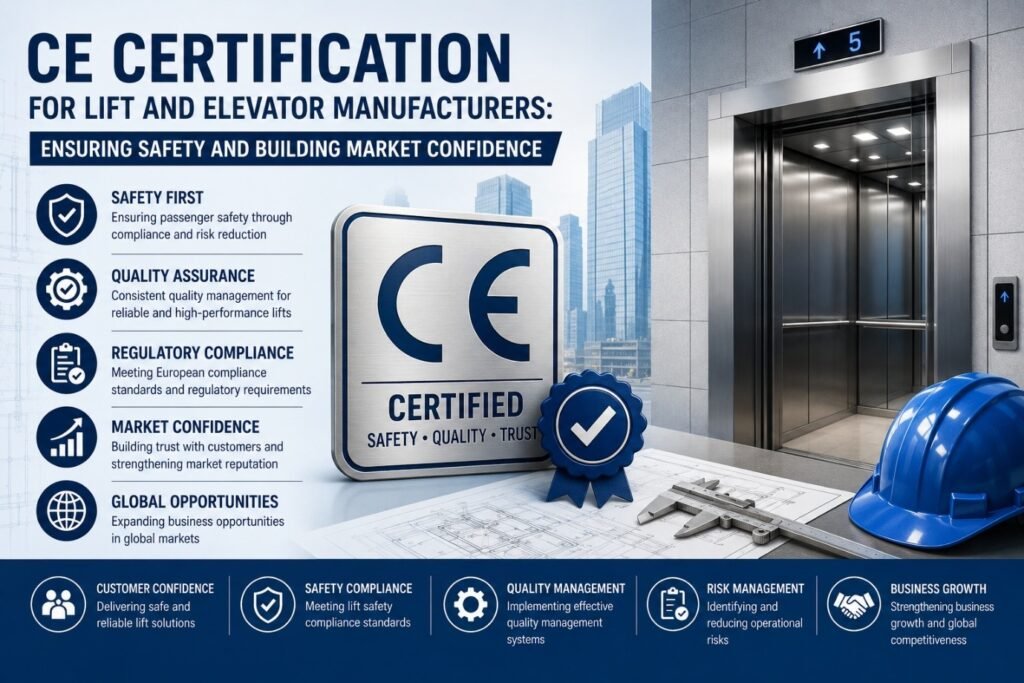
Understanding CE Certification for Lift and Elevator Manufacturers
Lift and elevator systems are among the most essential parts of modern buildings. Whether it is a residential tower, hospital, shopping complex, airport, or business centre, people expect elevators to work smoothly every single day. Nobody steps into an elevator thinking about the engineering, wiring, or safety systems hidden behind the doors. People simply press a button and trust that everything will function properly. That trust is important, and for manufacturers, maintaining that trust becomes a major responsibility. This is where CE Certification plays a significant role in the industry.
CE Certification is a process that shows a product follows specific safety, health, and performance requirements. For lift and elevator manufacturers, obtaining CE Certification demonstrates that products are designed and manufactured according to established requirements and expected safety levels. As technology in elevator systems continues to change, manufacturers need structured systems that support product reliability and customer confidence. The demand for secure and high-performing products continues to increase because modern buildings rely heavily on vertical transportation systems.
Why Lift Safety Has Become More Important Than Ever
The lift and elevator industry has changed considerably over the years. Buildings continue to grow taller and architectural designs have become more complex. With increasing urban development, elevators now handle heavy traffic every day. A lift operating in a busy commercial building may transport hundreds or even thousands of passengers daily. Such frequent use creates pressure on the system and its components.
Even a minor issue in a lift system can create operational problems. Sensors, control systems, doors, emergency functions, and mechanical components all work together continuously. If one part fails to perform properly, it may affect the complete system. Manufacturers understand that safety cannot be treated as an afterthought. It must be considered from the design stage itself.
CE Certification helps manufacturers maintain Lift Safety Compliance by ensuring products meet necessary requirements before entering the market. As safety expectations continue rising, structured manufacturing approaches have become increasingly important.
The Connection Between CE Certification and Elevator Quality
Many people assume that CE Marking is simply a label attached to a product after manufacturing is complete. However, the process involves much more than adding a symbol. The certification process focuses on evaluating multiple areas including product safety, performance, design, documentation, and manufacturing procedures.
Quality does not happen by chance. It develops through consistent planning, testing, and process control. Lift systems contain several components that must operate together without interruption. Every part contributes to the overall performance of the system. Strong quality practices help manufacturers reduce unexpected issues and maintain product reliability.
For lift and elevator manufacturers, Elevator Quality Management becomes an important factor because customers expect safe products that perform consistently over long periods. Through proper Conformity Assessment, manufacturers can identify potential concerns before products reach the market.
Growing Expectations from Customers and Regulatory Requirements
Customer expectations have shifted significantly in recent years. Building owners and project managers no longer focus only on functionality. They also consider product quality, safety standards, energy efficiency, and long-term performance. Customers want products that deliver consistent results without unnecessary interruptions.
At the same time, regulatory requirements continue evolving to address changing technologies and safety concerns. Lift manufacturers need to adapt to these changes while maintaining operational efficiency. Managing these requirements can sometimes feel challenging because production schedules and market demands continue moving forward.
Here is the thing. Safety expectations do not remain fixed. They continue changing as industries advance. Manufacturers who maintain strong compliance systems often find it easier to respond to these changes.
The importance of European Compliance Standards has increased because they help manufacturers establish product credibility and demonstrate commitment toward recognized safety requirements.
Challenges Faced by Lift and Elevator Manufacturers
Manufacturing lift systems involves many responsibilities beyond product assembly. Teams often manage technical design activities, supplier coordination, production schedules, quality checks, documentation requirements, and customer expectations at the same time.
Sometimes challenges appear in unexpected areas. A design modification may require updated documentation. A supplier change may influence production schedules. Testing procedures may need additional reviews. Small adjustments can create larger impacts if they are not managed carefully.
Manufacturers also face pressure to reduce delays while maintaining product quality. Speed remains important in competitive markets, but rushing production processes may create unnecessary risks.
Common challenges may include:
- Managing changing compliance requirements
• Maintaining consistent product quality
• Controlling manufacturing documentation
• Meeting customer delivery schedules
• Reducing operational risks
• Supporting continuous product improvement
These challenges show why structured systems become valuable in lift manufacturing environments.
How CE Certification Supports Better Manufacturing Processes
Manufacturers often focus heavily on final products, but production processes are equally important. Strong processes create consistency, and consistency often leads to better outcomes. CE Certification encourages manufacturers to develop organized procedures that support quality and safety throughout manufacturing operations.
The process examines important areas such as design evaluation, product specifications, testing activities, and supporting documentation. Rather than waiting until production is complete, manufacturers can monitor quality throughout different stages.
Imagine constructing a building without checking measurements until the final stage. Problems discovered late often require additional work and increased costs. Manufacturing operates in a similar way. Early identification of concerns helps prevent larger issues later.
By maintaining structured approaches, manufacturers can improve process visibility and strengthen operational control.
Benefits of CE Certification for Lift and Elevator Manufacturers
CE Certification provides several advantages that extend beyond compliance requirements. Many manufacturers experience improvements across different operational and business areas after implementing structured systems.
Some important benefits include:
- Supports stronger customer confidence
• Demonstrates commitment to product safety
• Improves market credibility
• Helps maintain Lift Safety Compliance
• Encourages consistent manufacturing procedures
• Supports better product quality management
• Assists with risk reduction activities
• Strengthens business opportunities in wider markets
• Supports continuous process improvements
• Helps manufacturers meet Industrial Safety Standards
These benefits often create long-term value because customer trust and product reliability strongly influence business growth.
Why Safety and Reputation Work Together
Reputation plays a major role in manufacturing industries. Companies spend years building customer confidence, and maintaining that confidence requires continuous effort. A reliable lift system does more than move passengers between floors. It creates a sense of security for building owners, maintenance teams, and users.
Think about entering an elevator in a large office building. Most people do not inspect the doors or question the internal systems. They trust the equipment automatically. That trust exists because people expect manufacturers to maintain strong quality and safety standards.
When manufacturers maintain Safety Management Systems and comply with Product Safety Requirements, they strengthen their market image. Consistent quality often leads to stronger customer relationships and repeat business opportunities.
Why CE Certification Supports Future Business Growth
The lift industry continues experiencing rapid development. Smart elevators, energy-efficient systems, digital monitoring technologies, and advanced control features are becoming increasingly common. As technology changes, manufacturers need systems that support adaptation and continuous improvement.
Businesses seeking growth opportunities often need to demonstrate reliability and commitment toward quality expectations. Customers, contractors, and project consultants frequently review supplier credibility before making purchasing decisions.
CE Certification supports manufacturers by demonstrating that products meet established requirements and recognized expectations. This can strengthen market confidence and improve competitive positioning.
Growth rarely happens through a single factor alone. Product quality, customer trust, safety practices, and manufacturing consistency all contribute to long-term success. Maintaining strong systems today can help create future opportunities.
Why Should You Choose Integrated Assessment Services?
Selecting a certification partner is an important decision because manufacturers often require practical support and industry understanding throughout the certification process. Integrated Assessment Services helps organizations understand certification requirements and maintain a smoother approach toward implementation activities.
The organization supports businesses through assessment processes, documentation activities, and guidance that assists manufacturers in meeting required expectations. Rather than creating confusion through complicated procedures, the focus remains on supporting businesses with a structured and practical approach.
For lift and elevator manufacturers, CE Certification is more than a requirement. It represents commitment toward quality, safety, and customer confidence. Every elevator journey may last only a few seconds, but the trust behind that journey begins much earlier — during design, manufacturing, testing, and certification processes. That trust matters, and maintaining it continues to shape the future of the lift industry.