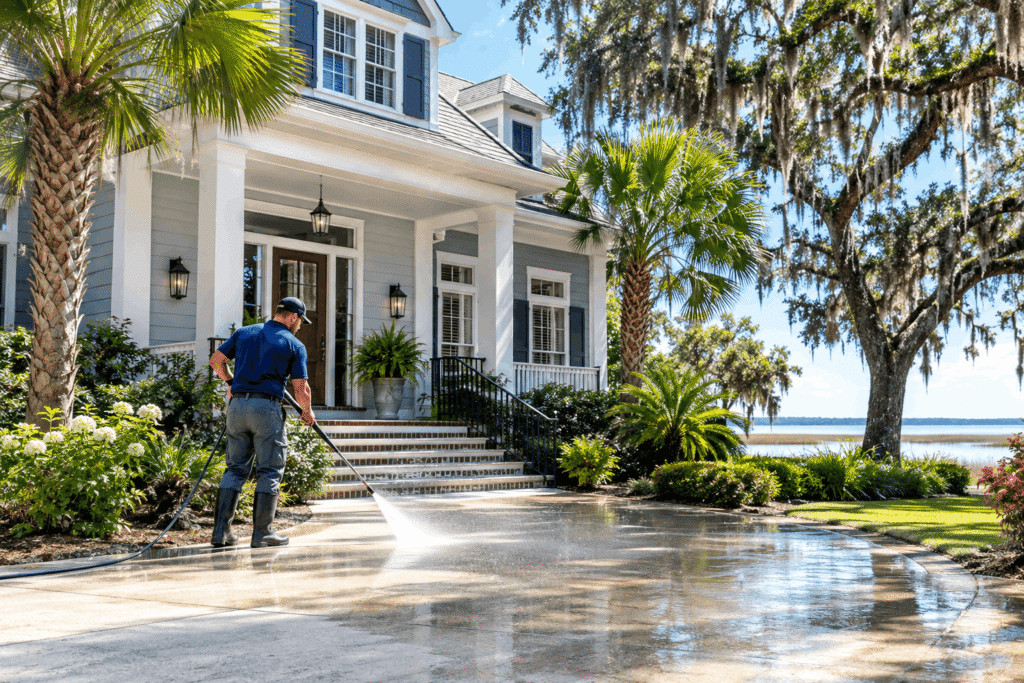
Coastal living comes with a hidden cost that many homeowners don’t notice until it’s too late. The warm, salty air and heavy humidity along the Georgia coast create the perfect conditions for mold, mildew, and grime to settle on outdoor surfaces. That’s why pressure washing in Savannah, GA has become a regular part of home maintenance rather than a one-time luxury.
Walk through almost any neighborhood in the area, and you’ll spot the difference between homes that get cleaned often and those that don’t. Green streaks on siding, dark patches on driveways, and slippery walkways are common signs of neglect. Left alone, these problems only get worse.
The Coastal Climate Challenge
Savannah’s climate is beautiful, but it’s tough on exterior surfaces. High moisture levels feed algae and mildew, which cling to brick, concrete, vinyl, and wood. Over time, these growths do more than look bad — they can eat away at surfaces and shorten their lifespan.
Salt from the nearby ocean adds another layer of wear. It settles on fences, decks, and outdoor furniture, slowly breaking down finishes and paint. Regular cleaning helps remove this buildup before it causes lasting damage.
Pollen season makes things messier still. Each spring, a thick yellow coat blankets cars, patios, and porches across the region. Washing it away keeps homes looking fresh and reduces allergens near living spaces.
What Sets Pressure Washing Apart
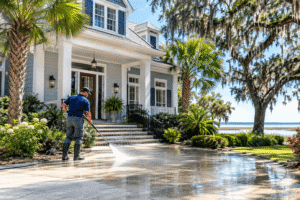
There’s often confusion between different cleaning methods, so it helps to know how they work. Traditional pressure washing uses high-powered water to blast dirt from hard surfaces like concrete and stone. It’s ideal for driveways, sidewalks, and parking areas.
Soft washing, on the other hand, relies on lower pressure paired with cleaning solutions. This gentler approach suits delicate surfaces such as roofs, painted siding, and screens. Using the wrong method can cause damage, which is why matching the technique to the surface is key.
Many cleaning professionals in the area now offer both options. This lets them handle a range of jobs, from stubborn oil stains on a garage floor to careful roof cleaning that won’t strip shingles.
The Benefits Homeowners Notice Most
The most obvious payoff is curb appeal. A clean exterior makes any property look cared for, which matters whether you’re selling or simply enjoying your space. Buyers often form first impressions before they ever step inside.
Beyond looks, regular washing protects your investment. Removing mold, algae, and salt buildup prevents early wear on siding, decks, and roofs. In the long run, this can save money on costly repairs and repainting.
Safety is another quiet benefit. Slippery walkways and moss-covered steps are accidents waiting to happen. Clearing them reduces the risk of slips, especially during Savannah’s wetter months.
Health plays a role too. Mold and mildew near doors and windows can affect indoor air quality. Keeping exterior surfaces clean helps limit what makes its way inside.
Real Situations Where It Helps
Consider a family preparing to list their home. A dingy driveway and streaked siding can drag down perceived value. A thorough cleaning often gives the whole property a refreshed look without expensive upgrades.
Or think about a homeowner who notices dark spots creeping across their roof. What looks like dirt is often algae feeding on the shingles. Addressing it early with the right method avoids premature roof replacement.
The same logic applies just outside the city. Homeowners searching for house washing in Richmond Hill, GA face similar coastal challenges, from mildew on siding to pollen buildup on porches. The nearby location shares the same humid conditions that make routine cleaning worthwhile.
In fact, demand for house washing in Richmond Hill, GA has grown alongside interest in exterior care across the region. Local providers such as Squeaky Clean Soft Washing and Lawn Care Services LLC have noted how coastal weather keeps these services in steady use year-round.
Choosing the Right Approach
Timing matters more than people expect. Many homeowners in Savannah, GA schedule cleaning in spring to clear away pollen, then again in fall before winter moisture sets in. This rhythm keeps surfaces in good shape through the seasons.
It also helps to match the service to the material. A concrete driveway can handle strong pressure, while a stucco wall or roof needs a softer touch. Asking about the method before work begins is a smart move.
Finally, water safety and runoff are worth considering. Responsible cleaners use products that break down safely, protecting nearby plants and drains. This is especially important in areas close to waterways.
Final Takeaway
Keeping a home clean on the outside is about more than appearance. In a humid coastal setting, routine washing protects surfaces, improves safety, and preserves property value over time.
If you’re seeing green streaks, dark patches, or slippery walkways, it may be time to look into a cleaning schedule that fits your home. A little maintenance now can prevent bigger headaches later.
Frequently Asked Questions
How often should a home be pressure washed in a humid climate?
Most homes benefit from cleaning once or twice a year. Coastal humidity speeds up mold and mildew growth, so twice-yearly washing often works best.
Is pressure washing safe for all surfaces?
No. Hard surfaces like concrete handle high pressure well, but roofs and painted siding need soft washing. Matching the method to the surface prevents damage.
What’s the difference between pressure washing and soft washing?
Pressure washing uses strong water force for tough surfaces. Soft washing uses lower pressure with cleaning solutions for delicate areas like roofs and siding.
Does exterior cleaning really help home value?
Yes. A clean exterior boosts curb appeal and first impressions. It can also prevent surface damage that lowers value over time.
When is the best time of year to schedule cleaning?
Spring and fall are popular choices. Spring clears pollen buildup, while fall removes grime before winter moisture and cooler weather arrive.