Professional communication
Healthcare depends on accurate information and effective communication. Every day, medical information is shared between patients, healthcare professionals, researchers, regulators, pharmaceutical companies, and other stakeholders. When this information is unclear, difficult to understand, or poorly presented, it can create confusion and reduce the value of important healthcare information.
Professional communication helps make medical and scientific information clear, accurate, secure, and useful. From patient education materials to clinical documents and regulatory content, good communication can support better understanding and more effective healthcare decisions.
Why Is Professional Communication Important in Healthcare?
Healthcare information can be highly complex. It may include medical terminology, clinical data, research findings, treatment information, and regulatory requirements. Different audiences also have different levels of medical knowledge.
A healthcare professional may understand technical terminology easily, while a patient may need the same information explained in simpler language.
Professional communication focuses on presenting the right information in the right way for the intended audience. Clear communication can help reduce misunderstandings, improve engagement, and make important healthcare information easier to use.
How Does Plain Language Writing Improve Healthcare Communication?
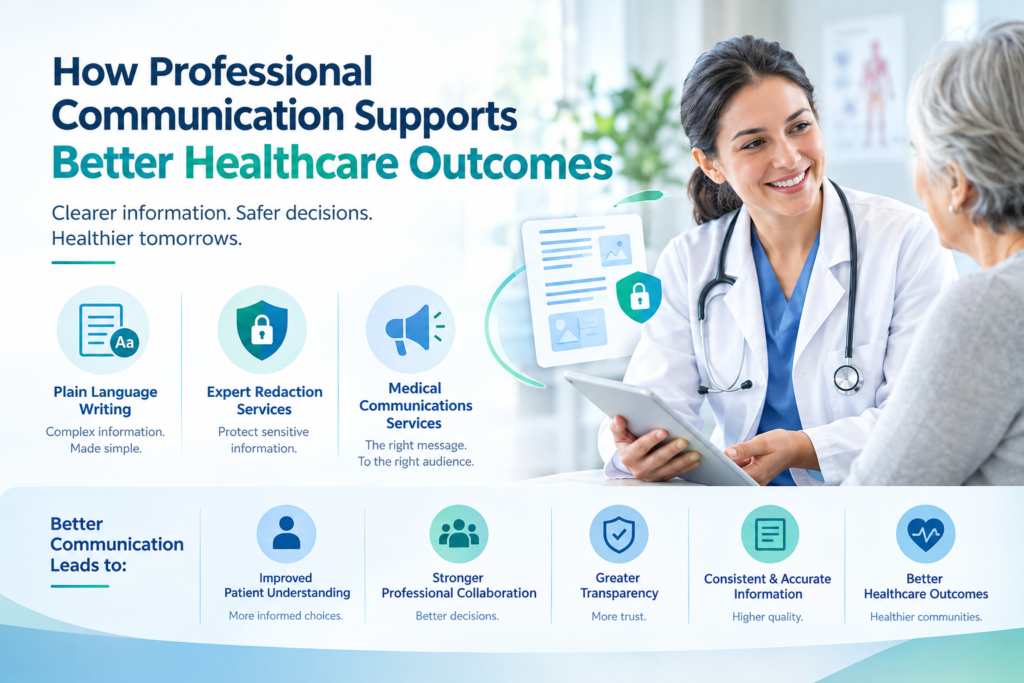
Plain language writing is an important part of effective healthcare communication. It focuses on making complex information easier to understand without changing its meaning or reducing its accuracy.
For example, instead of using unnecessary technical language, writers can use familiar words and explain medical terms when they are needed.
Plain language writing can help:
- Make healthcare information easier to understand
- Improve patient engagement
- Reduce confusion
- Support informed decision-making
- Make clinical information more accessible
- Improve the readability of medical documents
This approach is especially useful for patient information, informed consent materials, clinical trial information, health education content, and public-facing medical communications.
Clear language does not mean removing important scientific details. Instead, it means presenting those details in a way that the intended audience can understand.
How Can Expert Redaction Services Protect Healthcare Information?
Healthcare documents often contain sensitive information. Clinical and regulatory documents may include personal information, patient identifiers, commercially confidential information, or other details that should not be publicly disclosed.
Expert redaction services help organisations identify and appropriately protect sensitive information before documents are shared or disclosed.
Professional redaction can help organisations:
- Protect personal and confidential information
- Reduce privacy risks
- Support clinical document disclosure
- Maintain important scientific information
- Apply consistent redaction decisions
- Prepare documents for responsible sharing
Effective redaction requires careful review. Simply removing names or obvious identifiers may not always be enough. Information that could indirectly identify an individual or reveal confidential business information may also require consideration.
The goal is to protect sensitive information while retaining the useful clinical and scientific content of the document.
What Role Do Medical Communications Services Play?
Medical communications services help life sciences and healthcare organisations communicate scientific and medical information effectively.
These services can cover a wide range of activities, including medical writing, publication support, medical education, patient communication, scientific content development, regulatory communication, and digital medical content.
A professional medical communication approach considers:
- Who will read the information?
- What does the audience need to know?
- How complex is the subject?
- What tone and format are appropriate?
- How can the information remain accurate and compliant?
By answering these questions, medical communications services can help organisations create content that is more focused, consistent, and useful.
Connecting Clarity, Accuracy, and Data Protection
Professional healthcare communication is not only about making information easier to read. It also requires accuracy and appropriate protection of sensitive information.
For example, a clinical document prepared for public disclosure may contain confidential information. Expert redaction services can help protect that information. The remaining content may then need to be communicated clearly to a non-specialist audience, where Plain language writing can provide valuable support.
A broader medical communication strategy can bring these activities together through medical communications services.
This creates a simple approach:
Protect the information → Make it clear → Communicate it effectively
How Can Better Communication Support Healthcare Outcomes?
Clear communication can have benefits across different areas of healthcare and clinical research.
Better Patient Understanding
Patients are more likely to engage with healthcare information when it is clear and easy to understand. Straightforward communication can help people better understand treatments, instructions, risks, and available options.
Improved Professional Collaboration
Healthcare professionals and researchers need accurate information to make decisions and work effectively with others. Well-organised medical content can make important information easier to locate and review.
Stronger Clinical Transparency
Responsible sharing of clinical information can support transparency and public trust. Appropriate redaction and anonymisation help organisations protect sensitive information while making useful information available.
More Consistent Communication
Organisations often produce large amounts of medical and scientific content. Professional communication processes can help maintain consistent terminology, messaging, structure, and quality across different documents and audiences.
Greater Trust
Clear, accurate, and responsible communication can strengthen confidence among patients, healthcare professionals, regulators, researchers, and other stakeholders.
Best Practices for Effective Healthcare Communication
Organisations can improve their communication by following a few simple principles:
Know your audience: Write according to the reader’s knowledge and needs.
Keep information clear: Avoid unnecessary jargon and complicated sentences.
Maintain accuracy: Simplify language without changing scientific meaning.
Protect sensitive information: Review documents carefully before sharing or disclosing them.
Use a consistent approach: Maintain consistent terminology and messaging across documents.
Review the final content: A quality and readability review can identify unclear information before publication or distribution.
Frequently Asked Questions
What is Plain language writing in healthcare?
Plain language writing presents medical and scientific information in clear, straightforward language while maintaining its original meaning and accuracy.
Why are Expert redaction services important?
Expert redaction services help identify and protect sensitive personal, clinical, and commercially confidential information in documents prepared for sharing or disclosure.
What are medical communications services?
Medical communications services support the development and delivery of medical and scientific content for audiences such as healthcare professionals, patients, researchers, regulators, and life sciences stakeholders.
Can clear communication improve patient understanding?
Yes. Clear and well-structured healthcare information can make complex medical topics easier to understand and support better engagement with healthcare information.
How do redaction and plain language work together?
Redaction helps protect sensitive information, while plain language writing helps make appropriate information easier to understand. Together, they can support secure and accessible clinical communication.
Conclusion
Professional communication plays an important role in modern healthcare. Clear information can improve understanding, accurate content can support better decisions, and responsible information management can protect privacy and confidentiality.
By combining Plain language writing, Expert redaction services, and medical communications services, healthcare and life sciences organisations can create communication that is clear, accurate, secure, and appropriate for different audiences.
Better communication does not simply make healthcare information easier to read. It helps ensure that important information reaches the right people in the right way, supporting greater understanding, trust, and effective healthcare outcomes.