Searching for a luggage repair shop near me usually means your suitcase has developed a problem that needs more than a quick fix at home. A damaged wheel, broken zipper, loose handle, or torn section can make a bag difficult to use, especially before a trip.
Before leaving your luggage for repair, it helps to understand what needs attention and what information the repairer may need.
Start With a Full Inspection
Do not focus only on the part that has already failed.
Open the suitcase and inspect the exterior and interior.
Check the:
- Wheels
- Telescopic handle
- Zippers
- Locks
- Handles
- Seams
- Corners
- Fabric or shell
- Internal lining
One damaged component can sometimes indicate additional wear elsewhere.
For example, a suitcase with a broken wheel may also have damage around the wheel housing. Checking the complete bag can help identify problems before they become more serious.
Check the Wheels Carefully
Wheels receive significant wear because they are constantly exposed to floors, curbs, uneven surfaces, and repeated movement.
Look for signs such as:
- Cracked wheels
- Wobbling
- Uneven rotation
- Excessive noise
- Loose wheel fittings
- A wheel that no longer turns
Do not continue dragging a suitcase with a severely damaged wheel.
Doing so can place additional stress on the wheel housing and bottom of the suitcase.
Inspect the Zipper
A zipper problem does not always mean the entire zipper needs replacement.
The slider may be damaged, the teeth may be misaligned, or the surrounding fabric may have started to tear.
Try the zipper gently rather than pulling it aggressively.
If it repeatedly separates or gets stuck, avoid forcing it. Excessive pulling can damage the teeth or fabric and make the repair more complicated.
For a suitcase that otherwise remains in good condition, repairing the zipper may be more practical than replacing the entire bag.
Check the Telescopic Handle
A retractable handle can become loose or stop extending properly after repeated use.
Try extending and closing it carefully.
Look for:
- A handle that gets stuck
- Uneven movement
- Loose buttons
- Bent tubes
- Excessive side-to-side movement
If the handle is damaged, avoid putting excessive weight on it.
Pulling a heavy suitcase with a weak handle can cause additional damage to the mounting points.
Look at the Main Handles
Top and side handles can also wear over time.
Check whether the stitching, screws, or mounting points are still secure.
A handle that feels loose should not be ignored, especially if the suitcase is regularly used for travel.
Repairing the attachment before it completely separates can prevent the handle from failing while you are carrying the bag.
Check the Suitcase Body
Hard-shell and soft-sided luggage can develop different types of damage.
Hard cases may develop cracks, dents, or damage around corners.
Fabric luggage may develop:
- Tears
- Fraying
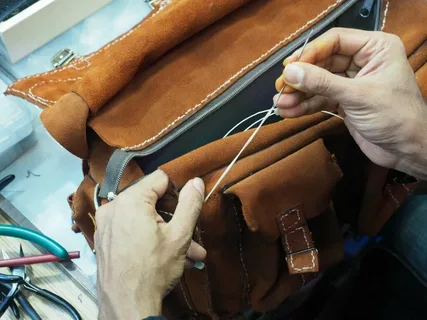
- Loose stitching
- Damaged panels
- Worn corners
Not every cosmetic mark requires repair.
The important question is whether the damage affects the suitcase’s ability to protect and carry your belongings.
Bring Useful Information to the Repair Shop
When taking your luggage for repair, explain exactly what happened.
For example, tell the repairer whether the wheel broke during travel, the zipper gradually became difficult, or the handle stopped locking into position.
If the suitcase has a known brand or model, provide that information as well.
It can help when replacement parts need to match the existing hardware.
Repair Before Your Next Trip
Do not wait until the day before travelling if you already know that your luggage has a problem.
A repair may require inspection, replacement parts, or additional work.
Give yourself enough time to test the suitcase after the repair.
Roll it on a flat surface, open and close the zippers, extend the handle, and check that all repaired components operate normally.
When Repair May Be Better Than Replacement
A suitcase does not necessarily need to be discarded because one component has failed.
Repair may make sense when the main body is still in good condition and the problem is limited to a replaceable component.
For example, a wheel, handle, zipper component, or damaged stitching may be repairable without replacing the complete suitcase.
However, extensive structural damage may require a different solution.
A professional inspection can help determine whether repairing the existing bag is practical.
Keep Your Luggage in Better Condition
Regular care can reduce unnecessary wear.
Avoid dragging the suitcase over rough surfaces when possible.
Do not overload it beyond its intended capacity.
Store it in a dry place and avoid leaving it exposed to prolonged moisture.
Before every major trip, spend a few minutes checking the wheels, handles, zippers, and locks.
Early maintenance can be much easier than dealing with a failed suitcase during travel.
What If Your Bag Needs Other Repairs?
A suitcase may have more than one problem at the same time.
For example, you may notice a damaged wheel while also finding a torn handle or worn zipper.
In such cases, it is useful to have the entire bag assessed rather than repairing one component and discovering another problem later.
A professional bag repair service in Dubai can help assess different types of luggage damage and determine which components may be repairable.
Final Thoughts
Searching for a luggage repair shop near me does not always mean you need to replace your suitcase.
Start with a complete inspection of the wheels, zippers, handles, body, and other hardware. Explain the problem clearly and, where possible, provide the suitcase brand and model.
If the main structure remains in good condition, repairing a damaged component may extend the useful life of the bag.
Taking care of the problem before your next trip can also reduce the chance of dealing with a broken suitcase while travelling.