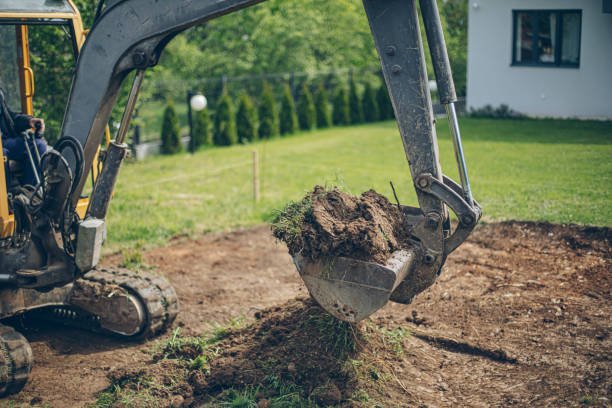
Working Excavator Digging A Trench At Construction Site
Two jobs that get lumped together constantly, and honestly they should be, because separating them tends to cause more problems than it solves. Grading shapes the ground. Excavating moves the ground to make room for something. Do one without thinking about the other and you end up with a driveway that’s technically level but drains wrong, or a foundation dug to spec but sitting in a spot that floods every spring because nobody looked at the bigger picture. When people finally start searching grading and excavating near me in Winchester, it’s usually after a smaller, piecemeal fix didn’t actually solve anything. Truth is, these two things were never really separate. They’re one continuous decision about how water moves and where structures sit, and treating them as unrelated tasks handed to different crews is where a lot of expensive mistakes start.
Why These Two Jobs Are Really One Job
Excavating without a grading plan is basically just moving dirt and hoping. You dig the hole, you fill where you need to fill, but if nobody’s thought through the finished slope and drainage pattern before any of that happens, you end up correcting it after the fact, which costs more than doing it right from the start. Grading without proper excavation underneath it doesn’t work either, because you can shape the surface all you want, but if the fill beneath isn’t compacted correctly or the cut isn’t balanced properly, that surface grade won’t hold, it’ll settle unevenly within a year or two and undo the whole thing. The two have to be planned together from day one, not bolted on as separate phases with separate crews who never actually talk to each other.
What Good Grading Actually Requires
Grading isn’t just making ground flat, and that’s the misconception that trips a lot of people up. It’s controlling exactly where water goes, on purpose, every time it rains. Positive slope away from any structure, usually somewhere around a six inch drop over the first ten feet though that shifts depending on soil type and the specific site. Swales cut deep and wide enough to actually move real volume in a hard storm, not just handle a light drizzle. Low points eliminated where possible, or drained deliberately where they can’t be. This requires someone actually reading the land, understanding where water naturally wants to go and working with that instead of just leveling whatever’s there and calling the job finished.
What Excavation Adds That Grading Alone Can’t
Some jobs need more than surface shaping. A building pad has to be cut to precise elevation and compacted properly underneath, not just graded on top of whatever fill happened to already be there. Utility trenching for water, sewer and electric has to happen at the right depth with proper bedding before any of the visible construction starts. Cut and fill work balances a site so you’re not hauling excess dirt off unnecessarily or bringing in fill that wasn’t actually needed. This is where excavation goes beyond what grading alone accomplishes, digging deep enough and precise enough to set up everything that comes after it, the foundation, the driveway base, the utility lines all running where they’re supposed to.
The Mistakes That Take Years To Show Up
Let’s be real, bad grading and rushed excavation rarely cause a visible problem on day one, and that’s exactly what makes them dangerous. Water pooling near a foundation for a season or two before anyone notices the first hairline crack. A patio settling unevenly because the base underneath wasn’t compacted right before the pavers went in. A driveway that looked fine the first year and started rutting the second because the crown wasn’t cut correctly and water’s been running down the center of it the whole time instead of shedding off to the sides. By the time these show up, homeowners usually assume it’s a new problem. It almost never is. It’s an old shortcut finally catching up.
Where Septic Systems Fit Into This Whole Picture
This connection gets missed more often than it should. A septic drainfield needs soil that can actually absorb what’s dispersing into it, and grading that accidentally pushes extra water toward that area, even without anyone intending it, can overload a system that was otherwise working fine. Homeowners sometimes end up blaming a septic system for a problem that’s really coming from grading nearby, water getting funneled toward the drainfield instead of away from it. Planning grading and excavation with the septic system’s location in mind from the start avoids this entirely, rather than discovering the conflict after the system’s already showing signs of strain.
When The Job Is Bigger Than Just Regrading
Sometimes a property genuinely needs more than a simple regrade to fix. Heavy clay that resists drainage no matter what slope you give it. Root systems interfere with where the grade actually needs to go. An old structure or section of driveway sitting exactly where proper drainage needs to run. This is where a crew like an excavating company in Woodstock VA that handles both clearing and excavation alongside grading becomes valuable, because sometimes the fix means removing what’s in the way first, whether that’s overgrown brush hiding the real contour or a piece of old infrastructure that’s been directing water wrong for years without anyone realizing it.
What To Ask Before Hiring Anyone
Ask them to walk the property and point out specifically where water’s currently misbehaving, not just where they’re planning to fix it, because that tells you whether they actually assessed the site or are working off assumptions. Ask how they handle the transition zones where new grading meets existing grade, since that’s often where amateur work leaves an awkward dip or ridge that just creates a fresh problem. Ask about compaction verification during excavation, not just visual leveling once it’s done. And ask whether grading and excavation are planned together as one continuous job or handled separately, because a crew treating them as connected tends to catch conflicts a split approach usually misses.
Bottom Line
The short answer is that grading and excavating were never really two different projects, they’re one decision about how water moves and where structures sit, made all at once instead of in disconnected pieces. Real grading and excavating near me in Winchester work means reading the land first, planning drainage and structural needs together, and following through with compaction and grading that actually holds instead of settling unevenly a year later. Whether that’s a straightforward driveway regrade or a bigger job requiring an excavating company in Woodstock VA to handle clearing, digging and grading as one connected process, the pattern holds steady every time. Plan it together, execute it together, and most of what looks like separate problems later, the wet basement, the rutting driveway, the strained septic system, tends to never show up in the first place.