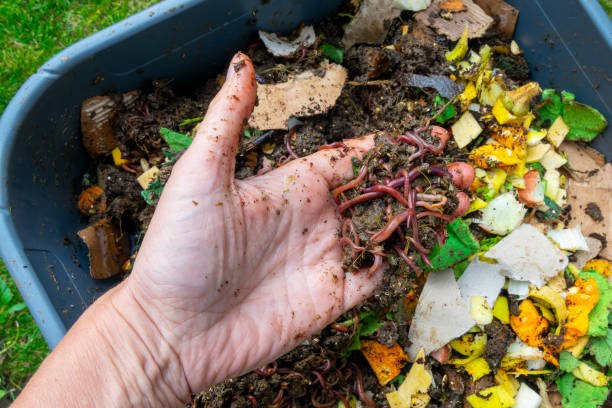
Hand holding worms in a worm composter with food waste
Starting a worm farm is a simple way to turn everyday food scraps into useful compost. However, choosing the right worms is important because not every type of earthworm is suited to living in a worm farm. The right species can adapt to the conditions inside the bin, process organic waste, and produce nutrient-rich worm castings.
Whether you’re setting up a small worm farm at home or managing a larger system, understanding which worms to choose can help you get started with confidence.
What Are Worm Farm Worms?
Worm farm worms are species that are comfortable living in decomposing organic material rather than deep garden soil. They feed on food scraps, plant matter, and other suitable organic waste while producing castings that can be used to improve soil.
Red Wigglers are one of the most commonly used options because they adapt well to worm bins and reproduce under suitable conditions.
What Makes a Good Worm for a Worm Farm?
The best worms for a worm farm should be able to handle a moist, organic environment and feed regularly on decomposing material.
Good composting worms generally:
- Stay close to the surface of the bedding
- Feed on decomposing organic matter
- Reproduce reasonably quickly
- Adapt to worm bin conditions
- Tolerate a range of organic bedding materials
- Produce useful worm castings
These characteristics make composting-specific species more practical than simply collecting worms from your garden.
Best Worms for a Worm Farm
Red Wigglers are one of the most popular choices for home worm farms. They are relatively small, active, and well adapted to feeding on organic waste.
Another option is the European Nightcrawler, which is also used in some worm farming systems. The best choice can depend on your climate, the size of your setup, and what you plan to compost.
When choosing your worms, it’s better to focus on species that are known to thrive in vermicomposting environments.
Where Can You Get Worms for a Worm Farm?
There are several ways to find composting worms. You can purchase them from specialist worm farms, gardening suppliers, or connect with local gardeners and composting groups.
If you’re looking for a ready-to-use colony, Memes Worms offers composting worms along with bedding, worm castings, and other worm farming supplies. Buying from a dedicated supplier can be helpful when you want to start with a known composting species rather than collecting random worms from the garden.
Local gardening communities can also be useful if someone nearby has an established worm farm and is willing to share some of their worms.
How Many Worms Do You Need?
The number of worms you need depends on the size of your worm farm and how much food waste you produce.
It’s usually better to start with a manageable colony instead of filling the entire bin with worms immediately. As the worms settle in and reproduce, the population can gradually increase.
A healthy environment with enough bedding, moisture, and food is more important than starting with a very large number of worms.
What Do Worm Farm Worms Eat?
Composting worms can process a variety of organic kitchen waste.
Common options include:
- Fruit and vegetable scraps
- Coffee grounds
- Tea leaves
- Crushed eggshells
- Small amounts of bread
- Soft plant material
- Shredded cardboard
Avoid adding meat, dairy, oily foods, and heavily processed leftovers. These can create unpleasant smells and may cause problems in the worm farm.
How to Maintain a Healthy Worm Farm
Once you have the right worms, maintaining suitable conditions is fairly simple.
Keep the bedding damp but not soaking wet. Make sure the container has enough airflow and drainage, and protect it from extreme temperatures.
Feed the worms small amounts at first. If food is still sitting in the bin after several days, reduce the amount until the worms become more established.
Adding fresh bedding from time to time can also help maintain a balanced environment.
Common Mistakes to Avoid
New worm farmers sometimes add too much food or choose worms that aren’t suitable for composting.
Some common mistakes include:
- Overfeeding the worms
- Keeping the bedding too wet
- Allowing the bin to become too dry
- Placing the farm in direct sunlight
- Adding unsuitable foods
- Using ordinary garden worms without checking the species
Avoiding these problems can make it much easier for the worm population to establish.
Conclusion
Choosing the right worms for worm farm systems is one of the most important steps when starting vermicomposting. Red Wigglers and other composting-specific species can adapt well to worm bins and help turn kitchen scraps into valuable worm castings.
With suitable bedding, moisture, food, and temperature, a worm farm can become an easy way to reduce household organic waste while creating useful material for your garden.
Frequently Asked Questions
1. What are the best worms for a worm farm?
Red Wigglers are one of the most commonly used worms for home worm farms because they thrive in organic material and adapt well to bin conditions.
2. Can I use worms from my garden?
Not all garden worms are suitable for worm farms. Composting species such as Red Wigglers are generally better suited to this environment.
3. How many worms should I start with?
The ideal number depends on your bin size and the amount of food waste you produce. Starting with a manageable colony allows the population to grow naturally.
4. What should I feed worms in a worm farm?
Fruit and vegetable scraps, coffee grounds, tea leaves, crushed eggshells, and suitable plant material are common choices.
5. How do I keep a worm farm healthy?
Maintain moist bedding, provide suitable food in moderate amounts, ensure good ventilation, and keep the farm away from extreme temperatures.