Manufacturing has changed a lot, but one thing hasn’t really changed: parts still need to fit, work, and keep working. That sounds obvious, yet hitting those requirements gets harder as products become smaller, lighter, faster, and more complicated. Modern production now depends heavily on tight tolerances, repeatable results, and smarter machining methods. This is where Swiss turn parts have become especially useful for industries dealing with compact, detailed components. Swiss turning can handle small diameters, intricate features, and demanding tolerances without making the process unnecessarily complicated. And that matters because the future of industrial manufacturing isn’t simply about making more parts. It’s about making better parts, with less waste and fewer headaches along the way. Precision machining is sitting right in the middle of that shift.
Why Tight Tolerances Matter More Than Ever
Industrial equipment used to have a little more room for error. These days, not so much. A tiny dimensional difference can affect how a bearing seats, how a valve operates, or whether two components line up properly during assembly. Precision machining gives manufacturers a controlled way to produce parts within very narrow specifications, again and again. CNC turning, milling, grinding, and Swiss-style machining can all be selected according to what the component actually needs. That last part is important. There’s no prize for using the fanciest process if a simpler one will do the job. The goal is consistency. When a batch contains hundreds or thousands of components, every individual part needs to behave pretty much the same. Otherwise, quality problems start showing up downstream, where fixing them is usually more expensive.
Advanced CNC Machining Is Changing Production
CNC technology has made precision manufacturing far more practical for modern factories. Machines can follow detailed digital programs, control cutting movements closely, and repeat complicated operations without relying entirely on manual intervention. That doesn’t mean skilled machinists have become irrelevant. Quite the opposite, actually. Someone still has to understand tooling, material behavior, feeds, speeds, inspection, and the quirks of a particular component. But CNC equipment takes much of the repetitive work out of the equation. It also allows manufacturers to move from design data to finished components with fewer manual steps. For complex industrial parts, that can save time and reduce variation. As software, controls, and machine capabilities continue improving, manufacturers can also produce geometries that would have been difficult, slow, or downright impractical with older equipment.
Smaller Components, Bigger Manufacturing Demands
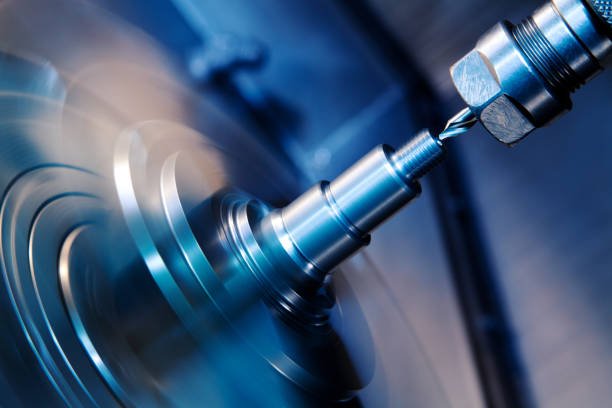
One interesting trend is the push toward smaller components. Industrial products are becoming more compact in plenty of sectors, including medical equipment, electronics, automotive systems, instrumentation, and aerospace. Smaller doesn’t automatically mean easier. In fact, machining a tiny component can be a real pain because there is less material to work with and very little room for mistakes. This is one area where precision turning earns its place. Swiss machining supports the production of slender, miniature, and highly detailed components while maintaining strong dimensional control. Features such as threads, grooves, holes, and shoulders can be produced with impressive consistency. The trick is having the right machine setup and tooling. A poor setup can ruin an otherwise good design pretty quickly. Precision manufacturing is as much about control as it is about cutting metal.
Material Challenges Are Not Going Away
Another issue manufacturers have to deal with is materials. Steel is still everywhere, but modern components may also use titanium, stainless steel, aluminum, nickel-based alloys, brass, plastics, and other engineered materials. Some cut nicely. Others fight back the whole way. Heat generation, tool wear, vibration, burr formation, and surface finish can all become problems depending on the material and component design. Precision machining processes have continued to evolve because of this. Better cutting tools, improved coolants, machine monitoring, and more capable CNC systems help manufacturers deal with difficult materials without simply throwing more labor at the problem. Truth is, material selection and machining strategy have to be considered together. Designing a part first and asking later whether it can actually be manufactured efficiently is a costly habit.
Reducing Waste Through Smarter Machining
Nobody wants to waste expensive material, machining time, or energy. Yet manufacturing waste can sneak into a process in ways that aren’t immediately obvious. Excessive scrap is one example. So are unnecessary machining passes, poor tool life, long setup times, and components that require repeated correction. Precision production helps tackle some of these problems by improving repeatability. If the machine consistently produces the required dimensions, fewer parts should need rework or rejection. Better programming can also reduce unnecessary cutting movements and improve cycle times. This doesn’t mean every precision shop automatically runs an efficient operation. Far from it. Process planning still matters. Tool selection matters. Inspection matters. But when those pieces are handled properly, precision machining can support leaner manufacturing without sacrificing the quality customers expect.
Digital Manufacturing and Process Monitoring
The future of machining isn’t only about faster machines. It’s also about better information. Digital manufacturing systems can connect design files, CNC programs, inspection data, production records, and machine information in ways that weren’t common years ago. Sensors and monitoring systems can help identify tool wear, unusual machine behavior, or changes in the cutting process before they turn into major production problems. That gives manufacturers more control over what’s happening on the shop floor. It can also make quality documentation easier, which is particularly useful in industries where traceability is a serious requirement. The technology still needs people behind it, though. A screen full of data doesn’t fix anything by itself. Someone has to understand what the numbers mean and decide what to do next. Still, the move toward connected machining is clearly making production more responsive.
Precision Supports More Flexible Production
There’s another benefit that doesn’t always get enough attention: flexibility. Industrial manufacturers aren’t always producing one simple component by the millions anymore. Customers may want smaller batches, design changes, custom configurations, or replacement parts that are difficult to source elsewhere. Modern CNC equipment makes it easier to adjust production when the underlying process is properly planned. A digital program can be modified instead of rebuilding an entire production method from scratch. Precision machining is therefore useful not only for high-volume manufacturing but also for specialized work where accuracy is critical. This flexibility can help companies respond when customer requirements shift. And they do shift. Usually at the least convenient time. A manufacturer that can adapt without losing control of quality has a practical advantage in a market where product cycles keep getting shorter.
The Role of Precision Machining in Aerospace and Beyond
As industrial manufacturing moves forward, sectors such as aerospace will continue demanding components that meet strict dimensional, material, and quality requirements. Fasteners, fittings, shafts, pins, bushings, and other small engineered parts may look simple, but their performance can matter enormously once they are installed inside a larger system. Manufacturers therefore need reliable production methods, strong inspection practices, and suppliers capable of maintaining consistency across batches. This is where experienced aerospace fastener suppliers can play an important role, particularly when components must meet demanding industry specifications and traceability requirements. The same basic lesson applies across automotive, medical, energy, defense, and other industrial fields. Precision isn’t some nice extra feature anymore. It’s becoming part of the foundation.
Conclusion: Manufacturing’s Future Depends on Control
The short answer is, precision machining supports the future of manufacturing by giving companies better control over dimensions, repeatability, materials, waste, and increasingly complex designs. It allows manufacturers to produce smaller and more demanding components while keeping production practical. But the machines themselves aren’t the whole story. Good programming, experienced machinists, suitable tooling, inspection, and sensible process planning still make the difference. As industrial products become more advanced, that combination will matter even more. Precision machining won’t solve every manufacturing problem, obviously. Nothing does. But it gives manufacturers a solid foundation for building components that have to work properly, fit properly, and keep doing their job. And honestly, that’s what modern manufacturing is really chasing.