Not all temperature sensitive cargo needs the same thing from a reefer container. A shipment of fresh mangoes and a shipment of vaccines might both travel in the same type of refrigerated container, but their actual requirements, the risks they face, and the mistakes that can ruin them are quite different from one another. Treating all cold chain cargo as one uniform category is one of the more common mistakes businesses make when shipping temperature sensitive goods for the first time.
This article looks specifically at how different categories of temperature sensitive cargo each present their own particular challenges, and what shippers need to think through depending on exactly what they’re moving.
Why Temperature Sensitive Cargo Deserves Individual Attention
Before getting into specific product categories, it helps to understand why a one size fits all approach to reefer shipping tends to fail. Every temperature sensitive product has its own ideal storage range, its own tolerance for brief fluctuations, and its own particular vulnerability, whether that’s to warmth, to cold, to humidity, or to the simple passage of time regardless of temperature.
A product that’s slightly too warm for a few hours might suffer only minor quality loss in one case, while an identical temperature deviation could render an entirely different product unsafe or unusable. Understanding these differences before booking a shipment, rather than assuming any reefer container will handle any cold chain product equally well, prevents a lot of costly mistakes.
Fresh Produce and the Challenge of Continued Ripening
Fresh fruits and vegetables present a particular challenge that many other temperature sensitive goods don’t share. Unlike frozen products or many manufactured goods, fresh produce remains biologically active even after harvest. It continues to respire, releasing carbon dioxide and heat as part of its natural ripening process, and this activity doesn’t stop simply because the product has been loaded into a container.
This is why reefer containers carrying produce often need their ventilation settings adjusted specifically for the product inside. Too little airflow, and the buildup of gases and heat from the produce’s own respiration can accelerate spoilage from within the container itself, regardless of how well the refrigeration unit is maintaining the surrounding air temperature. Certain fruits, including apples, bananas, and avocados, also release ethylene gas as they ripen, and this gas can accelerate ripening in other nearby produce if incompatible fruits are shipped together in the same space.
For longer voyages, particularly with fruit that needs to arrive still relatively unripe for extended shelf life at its destination, some shippers use controlled or modified atmosphere systems that actively adjust the mix of oxygen and carbon dioxide inside the container, slowing the ripening process well beyond what temperature control alone could achieve. This is a more advanced and more expensive approach, generally reserved for cargo where the extended transit time would otherwise make the product unsellable by the time it arrives.
Frozen Foods and the Irreversibility of Thawing
Frozen cargo, including meat, seafood, and prepared frozen foods, faces a completely different set of concerns compared to fresh produce. The main goal here is maintaining a consistently deep freeze temperature throughout the entire journey, since even a partial thaw can compromise both safety and quality in ways that can’t be corrected simply by refreezing the product once the problem is discovered.
This makes frozen cargo particularly unforgiving of any interruption in the cold chain. A brief loss of power during a truck transfer, a longer than expected wait at a terminal without the container properly connected, or a defrost cycle running longer than normal can each represent a real risk to frozen cargo in a way that might be far less consequential for other temperature sensitive products with more tolerance for brief fluctuations.
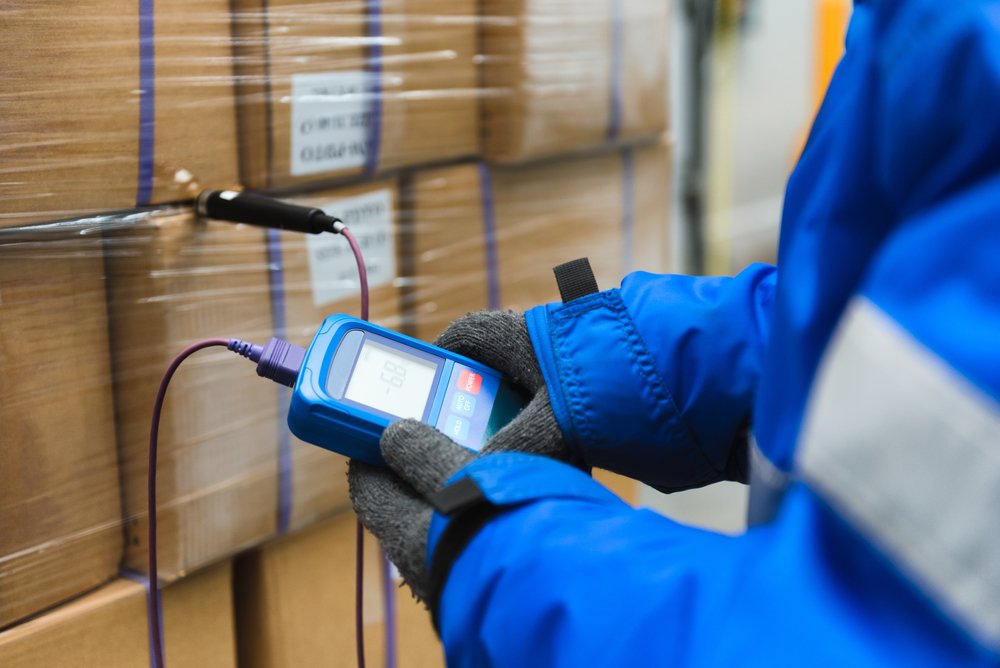
Because of this, shipments of frozen cargo particularly benefit from continuous temperature monitoring throughout the journey, giving both the shipper and the receiving party clear evidence of whether the cold chain was actually maintained throughout transit, or documentation if something went wrong at a specific identifiable point.
Dairy Products and Their Narrow Tolerance Range
Dairy products, including cheese, butter, and various milk based goods, generally require chilled rather than frozen conditions, but often within a fairly narrow acceptable range. Too warm, and spoilage risk increases along with potential food safety concerns. Too cold, in some cases, and certain dairy products can suffer texture changes or separation issues that affect quality even if the product technically remains safe to consume.
This narrower tolerance range makes precise setpoint control especially important for dairy shipments, along with attention to how quickly the product was cooled before it ever reached the container in the first place. Dairy that wasn’t adequately pre-cooled before loading puts unnecessary strain on the reefer unit and increases the risk that the product’s actual temperature lags behind what the container’s air temperature display might suggest.
Pharmaceuticals and the Stakes of Getting It Wrong
Pharmaceutical products, including vaccines and various temperature sensitive medications, represent perhaps the highest stakes category within cold chain shipping. Unlike food products, where a temperature excursion might result in reduced quality or, at worst, spoilage that’s usually detectable before consumption, pharmaceutical products can lose effectiveness from temperature deviations without any visible or detectable change in the product itself.
This invisible risk is exactly why pharmaceutical cold chain shipping typically demands a level of monitoring and documentation well beyond what most food cargo requires. Independent data loggers placed directly with the pharmaceutical cargo, rather than relying solely on the container’s own built in monitoring, are common practice, since they provide an accurate record of what the product itself actually experienced rather than just the general air temperature within the container.
Regulatory requirements around pharmaceutical shipping also tend to be considerably stricter than those for most food products, often requiring specific certifications from the shipping and handling companies involved, along with detailed documentation showing that the cold chain remained unbroken from origin to destination. Businesses shipping pharmaceutical products should confirm early in the process that their chosen logistics provider has genuine experience with this specific category, rather than assuming general cold chain experience automatically translates to pharmaceutical grade handling.
Flowers and the Combination of Cold and Delicacy
Cut flowers occupy an interesting position within temperature sensitive cargo, since they need careful temperature control similar to fresh produce, but also require attention to humidity levels in a way that many other cold chain products don’t. Flowers that dry out during transit arrive wilted regardless of how well the temperature itself was maintained, which is why reefer containers used for floral cargo often need their humidity control features actively engaged rather than left at a general default setting.
Handling also matters more for flowers than for many other cold chain products, since physical damage during loading or transit can ruin a shipment’s commercial value just as thoroughly as a temperature problem would, even if the flowers technically remained at the correct temperature throughout the entire journey.
Chemicals and Industrial Products Requiring Temperature Control
Not all temperature sensitive cargo is food or medicine. Certain chemicals, industrial materials, and manufactured products also require temperature controlled transport, either because extreme heat or cold could compromise their chemical stability, or because temperature fluctuations could affect their physical properties in ways that matter for their eventual use. These shipments often come with their own specific documentation and safety requirements separate from typical food safety concerns, and businesses shipping this type of cargo should work closely with a logistics provider familiar with the particular regulatory requirements involved.
What This Means When Choosing a Shipping Approach
Understanding these differences matters practically because it affects several decisions that need to be made before a shipment ever leaves origin. It affects what setpoint and ventilation settings should be requested, what level of monitoring makes sense given the value and risk profile of the specific product, and what documentation will likely be needed both for the shipper’s own records and potentially for regulatory compliance at the destination.
It also affects how a business should evaluate potential logistics partners. A provider with strong general reefer experience handling fresh produce might not automatically have the specific expertise needed for pharmaceutical grade cold chain shipping, and asking directly about a provider’s experience with your specific product category is a reasonable and important question before committing to a shipment.
Getting the Right Guidance for Your Specific Cargo
Given how much these requirements vary by product type, working with a logistics partner who takes the time to understand exactly what you’re shipping, rather than applying a generic cold chain approach to every temperature sensitive shipment, makes a real difference in outcomes. A Dubai-based provider such as Noble Line Logistics LLC can discuss the specific product being shipped and recommend the appropriate temperature settings, monitoring approach, and documentation needed for that particular category of cargo, rather than treating every reefer shipment as fundamentally the same.
Temperature sensitive cargo covers a genuinely wide range of products with meaningfully different needs, and recognizing this early in the planning process, rather than assuming any refrigerated container will handle any cold chain product equally well, is often the difference between a shipment that arrives in perfect condition and one that arrives with a problem that could have been avoided.