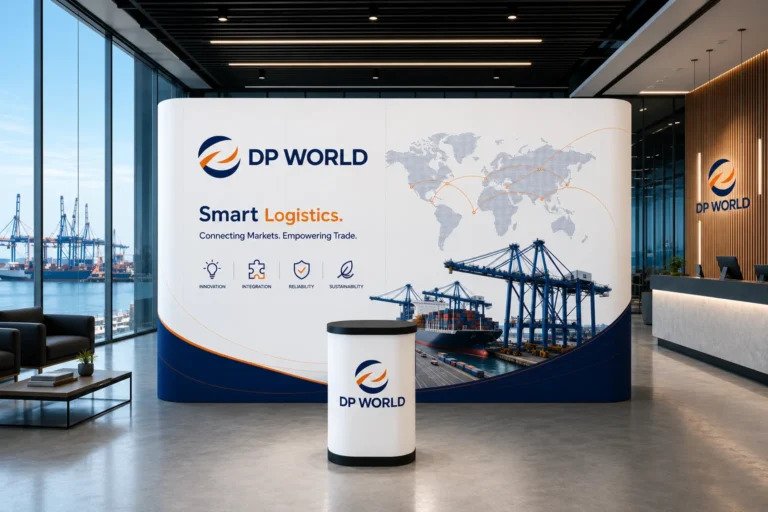
Exhibitions bring businesses and visitors together in one place, but preparing a display can take careful planning. The stand needs to fit the available space, show important information clearly, and leave enough room for people to move around. Pop up stands provide a practical way to create an exhibition backdrop without using a complicated permanent structure. They can be assembled when needed, packed away after an event, and used again for future exhibitions.
The design of a display can also affect how easily visitors understand a business. A simple graphic, a clear message, and a well-arranged space can make the exhibition area easier to approach. For businesses that attend several events, having a portable display can also make preparation and transportation more manageable.
1. Understanding Pop Up Stands
Pop up stands are portable exhibition displays that normally use a collapsible frame. When the frame is opened, it creates a structure that can hold printed panels or fabric graphics.
The display can act as a background for a business name, logo, product photographs, service information, or other messages. Different systems may have different shapes, sizes, and graphic attachment methods.
One of the main features of this type of display is its portability. Instead of constructing a new wall for every event, the same frame can often be packed and transported for repeated use.
The final appearance depends on the frame, graphic material, printing quality, and overall layout. Choosing each part carefully can help create a display that suits the exhibition space.
2. Choosing the Right Display Size
The available floor area should be considered before selecting a display. Exhibition organizers normally provide the dimensions of each allocated space, and the stand should fit within those limits.
A smaller display can work well for a limited area or when only a few messages need to be presented. A larger display may provide more room for images, headings, and product information.
However, using the largest possible display is not always the best choice. Staff and visitors need enough space in front of the stand, and furniture may also require additional room.
Measuring the exhibition area before making a decision can help avoid problems during setup. Height restrictions and venue regulations should also be checked.
3. Designing Clear Exhibition Graphics
Graphics are usually one of the first things visitors notice. The design should therefore be easy to understand without requiring people to read a large amount of text.
A company name or logo can be positioned in a visible area. A short headline can explain the main message, while images and brief points can provide supporting information.
Large text is generally easier to read from a distance. Long paragraphs and very small writing may not work well because visitors often move through exhibition halls quickly.
Images should also be clear enough for large-format printing. Low-resolution photographs can lose quality when enlarged.
Using consistent fonts, spacing, and visual elements can make the complete display look more organized.
4. Planning the Exhibition Layout
The stand itself is only one part of an exhibition area. Tables, chairs, products, brochures, screens, and other materials may also need to be included.
The layout should provide a clear path for visitors. Important graphics should not be hidden behind furniture or products.
If a table is needed, it can be positioned where it does not block the main display. Chairs should also be placed carefully so that people can sit without restricting movement around the stand.
Products can be grouped according to type or purpose. This makes it easier for visitors to understand what is being displayed.
A simple layout can often be easier to manage than a crowded one. Every item should have a useful reason for being there.
5. Preparing the Stand Before the Event
Even portable displays require preparation. Setting up the stand before the exhibition can help identify problems while there is still time to correct them.
The frame should be opened and checked to make sure all parts are working correctly. Graphics should be attached and inspected for proper alignment.
This is also a good time to check tables, chairs, lighting, electrical equipment, brochures, and products.
Staff members who will assemble the stand should understand the setup process. If different people will handle the equipment at different events, keeping basic instructions with the display can be useful.
A pre-event check can reduce the chance of discovering missing parts or damaged graphics on the exhibition day.
6. Transporting Portable Displays
One of the practical features of pop-up exhibition systems is that they can be transported between different locations. However, the equipment still needs to be packed carefully.
Frames should be placed in suitable cases or containers where possible. Graphics should be stored according to their material and should not be exposed to conditions that could cause damage.
Small accessories such as connectors, clips, or fasteners can easily become separated from the main equipment. Keeping them in a dedicated compartment can make future setup easier.
After returning from an event, the equipment should be inspected before being stored. This helps identify damage while the details of the event are still fresh.
7. Selecting Suitable Materials
Different pop-up displays can use different materials for their graphics. Fabric and rigid panels are two common options, and each has its own characteristics.
Fabric graphics can provide a continuous printed surface and may be easier to pack than some rigid materials. Panel graphics can provide a structured appearance and may suit certain display systems.
The choice should depend on how often the display will be used, how it will be transported, and the type of appearance required.
The frame is equally important. A system used repeatedly should be handled and stored carefully to maintain its condition.
Considering the complete display rather than only the graphic can help ensure that the different parts work together properly.
8. Using Pop Up Stands for Different Events
A portable display can be used at many types of events. Trade shows, conferences, exhibitions, seminars, product presentations, and business gatherings may all require a temporary display area.
The graphic can be planned according to the purpose of each event. A product exhibition may focus on photographs and features, while a business event may require a simple company backdrop.
Some display systems also allow graphics to be changed. This can be useful when a business attends events with different audiences or themes.
The same basic structure can therefore support different presentations, provided the graphic and surrounding layout are adjusted appropriately.
9. Maintaining the Display
Regular maintenance can help keep an exhibition display in good condition. After each event, the frame should be checked for loose or damaged components.
Graphics should also be inspected for marks, tears, or other problems. Cleaning should be carried out according to the material’s care instructions.
The equipment should be stored in a dry and suitable location. Heavy objects should not be placed on graphics if they could cause creases or other damage.
Keeping all components together can also make the next setup easier. A simple checklist can help confirm that nothing has been left behind at an event.
10. Making the Display Visitor-Friendly
An exhibition stand should make it easy for visitors to approach and communicate with staff. The entrance should remain open, and important information should be visible without creating confusion.
Staff should avoid blocking the main graphics or standing in a way that prevents visitors from entering the space.
Brochures and samples can be placed where visitors can reach them easily. Products should also be arranged at a comfortable viewing height where possible.
Lighting can help improve visibility, especially when the exhibition hall has uneven or limited lighting. However, lighting equipment should be positioned safely and should not create obstacles.
The overall goal is to create a space that feels open, organized, and easy to understand.
Final Thought
Pop up stands provide a practical way to create a temporary exhibition display without building a permanent structure for every event. Their portable design makes them suitable for businesses that need to move their display, store it between events, and use it again.
A successful display depends on more than the frame. The right size, clear graphics, sensible furniture placement, suitable materials, and careful preparation all contribute to a useful exhibition space.
Keeping the design simple can often be more effective than filling the stand with too much information. When visitors can quickly understand the main message and comfortably approach the display, the exhibition area becomes easier to use for both visitors and staff.