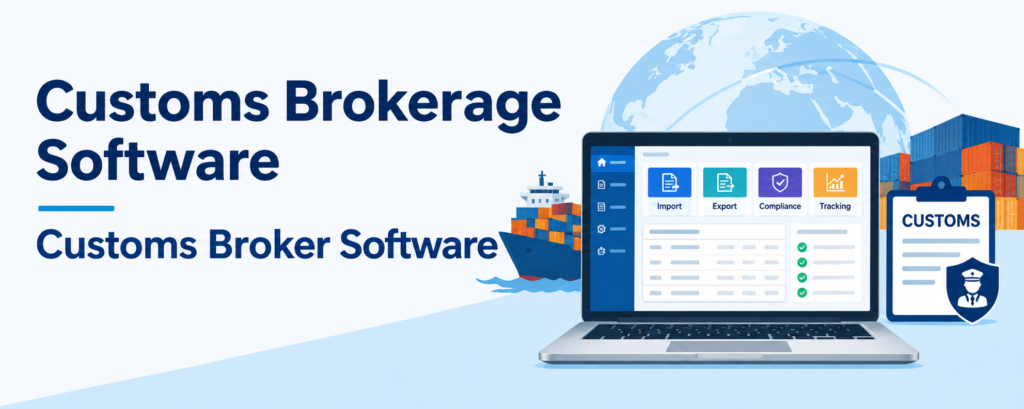
International trade operations depend on accurate information, efficient communication, and reliable customs processes. Modern customs brokerage software helps brokerage teams organize shipment data, automate repetitive activities, manage documentation, and improve visibility across customs workflows. At the same time, effective customs broker software can support growing transaction volumes by creating structured processes that reduce manual work while allowing professionals to concentrate on complex customs requirements.
Why Customs Brokerage Needs Digital Transformation
Customs brokers handle significant amounts of information for every international transaction. Product descriptions, classifications, values, country-of-origin details, transportation information, and supporting documents must remain accurate throughout the clearance process.When employees rely heavily on spreadsheets, emails, and disconnected records, processing becomes difficult to scale. Information may need to be entered several times, increasing both workload and the possibility of inconsistencies.Digital brokerage technology provides a more organized alternative.
How Customs Brokerage Software Improves Efficiency
Customs brokerage software brings important customs activities into a centralized environment. Instead of moving information manually between different processes, teams can create connected workflows.
Reduce Repetitive Data Entry
Entering identical shipment information into multiple systems takes time. Automation can transfer verified information between appropriate workflows, allowing employees to concentrate on activities requiring professional expertise.This benefit becomes increasingly important as transaction volumes rise.
Validate Shipment Information
Incorrect or incomplete information can interrupt customs processing. Automated validation can check records against predefined requirements and flag missing or inconsistent data.Employees can investigate flagged transactions before they progress further.
Centralized Documentation and Records
International shipments generate multiple documents. Managing these files across separate locations can make retrieval difficult.Customs broker software can associate documents with relevant shipment records, giving authorized employees easier access to the information they need.
Improve Record Organization
Centralized records create a clearer history of customs activity. When employees need to review a transaction, they can locate relevant information without searching across multiple systems.
Support Consistent Procedures
Structured workflows encourage employees to follow established processes for documentation, review, and exception handling.Consistency is particularly valuable when several teams or locations participate in customs operations.
Automation for Growing Brokerage Operations
Growth creates an important challenge: processing more transactions without allowing administrative workload to increase at the same rate.Automation helps brokerage teams establish repeatable processes for routine transactions.
Exception-Based Workflows
Not every shipment needs identical manual attention. Technology can identify records containing unusual information and route those transactions for additional review.Routine shipments can continue through standardized workflows while experienced employees focus on exceptions.
Better Operational Visibility
Centralized technology can provide visibility into transaction status and outstanding activities.Managers can identify bottlenecks, monitor workloads, and determine which transactions require immediate attention.
Features to Consider When Selecting Software
Businesses should choose technology based on operational requirements rather than simply comparing the number of available features.
System Integration
Brokerage operations often receive information from transportation, order management, inventory, warehouse, and customer systems.Effective integration can reduce duplicate data entry and create more consistent information across customs processes.
Reporting Capabilities
Reporting can reveal recurring errors, processing delays, exception frequency, and operational trends.Teams can use these insights to improve internal procedures instead of repeatedly addressing the same problems.
Data Security
Customs operations involve sensitive commercial and shipment information. Businesses should consider access controls, user permissions, and appropriate data-management practices when evaluating software.
Combining Technology With Customs Expertise
Automation does not eliminate the need for knowledgeable professionals.Complex classifications, unusual merchandise, uncertain documentation, and regulatory exceptions can require human judgment. Technology is most valuable when it handles predictable administrative activities while helping professionals identify transactions that deserve additional attention.This balance can improve productivity without sacrificing necessary oversight.
Preparing for Long-Term Scalability
Before implementing new brokerage technology, businesses should review their existing workflows.Recurring manual tasks, duplicate data entry, frequent corrections, and processing bottlenecks can indicate where automation will deliver the greatest benefit.Organizations should also improve source data. Accurate product and customer information creates a stronger foundation for successful automation.
Conclusion
Efficient customs brokerage requires technology that improves processing while preserving appropriate professional oversight. Modern customs brokerage software can centralize shipment information, automate routine tasks, strengthen validation, and improve operational visibility. When combined with scalable customs broker software, structured workflows and knowledgeable employees can help brokerage operations manage increasing transaction volumes while creating a more consistent and dependable approach to international customs processing.