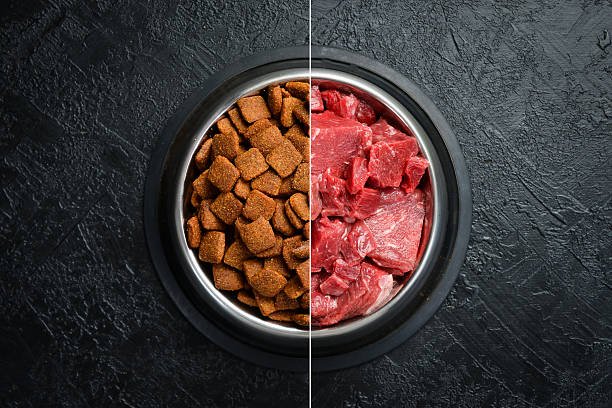
Photo collage. Bowl with food for dogs or cats. A set of dry fodder and fresh meat. Concept of healthy food for animals.
Most people put more thought into a phone case than into what goes in the dog’s bowl twice a day, every day, for years. I did it too. You walk into a giant chain store, the wall of bags stares back, and every single one has a shiny happy retriever on it. So you grab something. Fine. But if you’re typing “dog food store near Jupiter” into your phone, something already nudged you. Maybe it’s the itching, or the coat that went dull, or gas that empties a room. Whatever it was, pay attention to it. Food is the first place to look, and it’s the one thing in your dog’s life you fully control.
So What Does Organ Meat Even Mean on a Label?
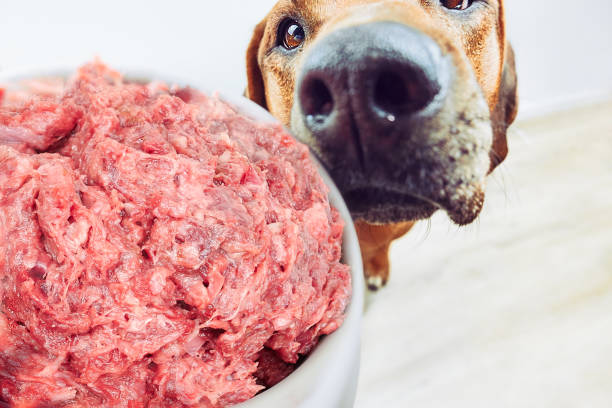
You’ve seen it printed on bags and probably skipped right over it. Liver, kidney, heart, sometimes spleen or tripe. That’s what the term covers. Not leftover scraps. Wolves go for the organs first and leave the plain muscle for later, which tells you something about where the good stuff is. Organs carry vitamin A, B12, iron, copper, zinc, in forms a dog’s body soaks up pretty easily. People wrinkle their noses at the idea, dogs never do. Liver is basically cake to them. One catch though, too much liver can cause trouble of its own (vitamin A builds up), so ratios matter and a decent maker keeps them in check.
Walking Into a Shop: Watch the People First
A bigger building doesn’t mean better advice. When you step into any dog food store near Jupiter, forget the shelves for a minute and watch the staff. Do they ask how old your dog is? His weight, how much he runs around, whether his stomach acts up? Good. If the first thing out of someone’s mouth is “this one’s on sale,” slow down. The best small stores I’ve seen carry a bit of everything, fresh, frozen, freeze-dried, plain kibble, and the people working there feed the stuff to their own dogs. You can tell. They talk about it like a friend would. And if you ask where the chicken comes from and they get weird about it, just leave. No big speech needed.
Reading a Label Without Losing Your Mind
Labels are written to sell you something. Teaching is not the goal. Ingredients go by weight, heaviest first, so the first three or four are the ones that count. You want a named meat up there, chicken or lamb or beef, rather than a fuzzy “meat meal.” Keep scanning down the list. When a recipe names the dog food with organ meat it uses, say chicken liver or beef heart, the company is basically showing its cards. “By-products” isn’t always bad, it’s just vague, and vague bugs me. Sugar, dyes, chemical-sounding preservatives with fourteen syllables, those are red flags. Your dog doesn’t care if kibble is red. You care, because the bag looks friendlier. Don’t fall for that.
Fresh, Frozen, Freeze-Dried, or Plain Old Kibble
Nobody can tell you the one right answer, and whoever claims to is probably selling a subscription. Kibble is cheap per day and lasts forever in the pantry. Fresh and frozen are closer to actual meals, but they cost more and eat up freezer space (I’ve seen people give up an entire shelf of ice cream for it). Freeze-dried lands somewhere between, light and easy, though you have to add water. Plenty of owners just mix. Kibble underneath, a spoonful of something fresher on top. It works. It’s also a cheap way to sneak in dog food with organ meat without wrecking your budget, and for a picky eater that topper alone can change dinner in a couple of days.
What Organs Actually Do for Skin, Coat, and Energy
This is where owners tend to notice stuff. Liver brings a lot of vitamin A and the B vitamins, which feed into skin, eyesight and plain old get-up-and-go. Heart and kidney add iron, taurine, and CoQ10, and heart muscle really likes that last one. People who switch often say the coat looks better after a month, maybe six weeks, with less scratching and firmer stool as a bonus. Not a miracle though. Every dog’s different, and a dog who’s actually sick needs a vet, not a fancier bag. But the nutrients are doing quiet work in the background, and it’s pretty boring science that works more often than not.
Before You Switch, Ask These First
Don’t pour the new food in tomorrow morning and hope for the best. A dog’s gut needs a week, ten days even, of old food mixed with new, a bit more new each day. Skip it and you’ll be scrubbing the rug. Think about life stage too. Puppies need different calcium than seniors, and big breeds have their own rules. Got an allergic dog? Say so before you buy, since chicken and beef are common triggers. And if your dog has kidney or liver problems, check with your vet first, because rich organ diets don’t suit every health situation. Asking feels slow. Guessing costs more.
Wrapping It Up
Feeding a dog well isn’t some big project, it just takes a little attention. Find a dog food store near Jupiter where the staff know what they’re talking about, ask way too many questions, and read the label yourself instead of trusting the front of the bag. Named proteins. Real organ ingredients. As little junk as you can manage. Switch slowly, then keep an eye on the coat, the energy, and yes, the poop. Your dog can’t tell you what’s working, so they show you, one wagging tail at a time. Try one better bag and see what happens.