Thanksgiving Boxes
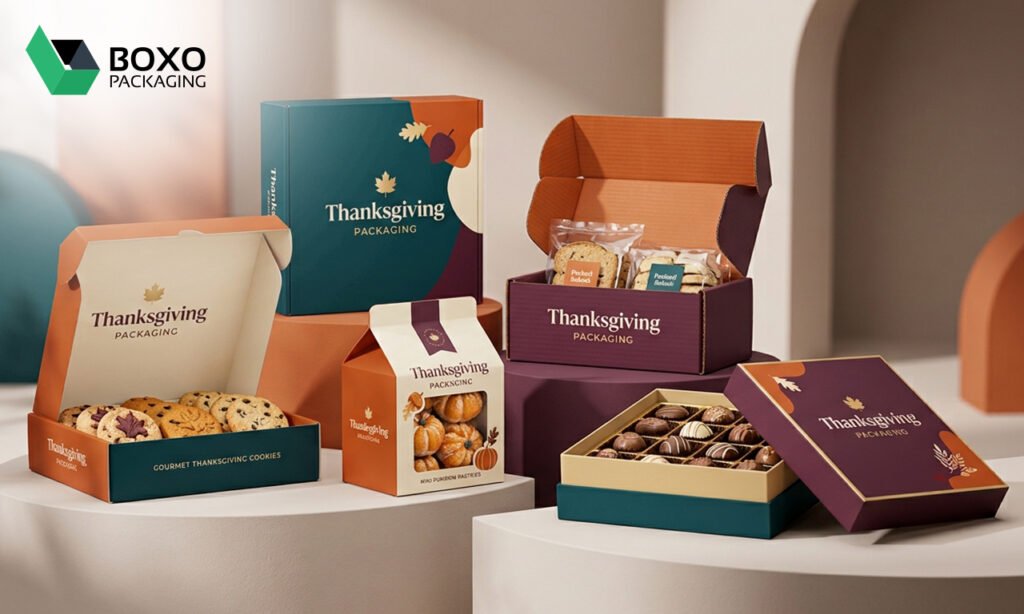
The useful life of a holiday food carton often starts when dinner ends. Guests take pie. Someone packs leftover dressing. A neighbor leaves with rolls. Cartons that only look right on the way to the table, and then split at the tuck in a coat pocket, have failed the second job. Thanksgiving Boxes earn that second job when the structure still closes after a warm kitchen and a cold car ride.
Pie wants a rigid square, sidewall above the crust, and a lid that does not rest on meringue or crimp. Leftover sides want a carton that closes against spills in a car, which is a different brief from a vented bakery lid. If one structure is asked to do both, the pie gets crushed or the sides leak at the corner.
A fridge overnight is part of the brief. Uncoated board picks up moisture and goes limp. A light aqueous varnish on the outside, and a liner or inner tray for wet food, does more than extra caliper alone.
Pie Depth, Sidewall Height, and Venting
Measure the pie you actually bake or buy, not a generic nine-inch note. Pan rims vary. A lid that is flush with a deep dish pie sits on pastry. A shallow sidewall on a tall crimp leaves the top unsupported in a stack of two.
Warm pie needs a path for steam. A fully sealed tuck on a hot pie wets the board and then collapses. Cool the pie, vent the lid, or use a bakery carton designed to breathe. Ordinary carton board is not a retort pouch, and it should not be described as one.
Carriers with a handle help when the walk is long. They do not help in a stacked fridge. Choose the silhouette for the trip you mean.
Stacking two pies in one shipper is a common home-bakery request. The lower lid then becomes a shelf. If that lid was drawn for a single pie on a table, the second pan prints through. Add caliper or refuse the double stack.
Kraft Faces Versus Printed Harvest Panels
Kraft reads as food-adjacent and hides grease spots better than a white clay coat. Printed harvest panels sell on a retail shelf and scuff in a busy kitchen. Many brands print the thanksgiving boxes outer sleeve and keep the inner carton plain so a stained sleeve can come off before leftovers go into the fridge.
A printed napkin or a paper liner is still useful inside a leftover carton. Board is not a soup container.
Sibling formats on the same table, used for the jobs the main carton should not take:
- Deep pastry boxes for whole pies that must vent
- Candy cartons for chocolate and nut mixes that would melt against a warm pie
- Lid-and-base gift boxes for dry goods that stay on a sideboard
- Folding food cartons with a simple tuck for leftover sides in the fridge
Hosts often ask whether the same harvest carton can go from oven to table to fridge. The honest answer is: cool the food first, then pack. Thanksgiving Boxes that leave the kitchen with steam still inside arrive as wet board.
Guest Favors Made With Pillow Packaging
Place-setting gifts are small and mixed: a wrapped caramel, a tea light, a handwritten card. A curved cavity still looks finished on a plate. A square mini-carton leaves corner gaps around a candle and then rattles. Pillow Packaging gives those mixed shapes a wall that follows the contents instead of boxing empty corners.
Wax and chocolate hate heat. The carton does not insulate. Keep favors away from the oven and off a hot serving dish. If the candle is loose, a thin card insert stops it punching the curve.
Food favors should stay in an inner wrap. Unlined paperboard is not a candy barrier. Grease from chocolate will mark the curve and then the tablecloth.
Colour on a Curved Gift Face
Harvest colors on a tight radius crack if the ink film is heavy. A one-color print, a stamped belly band, or a belly sleeve carries the seasonal cue without fighting the curve. White or Kraft bodies with a printed band also mix with leftover tableware the host already owns.
Boxo Packaging samples for table favors should include the actual candle or sweet, because an empty pillow always looks more even than a filled one.
Do not ask the same curved pack to carry a slice of pie. Food leftover cartons and pillow packs for place gifts can share a color story. They should not share a dieline.
Details that keep a place-setting pillow usable through dinner:
- Tabbed ends so a host can swap a name card without tearing board
- Card inserts that stop a tea light from punching the curved wall
- Inner wraps for chocolate so grease never reaches the paperboard
- Light ink coverage on the belly so the radius does not crack at the fold
Pointed Ends on a Place-Setting Pack
Ends may glue, tab, or tape. For a dinner, tabbed ends let the host pack the night before and reopen to swap a name card. Glued ends are fine when the favor is sealed at a shop and never opened until the guest tears it.
The pack usually lies on its long curve beside the plate. It will not stand in a tall stack of favors unless you add a tray. If you need a tower on a sideboard, a squared tuck carton is the calmer tool.
Weight stays low. A glass votive in a paperboard pillow will crease the side before dessert.
Name cards slipped under a tab can stain if the ink is still wet. Let calligraphy dry, then close the end. A belly band can carry the name instead of stuffing paper into the curve.