Choosing the right sesame seed supplier involves more than comparing prices. For bulk buyers, wholesalers, food processing companies, and international importers, a product catalogue provides essential information about sesame seed varieties, quality specifications, processing methods, packaging options, and order requirements. Reviewing these details carefully can help businesses reduce procurement risks and maintain consistent product quality.
When evaluating Sesame Seeds Manufacturers in India, buyers should look beyond product names and check whether the catalogue contains measurable specifications that match their intended application. A well-documented catalogue makes it easier to compare suppliers, assess product suitability, and make informed purchasing decisions.
Companies such as Valency Agro operate in an agricultural commodity market where product specifications and sourcing requirements are important considerations for commercial buyers. Understanding what to look for in a catalogue helps buyers approach supplier selection more systematically.
1. Check the Types of Sesame Seeds Available
The first thing to examine is the range of sesame seed varieties offered by the manufacturer. Different varieties serve different purposes in the food industry, and selecting the wrong type can affect the final product’s appearance, texture, processing requirements, or production costs.
A detailed catalogue may include the following varieties:
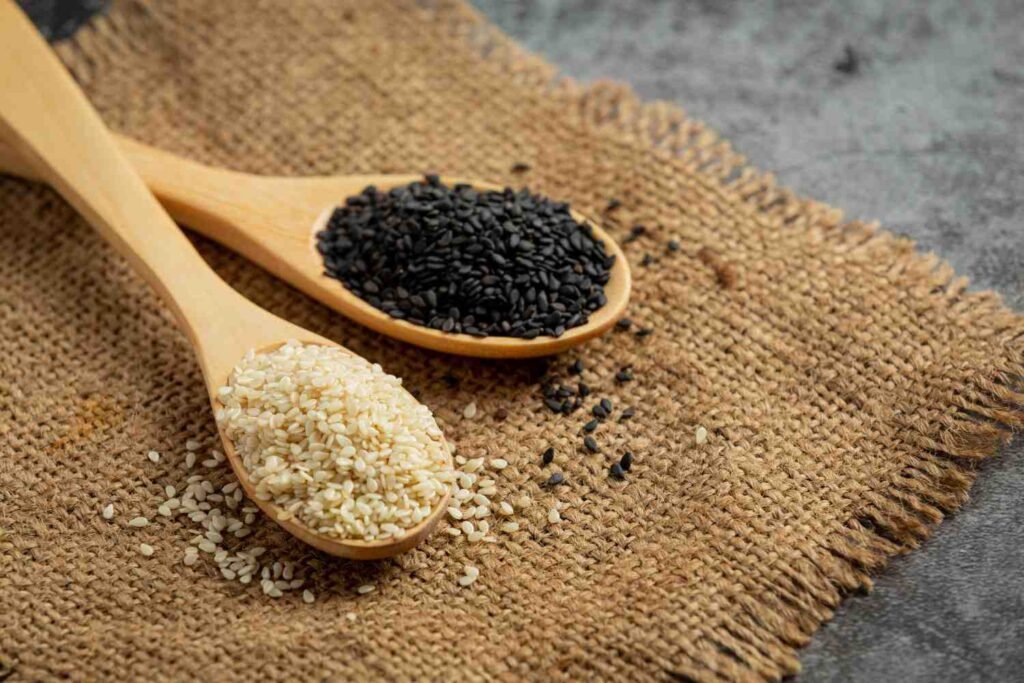
- White sesame seeds: Commonly used in bakery products, confectionery, tahini, and food toppings.
- Black sesame seeds: Used in specialty foods, bakery applications, seasoning blends, and traditional cuisines.
- Natural sesame seeds: Seeds supplied with their natural outer covering intact.
- Hulled sesame seeds: Seeds processed to remove the outer hull, often preferred for applications requiring a lighter appearance and different texture.
Buyers should confirm the exact variety, colour, processing status, and intended application before requesting a quotation.
When comparing Sesame Seeds Manufacturers, it is also useful to check whether multiple grades and varieties are available in the quantities required. This can simplify procurement for businesses that manufacture different food products.
2. Review Quality Specifications and Purity Levels
Product quality is one of the most important factors in bulk sesame seed procurement. However, descriptions such as premium quality or export quality are not sufficient on their own.
A useful product catalogue should provide clear specifications or explain how buyers can obtain them. Depending on the product and application, relevant parameters may include:
- Purity percentage: The proportion of sesame seeds in the lot compared with impurities and foreign material, according to the supplier’s stated testing method.
- Foreign matter: The presence of dust, stones, plant material, or other unwanted substances.
- Moisture content: An important factor in storage stability and the risk of quality deterioration.
- Damaged or discoloured seeds: Relevant to appearance, processing performance, and finished-product quality.
- Microbiological specifications: Requirements that may apply to the buyer’s food safety programme and destination market.
Buyers should ask for a product specification sheet and a recent batch-specific laboratory report where appropriate. They should also verify the testing method, sampling procedure, and applicable acceptance limits.
A catalogue is a starting point, not a substitute for quality verification. Before confirming a large order, buyers should establish measurable acceptance criteria and determine how any non-conforming shipment will be handled.
3. Understand Cleaning, Sorting, and Processing Methods
The processing method can significantly influence sesame seed quality and suitability for commercial applications.
For example, cleaned sesame seeds may undergo processes designed to remove dust and unwanted material. Optical sorting systems can help identify and remove certain seeds or foreign particles based on detectable differences in colour and appearance. Hulled sesame seeds undergo an additional process to remove their outer covering.
When reviewing a catalogue from Sesame Seeds Manufacturers in India, check whether it clearly distinguishes between:
- Natural and hulled sesame seeds
- Machine-cleaned and optically sorted products
- Different purity or grading specifications
- Products intended for direct food use and those requiring further processing
Do not assume that terms such as machine-cleaned, Sortex-cleaned, and export quality indicate identical specifications across suppliers.
Ask the manufacturer to explain the process used, the final product specifications, and whether the offered grade meets your production requirements. This is particularly important for food processors that need consistent raw materials across multiple production batches.
4. Check Packaging Options and Storage Requirements
Packaging affects product handling, transportation, storage, and protection from environmental exposure. Bulk buyers should therefore examine the packaging options listed in the catalogue.
Depending on the supplier and order requirements, sesame seeds may be available in food-grade bags or other bulk packaging formats. Buyers should confirm the available bag sizes, net weight, packaging material, labelling details, and palletisation options, if required.
Important questions include:
- Is the packaging suitable for the intended food application?
- Does the packaging protect the product against moisture and contamination?
- Can the supplier accommodate the buyer’s required net weight?
- Are batch identification and traceability details available?
- What storage conditions and shelf-life guidance apply?
Sesame seeds should be stored in clean, dry conditions and protected from excessive moisture, heat, pests, and strong odours.
Before placing an order, confirm the declared shelf life and the conditions under which it applies. Shelf life can vary according to processing, packaging, storage conditions, and the product’s initial quality.
5. Evaluate Minimum Order Quantities and Bulk Supply Capacity
A catalogue should help buyers understand whether a supplier can meet their purchasing requirements. However, not every manufacturer publishes minimum order quantities or available volumes in its public product documentation.
Ask the supplier to confirm:
- Minimum order quantity (MOQ): The smallest quantity accepted for the selected product.
- Available quantity: The volume currently available or that can be produced within the required timeframe.
- Lead time: The expected period between order confirmation and dispatch.
- Repeat-order consistency: Whether the same agreed specifications can be maintained across subsequent batches.
- Sample availability: Whether buyers can evaluate a sample before committing to a larger order.
These details are especially important for food manufacturers and wholesalers that operate on scheduled procurement cycles.
When comparing Sesame Seeds Suppliers in India, assess their ability to meet your volume, quality, and delivery requirements together rather than selecting a supplier based on price alone.
For example, a lower quotation may not represent better value if the product requires additional cleaning, arrives later than planned, or does not meet the agreed specification.
6. Verify Food Safety, Testing, and Traceability Information
Food safety documentation is another essential part of supplier evaluation. A product catalogue may mention certifications or quality management systems, but buyers should verify the validity, scope, and relevance of those claims.
Depending on the product, destination market, and transaction, useful documents may include:
- Product specification sheets
- Batch-specific certificates of analysis
- Applicable food safety or quality certifications
- Lot identification and traceability information
- Pesticide residue or microbiological test reports, where required
- Export documentation required for the destination country
Sesame seeds are a recognised food allergen in several markets. Businesses using them in food production should review applicable allergen labelling, handling, and cross-contact prevention requirements.
Buyers should not assume that every document is automatically included with every shipment. Confirm which documents the supplier can provide and whether they satisfy the buyer’s regulatory and contractual obligations.
Valency Agro is one name buyers may encounter while researching agricultural commodity sourcing. As with any prospective supplier, buyers should independently verify its current product specifications, available documentation, and suitability for their particular requirements rather than relying on a catalogue description alone.
7. Compare Pricing and Commercial Terms Carefully
Price is an important consideration, but it should be evaluated alongside quality, packaging, quantity, and delivery conditions.
When comparing quotations from Sesame Seeds Manufacturers, make sure the offers refer to equivalent products. A quotation for natural sesame seeds with one purity specification should not be compared directly with an offer for hulled sesame seeds or a different grade.
Check the following commercial details:
- Price per kilogram or metric tonne
- Product variety and agreed quality specifications
- Packaging costs, where applicable
- Applicable taxes and other charges
- Freight and insurance responsibilities
- Payment terms and quotation validity
- Delivery terms and the location where the price applies
For international orders, confirm the agreed Incoterms® rule and named place or port, where applicable. This helps clarify the division of costs, responsibilities, and certain risks between the buyer and seller.
A transparent comparison allows procurement teams to assess the overall landed cost rather than focusing only on the quoted product price.
8. Assess Supplier Reliability Before Placing an Order
A product catalogue can help shortlist suppliers, but it cannot establish reliability by itself. Buyers should conduct additional checks before entering into a long-term purchasing arrangement.
Consider requesting a product sample, speaking with the supplier about production or sourcing capacity, reviewing relevant business documentation, and confirming the terms for quality disputes.
When evaluating Sesame Seeds Brands in India, distinguish between the brand name used to market a product and the actual manufacturer, processor, exporter, or trading entity responsible for supplying it. These roles may differ.
For buyers researching Valency Agro, the same due diligence applies: verify the precise product being offered, confirm the contracting entity, and ensure that specifications and delivery commitments are documented before payment or dispatch.
A written purchase order should clearly state the product description, grade, quantity, packaging, acceptance criteria, delivery schedule, and agreed remedies for non-conforming goods.
9. Use a Checklist Before Finalising Your Supplier
Before choosing a supplier, review the catalogue against a consistent checklist.
| Evaluation area | What to verify |
| Product variety | White, black, natural, or hulled sesame seeds |
| Quality | Purity, moisture, foreign matter, and agreed limits |
| Processing | Cleaning, sorting, grading, and hulling details |
| Packaging | Bag type, net weight, protection, and labelling |
| Order capacity | MOQ, available quantity, and lead time |
| Documentation | Specifications, test reports, and traceability |
| Pricing | Comparable product grades and total delivery cost |
| Reliability | Samples, written terms, and quality dispute procedures |
Using the same checklist for every prospective supplier makes comparisons more objective and reduces the likelihood of overlooking important requirements.
Frequently Asked Questions
1. What should bulk buyers check before choosing sesame seeds manufacturers in India?
Bulk buyers should review sesame seed varieties, purity specifications, moisture content, foreign matter limits, processing methods, packaging, order capacity, testing documentation, and delivery terms. They should request samples and verify that the final product meets their intended application and contractual requirements.
2. How can I identify reliable sesame seeds suppliers in India?
Start by checking the supplier’s business details, product specifications, sourcing or processing capabilities, sample quality, relevant documentation, and ability to fulfil the required quantity. Confirm the agreed specifications and commercial terms in writing before placing a bulk order.
3. What documents should I request from a sesame seed manufacturer?
Depending on the transaction, request a product specification sheet, a batch-specific certificate of analysis, relevant food safety documentation, traceability details, and any testing or export documents required for your market. The exact documents depend on the product, destination, and applicable regulations.
4. How can I compare quotations from different sesame seeds manufacturers?
Compare quotations for the same seed variety, processing method, grade, purity requirements, packaging, quantity, and delivery conditions. Include applicable freight, taxes, and other charges to understand the total cost. A lower price is not necessarily better if the product does not meet your requirements.
5. How can buyers evaluate Valency Agro for sesame seed requirements?
Buyers can contact Valency Agro to enquire about relevant sesame seed varieties, available specifications, packaging, order quantities, and delivery options. Before confirming an order, they should independently verify current product availability, request appropriate quality documentation, evaluate a sample where possible, and document the agreed commercial terms.
Conclusion
A sesame seed product catalogue is a valuable procurement tool when it provides clear, verifiable information about varieties, quality, processing, packaging, and supply capabilities. Bulk buyers should use it to create a shortlist, then validate the supplier’s claims through samples, testing documents, and written commercial agreements.
For businesses comparing Sesame Seeds Manufacturers in India, a structured evaluation process helps reduce uncertainty and supports more consistent purchasing decisions. Whether sourcing for food manufacturing, wholesale distribution, or international trade, the goal is to select a supplier whose documented product specifications and delivery capabilities align with the buyer’s actual needs.
For More Information Click Here:- https://www.valencyagro.com/Sesame-Seeds