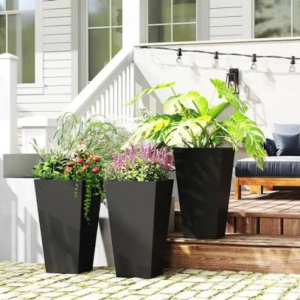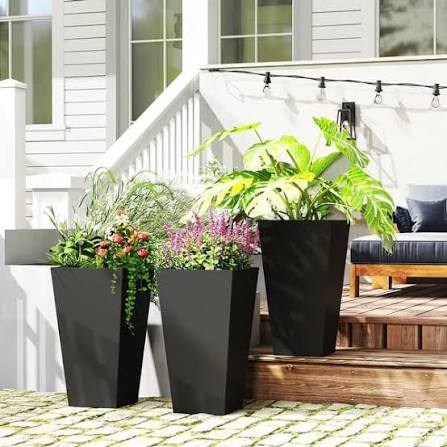
Large containers open up possibilities that smaller pots cannot match. Deeper soil means stronger root systems, better moisture retention, and room for plants that would struggle in cramped quarters. Knowing what thrives in these conditions helps gardeners get the most from their outdoor planters.
Vegetables That Need Room to Grow
- Tomatoes top the list for large container growing. Indeterminate varieties send roots deep and produce heavily when given adequate space. A single tomato plant needs at least 15 gallons of soil volume to reach full potential. Determinate bush types work in slightly smaller containers but still benefit from the extra root room large outdoor planters
- Peppers follow similar logic. Bell peppers, jalapeños, and other varieties develop stronger stems and heavier fruit loads when roots can spread freely. Plant one pepper per large container or group two to three in an oversized planter with adequate spacing.
- Squash and zucchini surprise many gardeners by adapting well to container life. Bush varieties stay compact enough for big pots while still producing generously. These heavy feeders appreciate the soil volume that retains nutrients and moisture through hot summer days.
- Eggplant, cucumbers, and pole beans round out the vegetable options. Each benefits from the stability and root space that large outdoor planters
Herbs Worth the Space
Not every herb needs a large container, but some reward the extra room with dramatically better performance.
Basil grows into an impressive bushy plant when given space to spread. A single Genovese basil in a large pot produces enough leaves for weekly harvests throughout summer. Crowded basil bolts faster and produces smaller, tougher leaves.
Rosemary and sage develop into substantial perennial shrubs over multiple seasons. These Mediterranean herbs need excellent drainage and room for woody root systems. Large containers with quality potting mix can provide both.
Mint deserves its own dedicated planter. The aggressive spreader takes over shared containers quickly.
Flowers and Ornamentals
Outdoor planters serve as focal points when filled with the right ornamental combinations.
The thriller-filler-spiller approach works especially well in large containers. A tall centerpiece plant (canna lily, ornamental grass, or dracaena spike) anchors the arrangement. Mid-height flowers (petunias, geraniums, calibrachoa) fill the middle zone. Trailing plants (sweet potato vine, creeping jenny, ivy) cascade over the edges.
Single-specimen plantings make equally strong statements. A large hibiscus, mandevilla on a trellis, or dwarf citrus tree turns a container into a standalone feature. These substantial plants need the root space and soil stability that only large outdoor planters can provide.
Perennial ornamental grasses work well for low-maintenance displays. Fountain grass, blue fescue, and similar varieties establish strong root systems in big containers and return year after year with minimal attention.
Dwarf Fruit Trees
Container fruit growing has expanded dramatically with dwarf and semi-dwarf rootstocks bred specifically for limited space.
Citrus leads the category. Meyer lemons, calamondin oranges, and kumquats thrive in large pots, especially in climates where they need winter protection indoors. The portability of container citrus lets gardeners in marginal zones succeed with these otherwise tender plants.
Fig trees adapt remarkably well to container culture. The root restriction actually encourages fruit production in some varieties. A large planter with a compact fig variety like ‘Little Miss Figgy’ or ‘Petite Negra’ produces edible harvests on patios and decks.
Dwarf apple and peach trees on appropriate rootstocks grow successfully in containers of 20 gallons or larger. These require more attention to watering and feeding than in-ground trees but reward the effort with actual fruit harvests.
Making the Right Match
Successful container growing starts with matching plant needs to planter capacity.
Deep-rooted vegetables and fruit trees need containers at least 18 inches deep. Shallow-rooted herbs and flowers can manage with less depth but still benefit from the moisture stability larger soil volumes provide.
Weight matters for balcony and rooftop gardeners. Soil-filled outdoor planters get heavy. Placing containers before filling saves effort and prevents damage to plants during repositioning.
Drainage remains critical regardless of container size. Even the largest planter drowns roots without adequate drainage holes. Quality containers include proper drainage by design.
Starting This Season
The best approach for beginners: start with one or two large containers and proven performers like tomatoes or a mixed flower arrangement. Success builds confidence for expanding the container garden over time. The flexibility of large outdoor planters lets gardeners experiment, move plants to better locations, and learn what works in their specific conditions.