A strip mall owner notices a hairline crack near the entrance in spring. By late summer, it has spread across three parking stalls. After one heavy Gulf storm, water pools in the same spot for days. Customers start parking farther away, and complaints start rolling in.
Situations like this are common across the region. That’s why choosing the right concrete parking lot contractor in Houston, TX matters more than many property owners realize. The local climate, soil, and rainfall create challenges that can shorten the life of a poorly built lot.
Why Parking Lots in This Region Face Unique Pressure
The Gulf Coast is hard on pavement. Summer heat regularly pushes surface temperatures well past 140 degrees, and long stretches of humidity keep moisture in the ground. Then come sudden downpours that can drop several inches of rain in a few hours.
Underneath it all sits expansive clay soil. This type of soil swells when wet and shrinks when dry. As it moves, it pushes and pulls on whatever rests on top of it, including concrete slabs.
Because of this, a parking lot that might last decades in a drier climate can fail early here if the groundwork isn’t done right. Experienced contractors tend to spend as much time thinking about what’s under the slab as the slab itself.
What Goes Into a Well-Built Concrete Lot
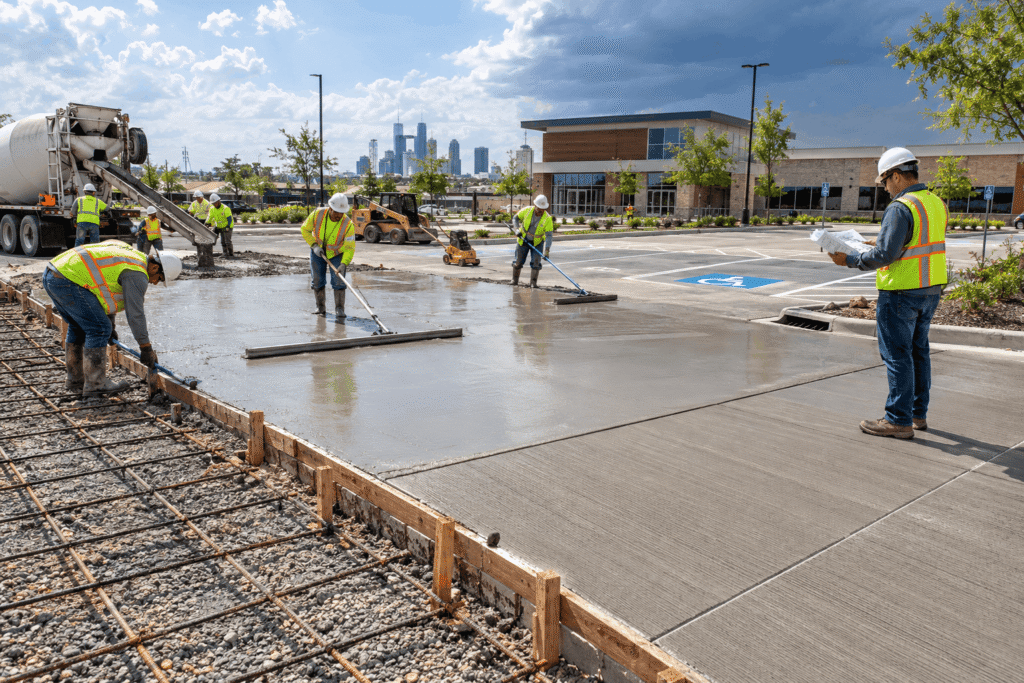
Most of the real work happens before any concrete is poured. Contractors usually start by testing the soil and planning how the site will drain. Many sites need the subgrade treated with lime or cement to reduce soil movement.
Thickness is another key decision. Lots built mainly for passenger cars often use slabs around 5 inches thick. Areas that see delivery trucks, garbage trucks, or fire lanes usually need 6 to 8 inches, along with steel reinforcement like rebar or wire mesh.
Drainage design ranks among the most important parts of the job. The terrain is flat, so water doesn’t naturally run off. A good plan uses careful slopes, inlets, and sometimes detention areas to meet local stormwater rules and keep water from sitting on the surface.
Joints also play a quiet but critical role. Control joints are cut into the concrete so cracks form in straight, planned lines instead of spreading at random. Spacing them correctly can make the difference between a lot that ages well and one that looks broken within a few years.
Finally, there’s the pour itself. In the summer heat, concrete can dry too fast, which weakens it. Crews often pour in the early morning hours and use curing compounds or water to slow the drying process.
How Concrete Compares to Asphalt in Hot Climates
Asphalt is often cheaper upfront, which makes it tempting. But asphalt softens in extreme heat. Over time, heavy vehicles can leave ruts and dips, especially in loading zones and drive lanes.
Concrete holds its shape under heat and weight. It also reflects more sunlight, so the surface stays cooler. Shoppers walking across a lot in August tend to notice that difference.
Lifespan is another factor. A properly built concrete lot can last 25 to 30 years or more with basic care. Asphalt usually needs sealcoating every few years and resurfacing far sooner.
Maintenance tends to be simpler with concrete as well. Routine joint sealing, cleaning, and occasional crack repair are usually enough to keep it in good shape. For owners who plan to hold a property for the long term, the lower upkeep often balances out the higher initial cost.
The Hidden Value of Getting It Right
A parking lot is often the first thing a visitor sees. Cracked, stained, or flooded pavement can shape how people feel about a business before they even walk through the door.
Safety plays a big role too. Uneven surfaces lead to trip-and-fall claims, and pooled water creates slick spots. A lot designed with proper grading and smooth transitions reduces those risks.
Compliance is another piece. Parking lots must meet ADA standards for accessible spaces, ramps, and slopes. Local codes also govern drainage and permits. A contractor familiar with these rules can help owners avoid costly rework or failed inspections.
Real-World Scenarios Property Owners Face
Consider a growing church on the north side of town. Its original gravel lot turns muddy every time it rains, and members have started complaining. Switching to concrete gives the congregation a clean, stable surface. A well-planned drainage system also keeps water away from the building’s foundation.
Or think about a small medical office with an aging asphalt lot. Patients with walkers and wheelchairs struggle with the rutted surface. Rebuilding with concrete allows the owner to add compliant accessible parking and smoother ramps at the same time.
Warehouses and distribution centers present a different challenge. Heavy trucks turning in tight spaces can tear up weaker pavement fast. Thicker, reinforced concrete pads in loading areas help these businesses avoid constant patching and downtime.
The suburbs see similar needs. Retail centers and office parks in growing communities to the southwest often rely on concrete construction services in Sugar Land, TX for new lots, sidewalks, and curb work as development expands. The soil and weather conditions there closely match those in the city, so the same design principles apply.
What to Look for When Comparing Contractors
Experience with local soil and drainage conditions should be near the top of any checklist. A contractor who has worked through several Gulf Coast rainy seasons will understand problems that outsiders might miss.
Property owners often ask for references, project photos, and proof of licensing and insurance. It’s also smart to ask how a contractor handles soil testing, slab thickness, and joint layout. Clear answers to these questions usually signal a thoughtful approach.
Written estimates should spell out materials, reinforcement, thickness, and timeline. Vague bids can lead to surprises later. Many owners compare at least three quotes before deciding.
Regional firms such as Cross Construction Services, along with many other local companies, often handle both new installations and repairs. Comparing several providers helps owners find the best fit for their budget and project size.
For larger projects that extend beyond city limits, some owners look for teams that also provide concrete construction services in Sugar Land, TX, and nearby areas. Working with one crew across several sites can simplify scheduling and keep quality consistent.
A Long-Term Investment Worth Planning Carefully
A parking lot isn’t just pavement. It affects safety, curb appeal, drainage, and long-term property costs. Rushing the decision or choosing the lowest bid without asking the right questions can lead to repairs that cost far more down the road.
Taking time to find a qualified concrete parking lot contractor in Houston, TX, helps ensure the job is done with the local climate in mind. A well-built lot can serve a property reliably for decades.
Frequently Asked Questions
How much does a concrete parking lot cost in Houston?
Costs often range from about $6 to $12 per square foot, depending on slab thickness, reinforcement, site prep, and drainage needs. Sites with poor soil or complex grading may cost more.
How long does a concrete parking lot last?
With proper installation and basic upkeep, a concrete parking lot can last 25 to 30 years or longer. Good drainage and regular joint sealing help extend its life.
How soon can cars drive on new concrete?
Passenger vehicles can usually drive on new concrete after about 7 days. Heavy trucks should wait until the concrete reaches full strength, typically around 28 days.
Is concrete better than asphalt for parking lots in hot climates?
In many cases, yes. Concrete resists softening and rutting in high heat, reflects more sunlight, and needs less frequent maintenance than asphalt, though it costs more upfront.
Do you need a permit to build a parking lot in Houston?
Most commercial parking lot projects require permits, along with approved plans for drainage and stormwater management. Requirements can vary, so checking with the local permitting office is always a good first step.