After a bad storm the phone just doesn’t stop. Trees across driveways, limbs on roofs, a road that’s blocked and somebody waiting on you to open it. Everybody wants it done yesterday, and honestly, most of them are right to want that.
That’s a big reason more crews are bolting a skid steer tree shear onto the machine they already run. Not buying a whole new rig, not hiring three extra guys with saws, just swapping the attachment and getting after it. Sounds too simple, I know. But when you watch one snip through a leaning trunk in a few seconds you kind of get why people are switching.
The Old Way Is Slow, and Kind of Scary
Chainsaw work after a storm is the worst version of chainsaw work. Trees are under tension, hung up on other trees, sitting at weird angles. One wrong cut and something snaps back at you. Crews do it every day and most are careful, but the risk is real, and it’s also just slow. One guy cuts, another drags, another stacks, and the whole thing eats the day.
Insurance people don’t love it either. Fewer people on foot near damaged timber is better for everybody, including your premiums.
What a Tree Shear Actually Does on a Storm Job
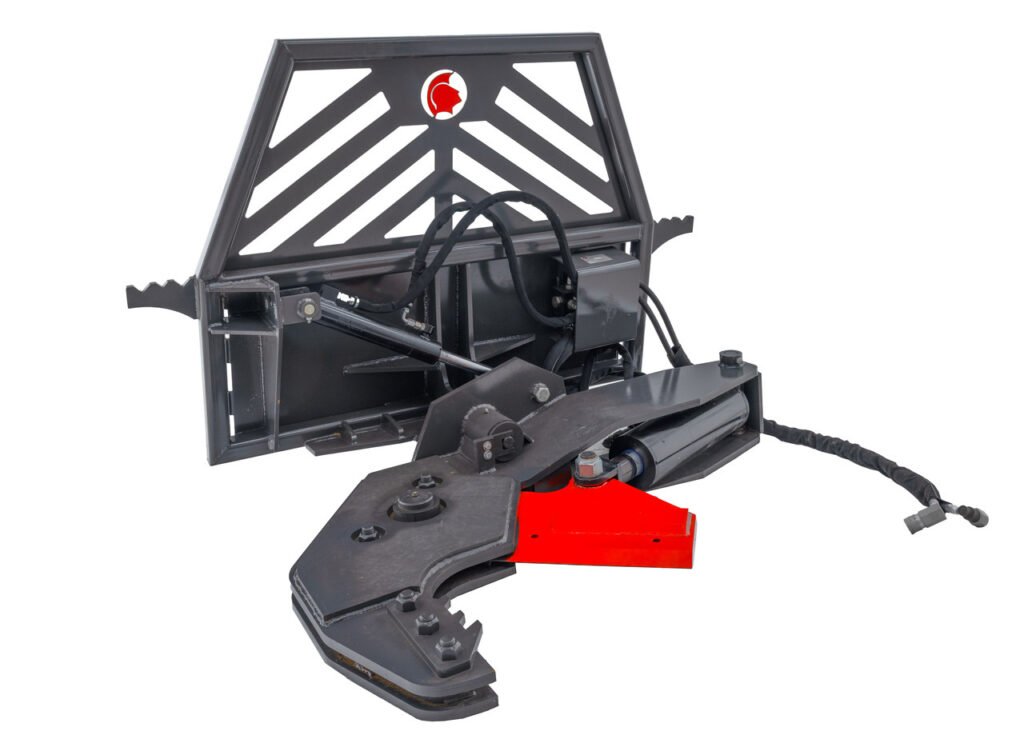
Basically it grabs the tree and cuts it off at the base, clean, from the seat of the machine. You’re not standing next to it. The arms hold the trunk while the blade goes through, so you can lay it down where you want instead of hoping it falls that way. Then you carry it off or stack it right there.
Smaller diameter trees go quick. Bigger stuff takes more patience and you’ll want to size the shear to the trees you actually see in your area, not the biggest one in the catalog. And leaners, the ones that scare everybody, become a lot more manageable when you can grip them first.
Where It Beats a Saw Crew, and Where It Doesn’t
Be honest with yourself here. A shear isn’t going to do everything. Tight spots right up against a house, delicate pruning, climbing work, that’s still a saw and a skilled guy. But for clearing downed or standing trees along roads, fence lines, ditches and open ground, the shear wins on speed pretty easy.
One operator with a shear can move more wood than a small crew, and he’s not wiped out by lunch. That matters when you’ve got twenty calls stacked up and a limited number of daylight hours.
Who’s Actually Buying These
Storm cleanup contractors are the obvious ones, but it goes wider. Farmers use them on fence rows and windbreak thinning, and after a blowdown they’re glad to have one. Landscapers grab one for lot clearing and removing unwanted trees before a build. Municipal crews and government buyers use them for roadsides and right-of-ways, where speed and crew safety both count, and where waiting on a contractor can leave a road closed longer than anyone likes. Plenty of regular equipment owners with acreage are buying too, mostly so they’re not stuck after the next big wind.
Matching It to Your Machine
This is where people mess up. Check your skid steer’s hydraulic flow and pressure against what the shear needs, and check your lift capacity too, because a heavy attachment with a heavy trunk in it can get tippy fast. Don’t assume it’ll just work because the plate fits.
If you’re building out a lineup, a tree shear belongs on any list of the best skid steer attachments for storm work, right next to a good grapple and a sturdy bucket. Those three together handle a lot of what comes after a storm. Cut it, grab it, haul it. Spartan Equipment builds their attachments tough for exactly this kind of ugly, repetitive work, so you’re not babying gear when the pressure’s on.
Keeping It Running, and Staying Safe
Blades get dull and you’ll feel it, cuts get ragged and the machine strains. Check the cutting edge before each job, grease the pivots, look over hoses and fittings. Ten minutes in the yard beats an hour of downtime on a job site with the customer watching.
Safety stuff is simple but people skip it. Keep everyone well back, watch for power lines always, and never assume a tree is stable just because it looks calm. Storm timber moves in ways you don’t expect.
Does the Money Make Sense?
If you do storm work even a few times a year, usually yes. You’re cutting labor hours, getting more jobs done per day, and reducing the injury risk that can sink a small outfit. It also isn’t a one-season purchase. Same attachment works for land clearing and lot prep the rest of the year, so it earns when the weather’s calm too.
Wrapping It Up
Storm work isn’t going away, and customers aren’t getting more patient. Crews that can clear trees faster and with fewer people on foot are the ones getting repeat calls. A skid steer tree shear won’t solve everything, but for a lot of jobs it’s a smart way to work faster without piling on risk or headcount.
If you’ve been eyeing one, and you’re adding to your best skid steer attachments list before winter, Spartan Equipment is running 25% OFF SITEWIDE with code DIESEL25 right now. Worth grabbing before the next storm decides for you.