Choosing the right Ethernet cable is an important part of building a reliable and safe network. Whether you are installing a network in an office, school, commercial building, or home, understanding cable ratings can help you make the right decision. One common question among installers and businesses is cat5e cable plenum vs non plenum. Although both cable types can support network connectivity, they differ in jacket materials, fire and smoke performance, installation suitability, and cost. In the USA, TS Cables offers networking cable solutions for different applications, making it important for buyers to understand which cable type fits their project requirements.
What Is Cat5e Plenum Cable?
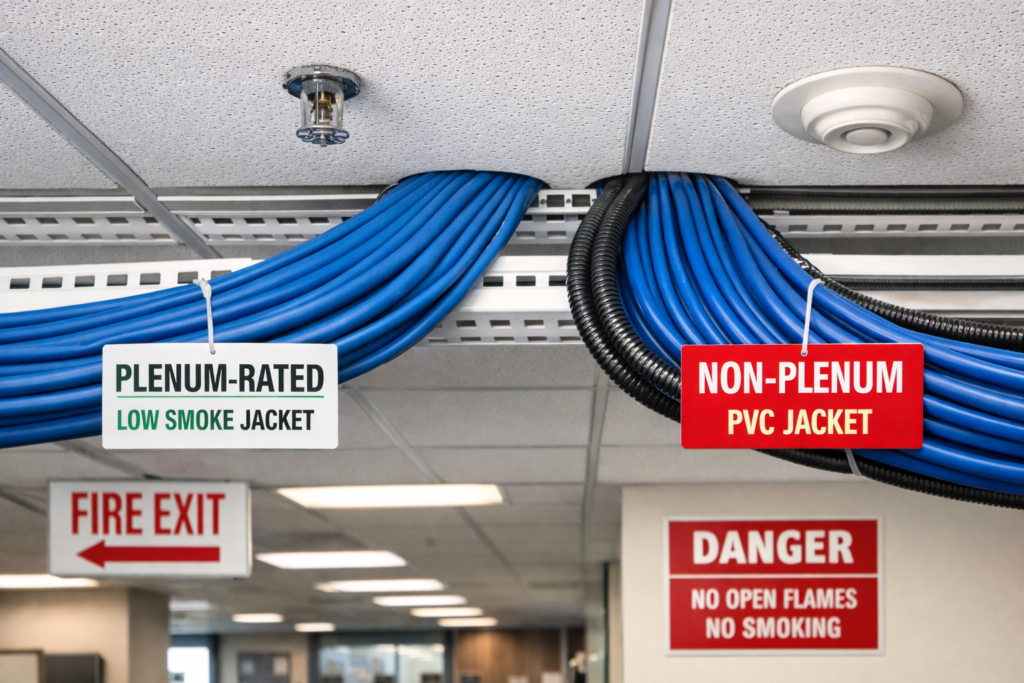
Cat5e plenum cable is a Category 5e Ethernet cable designed with a jacket that meets specific fire and smoke performance requirements for use in qualifying plenum spaces. These spaces are typically areas within buildings used to circulate environmental air, such as certain spaces above suspended ceilings or beneath raised floors.
In the USA, plenum-rated communications cables commonly carry the CMP classification. These cables are designed to meet applicable flame-spread and smoke-generation requirements for their intended installation environments.
Cat5e plenum cable supports Gigabit Ethernet at speeds of up to 1 Gbps over a compliant channel of up to 100 meters. It is commonly used for network connections involving computers, printers, wireless access points, and other compatible Ethernet devices.
For commercial installations, choosing the correct plenum rating helps address building fire-safety requirements and supports compliance with applicable codes.
What Is Non-Plenum Cat5e Cable?
Non-plenum Cat5e cable is a general description for Cat5e cable that does not have a plenum rating. It may include riser-rated cable, commonly marked CMR, or general-purpose cable, depending on its specific listing and construction.
These cables can provide similar Cat5e networking performance when their electrical specifications are comparable. The primary difference is the cable’s fire and smoke rating and the environments in which it is permitted to be installed.
For example, riser-rated Cat5e cable is designed for qualifying vertical runs between floors. General-purpose cable is suitable only for locations permitted by its specific rating and applicable codes.
Non-plenum cable is often less expensive than comparable plenum-rated cable. However, it should not be used in a plenum space unless the product’s listing and applicable regulations specifically permit that use.
Cat5e Cable Plenum vs. Non-Plenum: Key Differences
Understanding the differences between these cable types can help contractors, business owners, and homeowners select a suitable product.
1. Fire and Smoke Performance
The most important difference is fire and smoke performance.
Plenum-rated Cat5e cable is designed to meet specific flame-spread and smoke-generation requirements for qualifying environmental air-handling spaces. This is important because smoke can spread through building air circulation systems.
Non-plenum cable may not meet the same requirements. Its suitability depends on whether it is riser-rated or carries another recognized listing.
2. Cable Jacket Materials
Plenum cables commonly use jacket materials selected to meet the required fire and smoke performance standards. Non-plenum cables may use different jacket materials suited to their intended installation environments.
The precise material depends on the product, so buyers should check the manufacturer’s specifications instead of relying on appearance alone.
3. Installation Locations
Plenum-rated Cat5e cable is intended for qualifying plenum spaces when required by the applicable code.
Riser-rated cable is intended for qualifying vertical pathways between floors. General-purpose cable may be used in other permitted locations according to its listing.
Selecting the correct rating depends on the building layout, cable pathway, and local requirements.
4. Purchase Price
Plenum-rated cable generally costs more than comparable non-plenum cable because of its jacket construction and performance requirements.
Non-plenum cable may offer a lower upfront cost for installations where its rating is permitted. However, selecting a cable based only on price can lead to compliance problems and expensive replacement work.
5. Network Performance
Both plenum and non-plenum Cat5e cables can support Gigabit Ethernet when they meet the appropriate electrical performance specifications and are installed correctly.
The plenum rating does not automatically make a cable faster. It primarily relates to fire and smoke performance rather than network speed.
When Should You Choose Cat5e Plenum Cable?
Plenum-rated cable is an appropriate choice when the installation route requires a cable with a CMP listing.
Common examples include qualifying air-handling spaces above suspended ceilings or beneath raised floors. These spaces may be used to circulate return air throughout a building.
Commercial offices, educational institutions, healthcare facilities, and other large buildings may have installation areas where plenum-rated cable is required.
Before purchasing, installers should inspect the building plans and confirm the applicable electrical and building codes. The exact requirements can vary depending on the space, building design, and adopted regulations.
Choosing plenum-rated Cat5e cable where required helps support fire-safety compliance and reduces the risk of needing to replace incorrectly rated cable later.
When Is Non-Plenum Cat5e Cable Suitable?
Non-plenum cable may be appropriate when the installation location does not require a plenum rating and the cable’s specific listing permits its use.
For example, riser-rated Cat5e cable can be suitable for qualifying vertical cable runs between floors. Other general-purpose cable may be used in permitted residential or commercial locations, depending on its rating and the applicable code.
Home networks, office installations, and small business projects may use non-plenum cable when the planned cable route allows it.
However, not every ceiling cavity is a plenum space, and not every ceiling installation permits general-purpose cable. Buyers should confirm the actual installation requirements before making a decision.
Benefits of Choosing the Right Cat5e Cable
Selecting the correct cable rating provides several practical advantages.
Improved fire-safety planning: Using a cable with the required listing helps address the fire and smoke requirements associated with its installation location.
Reliable network connectivity: Properly specified Cat5e cable supports Gigabit Ethernet and common networking applications.
Better cost management: Selecting the appropriate cable from the beginning can help avoid unnecessary spending on unsuitable products or replacement work.
Simplified maintenance: Correct cable selection, labeling, and documentation make future troubleshooting and network upgrades easier.
Support for building compliance: Following applicable installation standards helps contractors and building owners meet project requirements.
How to Choose the Right Cable for Your Project
When comparing cat5e cable plenum vs non plenum, consider these important factors before purchasing.
First, identify where the cable will be installed. Determine whether the route passes through a plenum space, a qualifying riser pathway, or another type of location.
Second, verify the cable’s rating. Look for appropriate product markings, such as CMP for plenum cable or CMR for riser cable, and review the manufacturer’s documentation.
Third, consider the network’s performance requirements. Cat5e generally supports Gigabit Ethernet over a compliant 100-meter channel. Confirm that the selected cable is suitable for the intended application and equipment.
Fourth, evaluate the total installation cost. Compare cable prices alongside connectors, termination hardware, labor, and future maintenance needs.
Finally, use qualified installers when necessary and ensure the completed cabling system is installed and tested according to applicable standards.
Why Consider TS Cables in the USA?
For businesses, contractors, and property owners in the USA, TS Cables is one option to consider when comparing Ethernet cabling solutions for residential and commercial installations.
When evaluating Cat5e products, buyers should review cable specifications, conductor material, jacket rating, available lengths, and relevant compliance documentation. For installations in air-handling spaces, it is particularly important to verify that the selected cable carries the required plenum listing.
TS Cables can be considered as part of the product-selection process for projects that need dependable network connectivity. Choosing a cable based on the installation environment rather than price alone helps ensure that the selected product meets the project’s technical and safety requirements.
Conclusion
Understanding cat5e cable plenum vs non plenum is essential when planning a safe and reliable Ethernet installation. Both cable types can support Gigabit Ethernet, but their jacket construction and fire and smoke ratings determine where they can be used.
Plenum-rated Cat5e cable is designed for qualifying environmental air-handling spaces, while non-plenum cable may be suitable for riser pathways or other permitted locations depending on its specific rating. The correct choice depends on the building layout, installation route, local codes, and project specifications.
For customers in the USA, TS Cables is one option to consider when comparing networking cable products. By verifying cable ratings, reviewing technical specifications, and following proper installation practices, businesses and homeowners can establish reliable networks while meeting applicable fire-safety requirements.