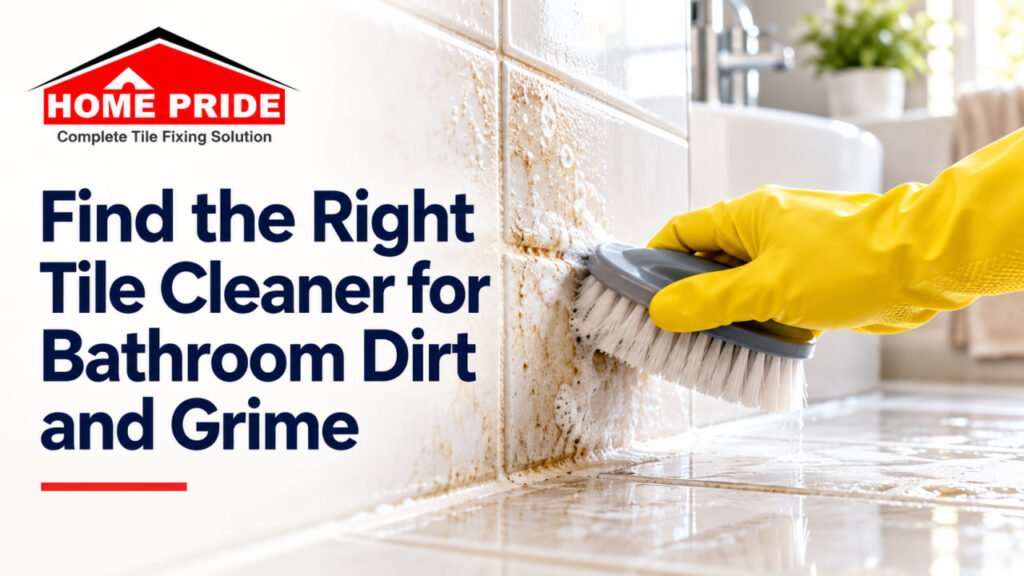
Bathroom tiles face daily exposure to soap, shampoo, body oils, moisture, and muddy footprints. Over time, these leave dull patches, cloudy deposits, and dirt along grout lines. When ordinary mopping stops working, choosing the right tile cleaner for bathroom surfaces becomes more useful than scrubbing harder.
The right cleaner matches both the stain and the surface. Everyday grime, hard water deposits, and mould require different approaches. Tile material, grout condition, and product instructions also matter.
Whether you are considering Home Pride or comparing other options, this guide explains what to check before buying and how to clean effectively without damaging your bathroom.
What Makes Bathroom Tiles Look Dirty?
Identifying the buildup helps you choose a suitable tile cleaner and avoid unnecessary repeat cleaning.
Soap Scum and Body Oils
Soap residue combines with oils and minerals to form a cloudy or greasy film. It commonly collects around shower walls, bathing areas, and soap holders. Look for a product labelled for soap scum and compatible with your tiles.
Hard Water Deposits
White, chalky marks near taps and shower areas often indicate hard water stains. These mineral deposits may need a compatible limescale remover rather than an everyday floor cleaner. However, a descaling formula is unsuitable for some surfaces, particularly acid-sensitive stone.
Grout Dirt and Persistent Dark Patches
Grout joints collect residue that a flat mop may miss. Dark patches can indicate trapped dirt, staining, or mould; colour alone does not confirm the cause.
For mould on hard surfaces, the EPA recommends cleaning with detergent and water and drying completely. Fixing leaks and controlling moisture are essential to prevent recurrence.
How to Choose a Tile Cleaner for Bathroom Surfaces
1. Identify Your Tile Material
Check whether your bathroom has ceramic, porcelain, marble, limestone, or another surface. Do not assume a cleaner suitable for one material works safely on every other material.
For natural stone, choose a product specifically approved for the stone concerned. The Natural Stone Institute recommends neutral cleaners or suitable mild cleaning solutions and warns that acidic products can etch acid-sensitive stone. Vinegar and lemon are therefore poor default choices for marble bathrooms.
Also check compatibility with grout, sealants, decorative borders, and nearby metal fittings.
2. Match the Formula to the Problem
A routine maintenance cleaner may handle fresh dirt but struggle with established mineral deposits. Equally, using a specialist descaler for every cleaning session may be unnecessary.
Before selecting Home Pride, read the particular product’s intended uses. Check whether its label covers everyday grime, soap scum, or mineral deposits rather than assuming one formula addresses everything.
3. Read Dilution and Application Instructions
Some products are ready to use; others require dilution. Follow the stated ratio and application method.
A stronger mixture is not automatically more effective. Excess cleaner can leave residue, waste product, and create additional rinsing work. Likewise, do not invent a soaking time: use the manufacturer’s directions.
4. Compare Practical Value
Bottle price alone does not show cleaning value. Consider:
- Cost per use at the recommended dilution.
- Suitability for your bathroom’s surfaces.
- Clear directions and safety information.
- Ease of application and rinsing.
- Availability of suitable pack sizes.
When comparing Home Pride with alternatives, these details provide a more useful basis than fragrance or broad shine claims.
Which Cleaner Fits Your Bathroom Problem?
| Bathroom problem | What to look for | What to check first |
| Everyday dirt and footprints | Routine maintenance cleaner | Tile compatibility and dilution |
| Cloudy soap film | Soap-scum cleaning formula | Suitability for tiles and fittings |
| White mineral deposits | Compatible limescale remover | Restrictions for stone, grout, and metals |
| Dirty grout lines | Grout-compatible cleaner | Joint condition and brush suitability |
| Repeated mould patches | Appropriate cleaning and moisture control | Leaks, ventilation, and damaged sealant |
A tile cleaner for bathroom maintenance should solve the problem you actually have. If the stain remains unidentified, test cautiously rather than moving immediately to a harsher product.
How to Clean Bathroom Tiles Effectively
A consistent method helps the cleaner work and makes missed areas easier to spot.
- Remove loose debris. Pick up hair and sweep away grit before wet cleaning.
- Ventilate the bathroom. Open a window or use the exhaust fan.
- Prepare the product correctly. Follow its dilution and protective-equipment instructions.
- Test a hidden area. Check for changes in colour, gloss, or texture.
- Work in manageable sections. Apply only as directed.
- Allow the specified working time. Avoid letting the product dry unless instructed.
- Agitate gently. Use a suitable soft brush or non-scratch pad, paying attention to grout.
- Rinse as directed and dry. Remove residue and leave the floor safe to walk on.
If using Home Pride, follow the instructions on that specific pack rather than borrowing directions from another cleaner.
Never mix cleaning products. The CDC warns that mixing bleach or disinfectants with other cleaners can release dangerous vapours. Keep products in their original containers and follow ventilation and protection instructions.
Cleaning Mistakes That Can Make Tiles Worse
Avoid metal scrubbers and abrasive powders unless the surface manufacturer explicitly permits them. A stubborn mark does not justify risking permanent scratches.
Do not use toilet cleaner on bathroom floors simply because it removes stains inside a toilet bowl. Its intended application does not establish compatibility with tiles, grout, or fixtures.
Also, distinguish cleaning from disinfecting. Removing visible dirt does not prove that a product disinfects. If disinfection is needed, choose a product labelled for that purpose and follow its specified contact time.
Finally, recognizing when cleaning cannot solve the issue. Etched stone, worn finishes, cracked grout, and deeply stained sealant may need repair or professional assessment.
How to Evaluate the Best Tile Cleaner Company in India
If you are searching for the best tile cleaner company India, start with evidence rather than ranking claims. A useful supplier provides clear surface guidance, application instructions, safety information, and accessible customer support.
For Home Pride or any shortlisted brand, ask whether the particular product suits your tile material and main cleaning problem. Treat unsupported promises such as “safe for every surface” cautiously.
Choose a small suitable pack first when practical. Assess cleaning results, rinsing effort, and the dried finish before committing to a larger purchase.
FAQs
1. Which tile cleaner is best for bathroom tiles?
The best option depends on your tile material and stain type. Choose a surface-compatible maintenance cleaner for routine dirt and a suitable specialist product for mineral deposits. Check grout and fitting compatibility too.
2. How do I remove hard water stains from bathroom tiles?
Confirm that the marks are mineral deposits, then use a limescale remover approved for your surface. Follow application directions and rinse properly. Avoid acidic descalers on acid-sensitive stone unless specifically approved.
3. Can I use a tile cleaner on bathroom grout?
Only when the label confirms compatibility. Use a gentle brush and avoid aggressive scrubbing on cracked or deteriorating joints. Persistent discolouration may require assessment rather than repeated chemical treatment.
4. How often should bathroom tiles be cleaned?
Base frequency on bathroom use and visible buildup. Remove standing water after bathing and clean frequently used areas regularly. Address fresh residue early instead of allowing thick deposits to develop.
5. Is Home Pride suitable for every bathroom tile?
Check the specific product label before use. Suitability depends on the formula, tile material, grout, and finish. Confirm compatibility and test a concealed area before applying it across the bathroom.