A small water stain on the ceiling rarely looks urgent. Then it spreads, the paper starts to bubble, and a soft spot forms where the drywall used to be firm. Most homeowners and property managers know this moment well.
Choosing a Trusted Drywall Contractor in Raleigh, NC starts with understanding what good drywall work looks like. Once you can spot the difference between a solid repair and a quick cover-up, it gets much easier to decide when to handle a job yourself and when to call in experienced help.
This guide covers the signs of quality repair work, the situations that usually call for a professional, and a few real-world examples worth keeping in mind.
Why Drywall Repairs Deserve a Closer Look
Drywall seems simple. It’s gypsum board, tape, and joint compound. But the gap between an average repair and a great one is wider than most people expect.
A poor patch might look fine for a few weeks. Then the edges crack, the seams show through the paint, or a faint outline appears whenever light hits the wall at an angle. These flaws tend to show up at the worst times, like right before a home sale or a new tenant’s move-in date.
Climate matters too. Humid summers and cooler, drier winters in central North Carolina cause building materials to expand and contract. Repairs that skip proper taping or use the wrong compound are more likely to fail under these seasonal shifts.
What Quality Drywall Repair Work Looks Like
You don’t need to be a contractor to judge a finished repair. A few simple checks will tell you most of what you need to know.
The Patch Should Disappear
The clearest sign of skilled work is that you can’t find the repair. Run your hand across the area. It should feel flat and smooth, with no ridges, bumps, or dips around the edges.
Next, hold a flashlight close to the wall and shine it sideways. This “raking light” test exposes uneven surfaces quickly. A well-feathered patch blends into the surrounding wall without casting shadows.
The Texture Should Match
Many homes have textured walls or ceilings, such as orange peel, knockdown, or light stipple. Matching texture is one of the hardest parts of drywall work, and it separates experienced pros from beginners.
When texture is off, the repair stands out even after painting. A good contractor will test the spray pattern or hand technique before applying it to the main surface.
The Root Cause Gets Fixed
This point is easy to overlook. A ceiling stain caused by a leaking pipe or roof flashing will come back if only the drywall gets fixed.
Quality work always starts with the question, “Why did this happen?” Reliable contractors look for moisture, check for mold, and recommend a plumber or roofer when needed before closing up the damage.
When It Makes Sense to Hire a Professional
Plenty of small fixes are fine for a confident DIYer. A nail pop or a tiny hole from a picture hook usually needs little more than spackle, sandpaper, and paint.
Larger problems are a different story. Here are some situations where professional help tends to pay off:
- Ceiling damage of any real size, especially after a leak
- Holes larger than a fist, which often need backing or a new section of board
- Cracks that keep coming back, which may point to structural movement
- Textured surfaces that need an exact match
- Rental units or homes for sale, where appearance affects value
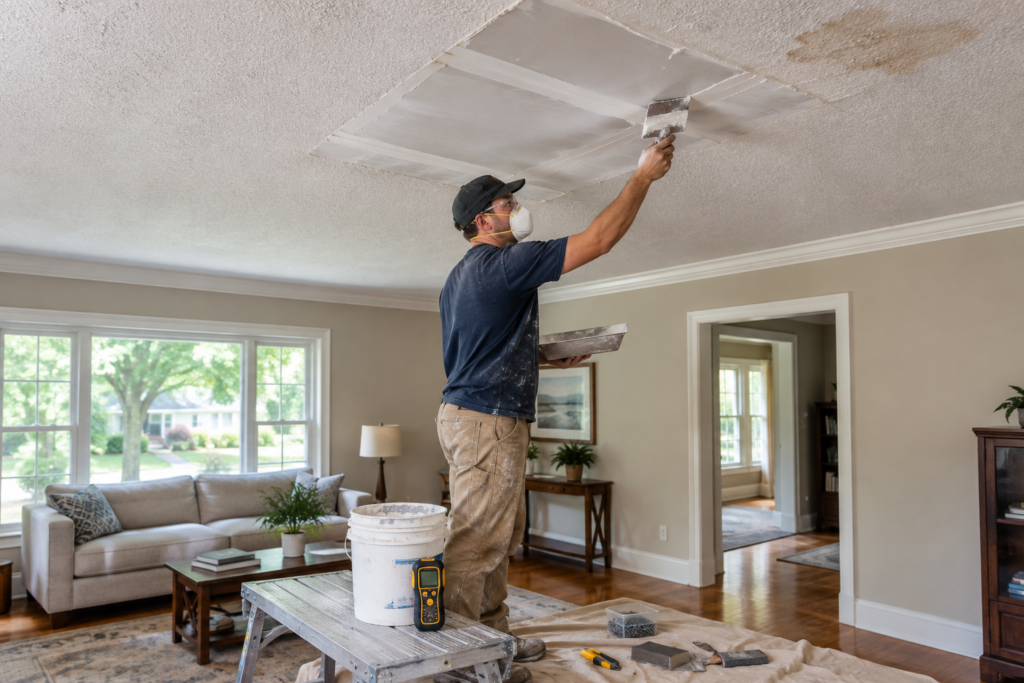
Ceiling work is a common reason people reach out for help. Working overhead is tiring, gravity fights you at every step, and sagging drywall can be heavy and unsafe to handle alone. Drywall ceiling patch repair in Raleigh, NC is often requested after HVAC condensation leaks, upstairs bathroom overflows, or attic roof issues.
The Real Benefits of Experienced Help
The biggest advantage is time. A job that takes a homeowner three weekends of trial and error might take a skilled tradesperson a day or two, with drying time included.
There’s also the matter of a cleaner result. Professionals know how many coats of compound to apply, how long to let each one dry, and how to sand without gouging the paper. These details make a repair last.
Cost savings matter as well, even if that sounds backward. A failed DIY repair often has to be cut out and redone, which means paying for materials twice. Getting it right the first time usually costs less in the long run.
For property managers, reliability counts as much as quality. Having a go-to contractor who shows up on schedule and communicates clearly can keep unit turnovers on track and tenants happy.
Real-World Examples Worth Learning From
Consider a homeowner whose upstairs toilet leaked overnight. By morning, the kitchen ceiling below had a brown ring about two feet wide. A quick coat of stain-blocking paint might hide it for a while. But the drywall may already be soft, and trapped moisture can lead to mold. In this case, cutting out the damaged section, drying the space, and installing new board is the safer path.
Now picture a property manager preparing a townhouse for a new tenant. The walls have dozens of anchor holes, a doorknob dent, and a long crack above a closet door. None of these issues is serious alone. Together, they make the unit look worn. A single professional visit can address everything at once and leave the walls ready for fresh paint.
Then there’s the family that bought an older home with popcorn ceilings. After removing a light fixture, they found a gap that needed patching. Matching that dated texture is tricky. Many local specialists, including teams like Very Handy Wall and Ceiling Repairs, handle these blends regularly because older homes in the area often have them.
How to Vet a Contractor Before You Hire
Finding the right person takes a little homework. Start by asking for photos of past repairs, especially jobs similar to yours. Close-up shots of finished patches tell you far more than a polished website.
Reviews help, but read them carefully. Look for comments about cleanup, communication, and whether the repair held up over time. Those details reveal more than a simple star rating.
It’s also smart to ask a few direct questions:
- Do you check for the source of water damage before repairing?
- How do you match existing wall or ceiling texture?
- Is painting included, or should I plan for that separately?
- Do you carry liability insurance?
A trusted drywall contractor in Raleigh, NC should answer these questions clearly and without pressure. Vague replies or rushed quotes are worth noting.
Key Takeaway
Good drywall work is invisible, durable, and addresses the real cause of the damage. Small cosmetic fixes are often manageable on your own. Ceiling damage, large holes, recurring cracks, and textured surfaces usually benefit from skilled hands.
Before your next repair, run the hand and flashlight tests on any past patches in your home. They’ll show you exactly what level of quality to expect, and what to ask for when you bring in a Trusted Drywall Contractor in Raleigh, NC.
Frequently Asked Questions
How much does drywall ceiling patch repair in Raleigh, NC typically cost?
Costs depend on the size of the damage, ceiling height, and texture matching needs. Small patches are usually affordable, while larger water-damaged areas that need new board, drying, and painting cost more.
Can I paint over a water stain on my ceiling?
You can, but only after the leak is fixed and the drywall is fully dry and firm. If the area feels soft or sags, the damaged section should be replaced rather than painted.
How long does a drywall repair take to complete?
Small repairs can be finished in a day. Larger jobs often take two to three days because each coat of joint compound needs time to dry before sanding and painting.
Why do my drywall cracks keep coming back?
Recurring cracks often come from seasonal house movement, settling, or poor original taping. A lasting fix usually involves re-taping the joint properly instead of just filling the surface crack.