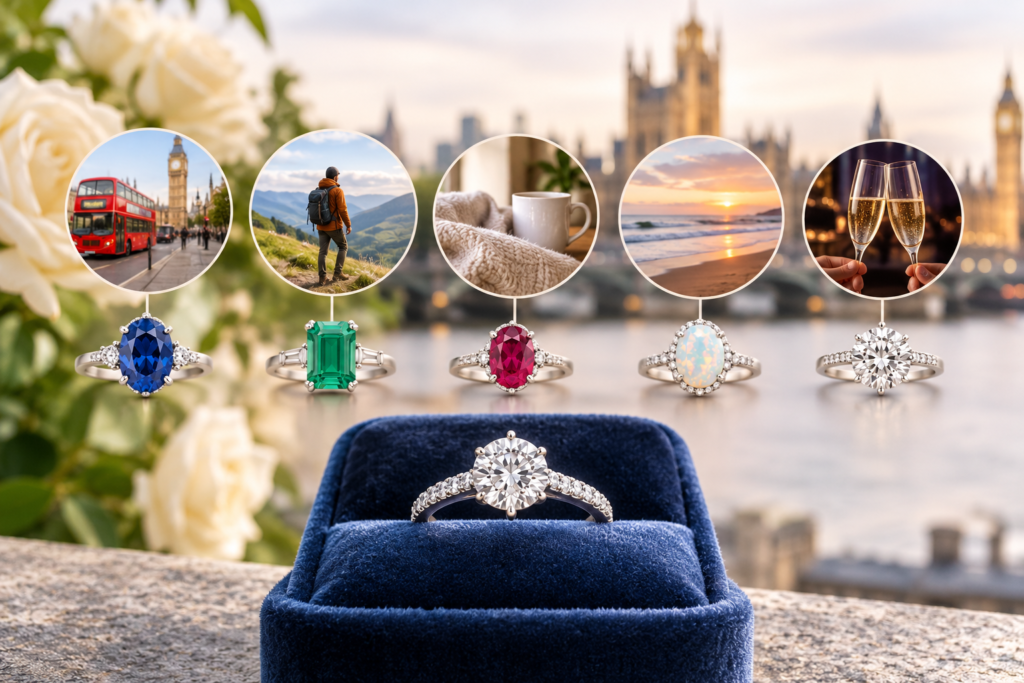
Search for engagement rings in the UK and you’ll have plenty of options and suggestions regarding the diamonds, carats and clarity charts. What rarely gets asked is the question that matters most: what do your hands actually do all day? A ring that looks perfect under shop lighting can look tired within a year if it’s not according to your job, your hobbies or your commute. The short answer is to match the stone’s toughness to your routine first, then choose the colour you love.
This guide covers four popular coloured gemstones, where each one shines, and where each needs a little more care.
How Do You Choose an Engagement Ring Stone to Suit Your Lifestyle?
Choose by routine before colour. Work out how much your hands knock, grip and get wet each day, then pick a gemstone with matching toughness. Hardness is measured on the Mohs scale, where diamond scores 10. For daily wear, stones scoring 8 or above need the least fuss, while softer ones need a little extra care.
Start with hardness, not colour
The Mohs scale ranks minerals by scratch resistance from 1 to 10. It was devised by the German mineralogist Friedrich Mohs in 1812, and gemmologists still use it today. Blue sapphire scores 9. Topaz scores 8. Aquamarine sits at 7.5 to 8, and amethyst, a type of quartz, scores 7.
Why does a single point matter? Quartz is one of the most common minerals in everyday grit and dust, so a stone rated 7 can pick up fine surface scratches over years of wear. Harder stones shrug that off for much longer.
Hardness isn’t the full picture, though. Toughness, meaning resistance to chipping or splitting, counts too. A very hard stone can still chip if it takes a sharp knock on a vulnerable edge.
Be honest about your week
List the three things your hands do most. Typing, driving and cooking are gentle. Gardening in Surrey clay, lifting weights, or working as a nurse who washes her hands thirty times a shift are risky.
A teacher or office worker might happily wear a blue topaz engagement ring every day, provided the setting sits low and secure. Someone who climbs every weekend should probably choose the toughest stone available or leave the ring at home on climbing days. Neither choice is wrong. It’s a trade-off, and it’s far better made before buying than after the first chip.
Which Gemstones Cope Best with Everyday Wear?
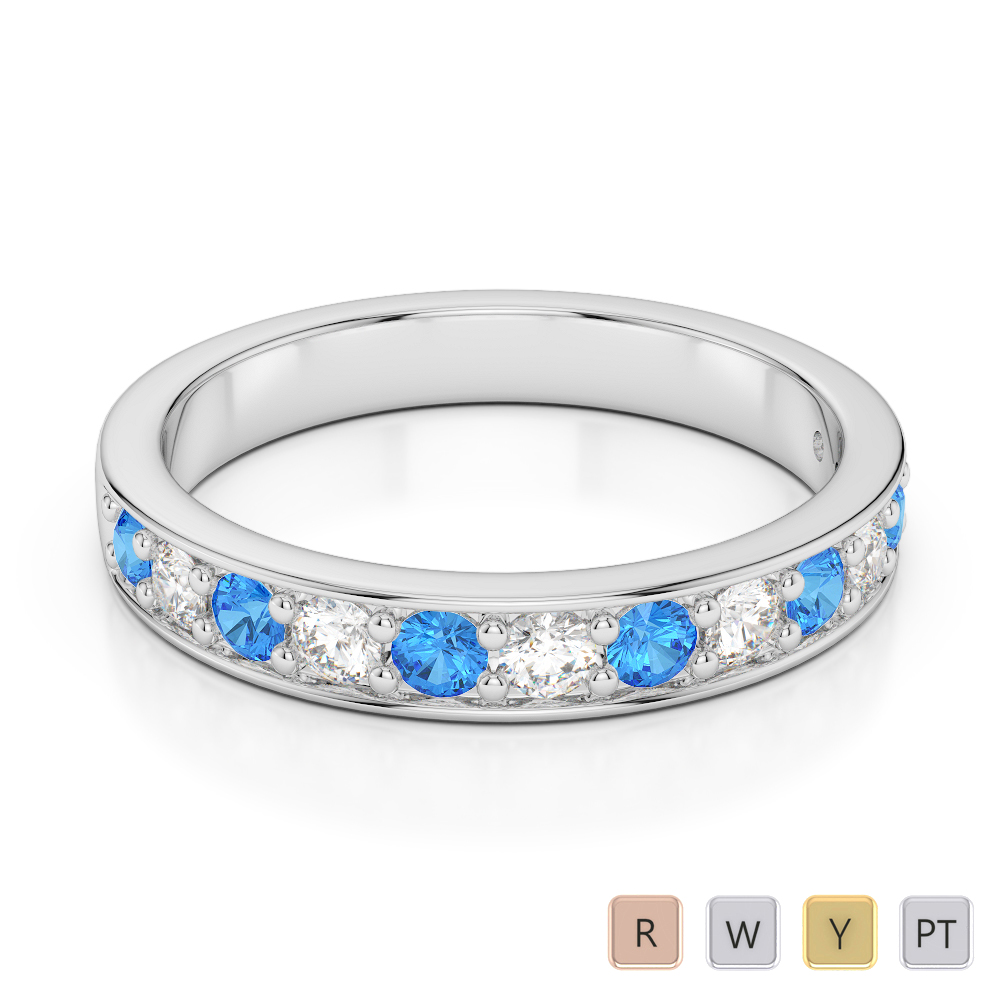
Blue sapphire copes best, thanks to its Mohs rating of 9 and excellent toughness. Blue topaz and aquamarine are solid second choices for most routines, provided the setting protects the stone. Amethyst is the softest of the four and suits gentler habits. No coloured stone is indestructible, so setting and care matter as much as the gems themselves.
Blue sapphire: the sturdy all-rounder
Blue sapphire is a variety of corundum, the same mineral family as ruby. At 9 on the Mohs scale, it’s second only to diamond, which explains why it has been a ring stone for centuries. A blue sapphire engagement ring is more suitable for commuting, typing, cooking, and the occasional accidental bump against a door frame than any other coloured option here.
Britain knows the sapphire engagement ring better than most. The sapphire engagement ring chosen by Princess Diana in 1981, a 12-carat oval stone surrounded by diamonds and supplied by Garrard, is now worn by Catherine, Princess of Wales.
Shade is where your choice comes in. Cornflower blues look light and airy, while deep navy reads more formal and hides small marks better. One honest caveat: most sapphires are heat-treated to improve their colour. That’s accepted trade practice, but it should always be disclosed.
Blue topaz and aquamarine: Lovely options, but come with conditions
Blue topaz is popular because it offers a big, clear colour at a reasonable price. Most of it gets its colour from treatment, usually irradiation followed by heat.
Topaz also has perfect cleavage, which is a weak direction along which it can split under a sharp blow. A blue topaz engagement ring therefore wants a secure, low-profile setting rather than a tall, exposed one.
Aquamarine is a form of beryl, the family that also includes emerald. The name comes from the Latin for seawater, and good stones do look like calm shallows. They tend to be cleaner than emerald, with fewer visible inclusions. Pale blues look washed out when small, though, so aquamarine engagement rings usually look best with a bit of size behind them.
Is Amethyst a Sensible Choice for an Engagement Ring?
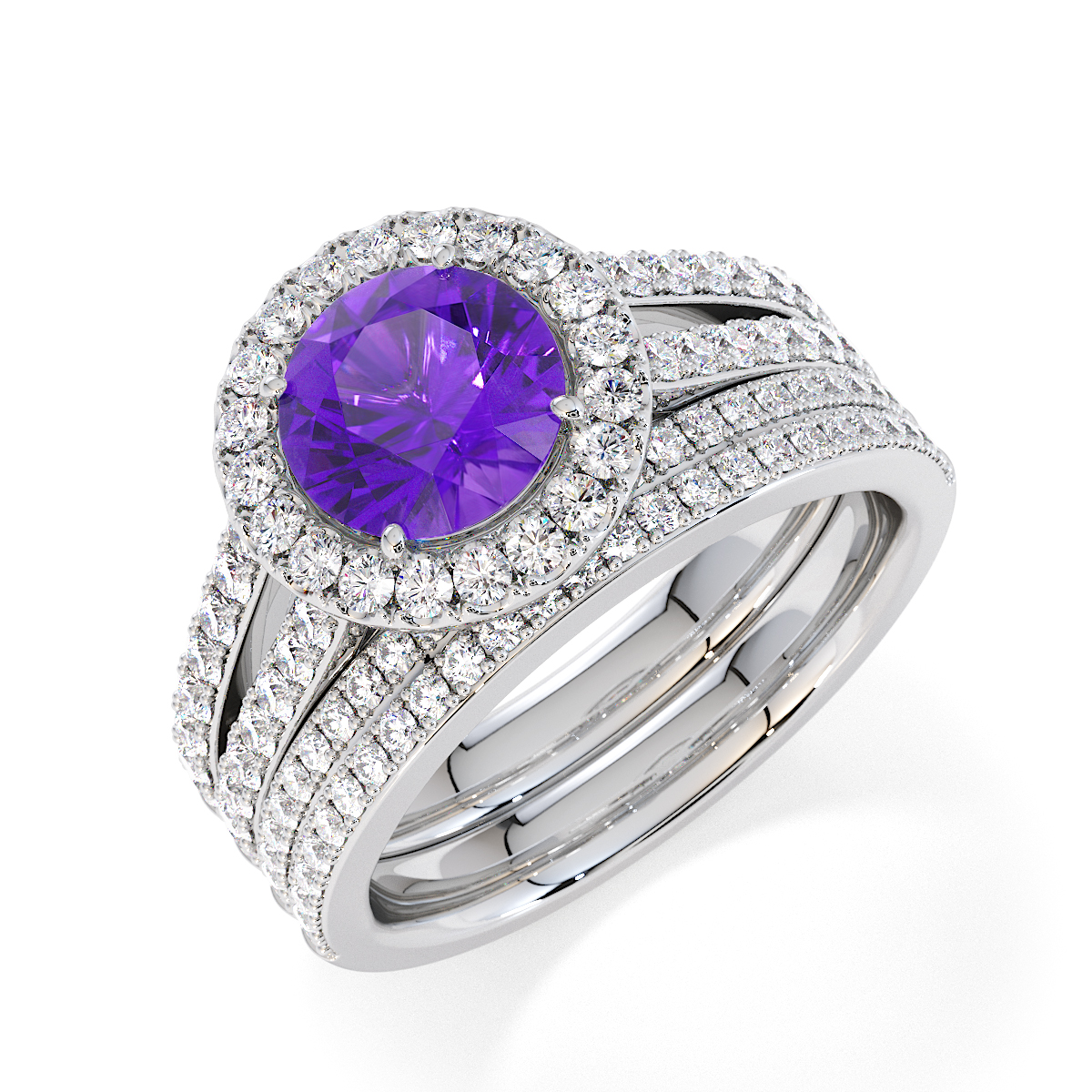
Yes, if you’re realistic about wear. Amethyst scores 7 on the Mohs scale, so it can pick up fine scratches over time. It suits office work, light daily use and anyone happy to remove the ring for rough tasks. Its purple, from soft lilac to deep violet, gives a lot of colour for the price.
Amethyst is the purple variety of quartz. It’s widely available, usually clean to the eye, and rarely treated in ways that cause concern, which makes it one of the more straightforward coloured stones to buy.
Where amethyst works best
Amethyst engagement rings make particular sense for people with desk-based or lighter routines and for anyone who wants a ring that’s clearly different from the usual. Deep purples look rich in white gold or platinum and a touch rosier in rose gold. The colour can lighten if the stone sits in strong sunlight for long periods, so keep it off sunny windowsills.
Where it needs more thought
If you’re set on amethyst engagement rings but have a hands-on job, think about wearing the ring only outside work hours. Alternatively, pick a different stone.
How Do You Match Colour, Metal and Setting to Your Style?
Hold the stone against your skin in daylight, not shop lighting. Cool blues and purples tend to flatter in white metals, while rose gold adds warmth and softens deeper shades. Then choose a setting that fits your habits: solitaires are simple and straightforward to clean, while three-stone rings spread the visual weight.
Skin tone and metal
Walk to a window and look properly. A blue sapphire engagement ring in platinum looks crisp and cool, while the same stone in rose gold turns warmer and more vintage. Aquamarine engagement rings, being paler, pick up more of the metal’s colour than do deeper stones.
Warm skin tones often suit rose gold, while cooler ones lean towards white metals. Treat that as a rule of thumb, not a law. Trust the mirror. Platinum is also denser and usually pricier than white gold, which is worth knowing before you fall for it.
Solitaire or three-stone?
A solitaire puts a single stone in the spotlight. It’s clean, classic and easy to wash, and it lets the colour do all the talking. A three-stone ring adds side stones, often diamonds, that frame the centre gem and bring extra sparkle. The trade-off is a little more cleaning, since grime collects between stones.
Neither is better. It’s about whether you want your colour served plain or with company.
Frequently Asked Questions
-
Can I wear a coloured gemstone engagement ring every day?
Yes, with sensible habits. Sapphire is the toughest option and copes with most routines. Softer stones such as amethyst do better if you remove the ring for gardening, the gym and heavy cleaning. Have the settings checked once a year, because loose claws cause more lost stones than scratches do.
-
Is blue topaz a viable alternative to sapphire?
It’s a good alternative if budget and colour are the most important factors. A blue topaz engagement ring gives a similar look for less money, but it’s softer, scoring 8 against 9, and its colour is usually produced by treatment. A blue sapphire engagement ring costs more but wears harder over decades.
-
How should I clean a coloured gemstone ring?
Soak it in warm water with a few drops of mild washing-up liquid, then brush gently behind the stone with a soft toothbrush. Rinse and dry with a lint-free cloth. Avoid bleach and harsh chemicals. Ask a jeweller before using an ultrasonic cleaner, as not every stone or setting tolerates one.
-
Should I choose a stone because of a birthstone?
Only if it feels meaningful. A birthstone adds sentiment, but daily practicality matters more. If the birthstone is softer than your lifestyle suits, consider setting it low and secure or choosing it for an occasional second ring instead. The colour you love will always outlast a rule you follow.
Summing up
To sum up, the best engagement rings chosen by UK buyers should ideally begin with a genuine assessment of daily life rather than a colour chart. Metal, setting and shade come after that, and they’re matters of taste. Furthermore, try rings on in daylight, consider the wedding band, and be honest about your hands’ weekly activities.
Pick the ring you’d be happy to glance down at every day for decades. Everything else is detail.