Introduction
Organizations across different industries follow international standards to improve quality, safety, environmental performance, and information security. To ensure these standards are properly implemented, businesses need skilled professionals who can evaluate management systems and identify areas for improvement. ISO Lead Auditor Certification provides the knowledge and skills required to plan, conduct, manage, and report management system audits.
This certification is a valuable professional development opportunity for individuals who want to build a career in auditing, compliance, quality management, and consultancy. It helps participants understand ISO requirements and apply auditing principles in real business environments.
What Is ISO Lead Auditor Certification?
ISO Lead Auditor Certification is a professional qualification that demonstrates an individual’s knowledge of auditing management systems against a particular ISO standard. The training focuses on audit principles, planning, execution, reporting, and follow-up activities.
Depending on the selected standard, participants can develop expertise in areas such as quality management, environmental management, occupational health and safety, information security, and food safety.
Common Lead Auditor training programmes include:
- ISO 9001 Lead Auditor – Quality Management System
- ISO 14001 Lead Auditor – Environmental Management System
- ISO 45001 Lead Auditor – Occupational Health and Safety Management System
- ISO 27001 Lead Auditor – Information Security Management System
- ISO 22000 Lead Auditor – Food Safety Management System
- ISO 22301 Lead Auditor – Business Continuity Management System
Key Topics Covered in Lead Auditor Training
A comprehensive ISO Lead Auditor course generally covers the following subjects:
1. Understanding ISO Standards
Participants learn the structure, purpose, principles, and requirements of the selected ISO standard. This knowledge helps them evaluate whether an organization’s management system meets applicable requirements.
2. Audit Planning and Preparation
Auditors learn how to establish audit objectives, define the scope, prepare audit plans, review documentation, and allocate responsibilities among audit team members.
3. Conducting Audits
The training explains how to conduct opening meetings, interview employees, examine records, observe workplace activities, and collect objective evidence.
4. Identifying Nonconformities
Participants learn how to identify gaps between actual practices and standard requirements. They also understand how to document audit findings and communicate nonconformities clearly.
5. Audit Reporting and Follow-Up
The course covers preparing audit reports, conducting closing meetings, evaluating corrective actions, and verifying whether identified issues have been properly addressed.
Benefits of ISO Lead Auditor Certification
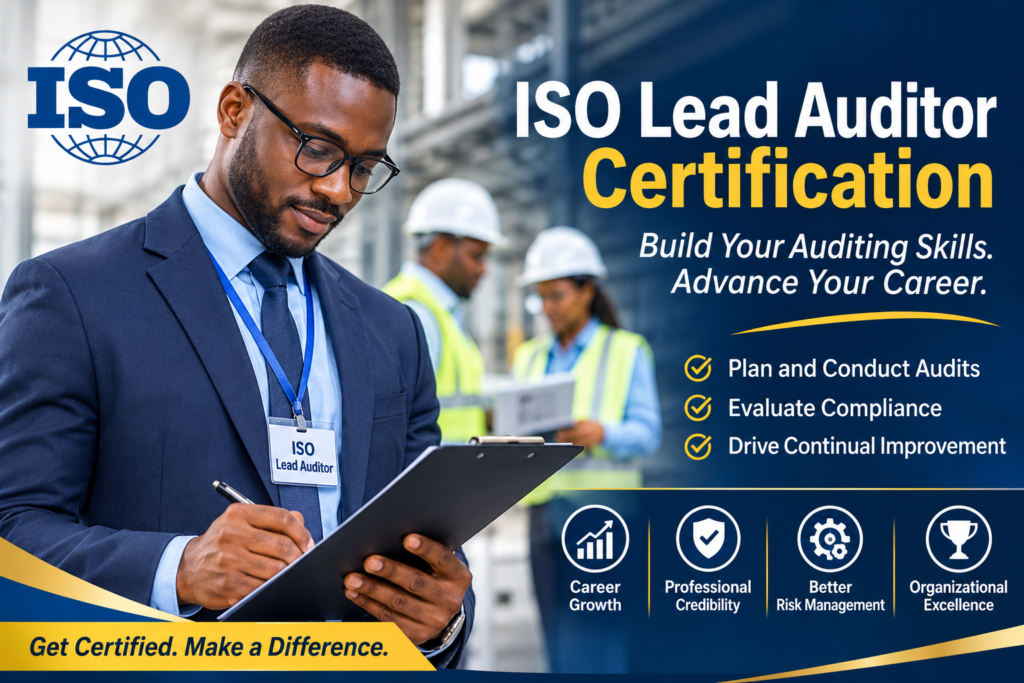
Obtaining ISO Lead Auditor Certification offers several professional and organizational benefits.
- Career Development: It helps professionals develop specialized auditing knowledge and explore opportunities in quality management, compliance, and consultancy.
- Practical Auditing Skills: Participants learn how to plan and conduct systematic audits using established auditing principles.
- Better Risk Awareness: Auditors develop the ability to identify weaknesses, evaluate risks, and recommend improvements.
- Professional Credibility: Recognized training and relevant auditing experience can strengthen professional profiles.
- Organizational Improvement: Skilled auditors help businesses identify process gaps and improve management system performance.
Who Should Attend ISO Lead Auditor Training?
ISO Lead Auditor training is suitable for professionals who want to develop their auditing capabilities. Quality managers, internal auditors, compliance officers, management representatives, consultants, and department heads can benefit from this programme.
It is also useful for individuals working in manufacturing, construction, healthcare, food processing, information technology, logistics, and other regulated industries. A basic understanding of the relevant ISO standard and management system concepts can help participants gain more from the training.
How to Choose the Right Training Provider
Selecting a suitable training provider is important for gaining valuable knowledge and practical auditing experience. Before enrolling, check the course syllabus, trainer qualifications, practical exercises, assessment methods, and certificate recognition.
Participants should also verify whether the programme meets their professional or employer requirements. Training and certification arrangements may differ between providers, so reviewing the course details in advance is recommended.
Conclusion
ISO Lead Auditor Certification helps professionals build the knowledge and practical skills needed to conduct effective management system audits. It improves understanding of ISO requirements, strengthens auditing capabilities, and supports career development across various industries.
By choosing the right Lead Auditor training programme, participants can improve their professional expertise and help organizations maintain effective management systems, meet applicable requirements, and achieve continual improvement.