Food packaging plays a major role in protecting product quality, maintaining freshness, and building customer confidence. For food manufacturers, bakeries, snack producers, and takeaway businesses, Customized Heat Seal Paper offers a practical packaging option that combines sealing performance with brand presentation.
Heat-sealable paper is designed to form a closure when compatible surfaces are exposed to controlled heat and pressure. Depending on its construction, it can help protect products from external exposure and support more consistent packaging operations. When customized with logos, colors, and printed designs, it also helps food brands create a recognizable identity.
What Is Custom Heat Seal Paper?
Heat seal paper is a packaging material designed to bond under specific temperature, pressure, and dwell-time conditions. Its construction may include a heat-sealable coating or layer that allows packaging equipment to create a secure seal.
Custom Heat Seal Paper can be developed in different formats according to product requirements and packaging machinery. It may be used for selected dry foods, snacks, confectionery, and other compatible products.
Its main advantages can include:
- Sealing capability: Helps create closed packaging when matched with suitable equipment.
- Product protection: Can reduce exposure to dust and other external contaminants.
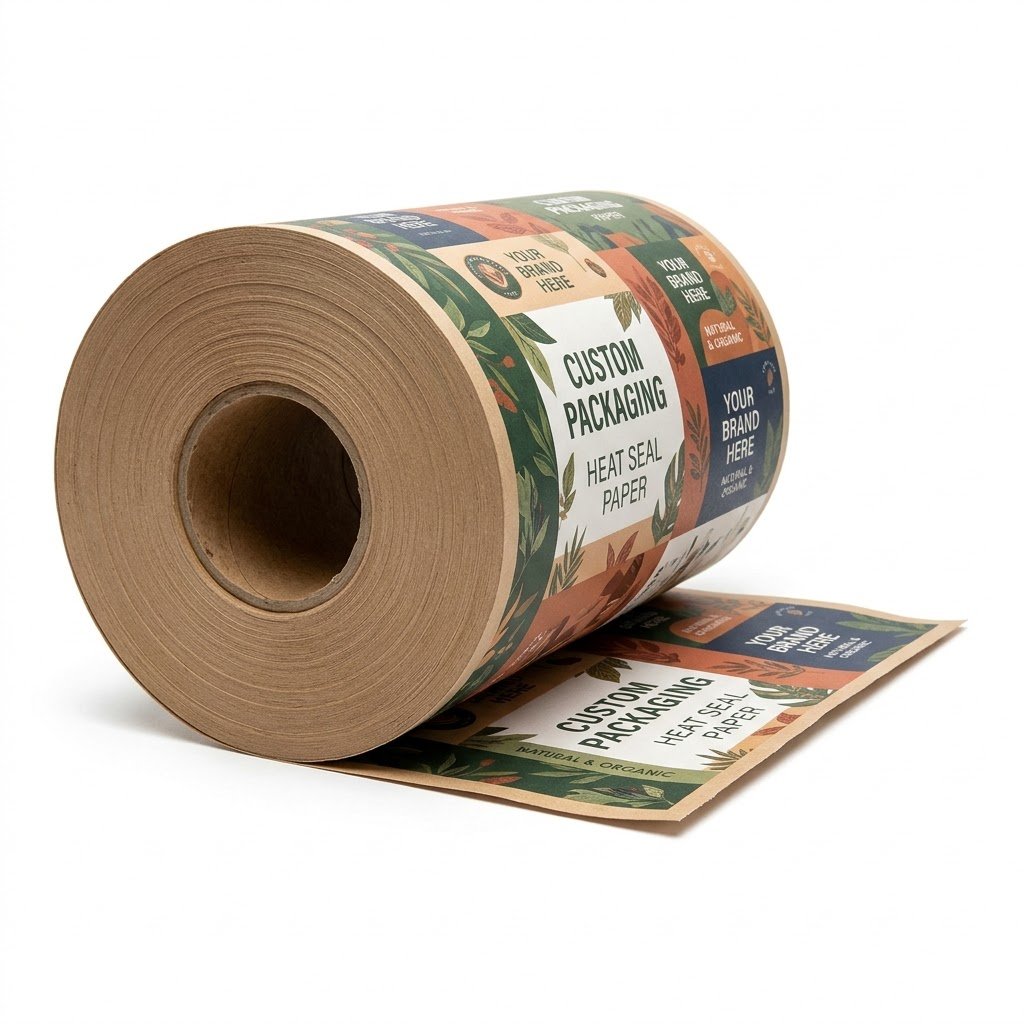
- Flexible formats: Available in suitable sheets or roll formats.
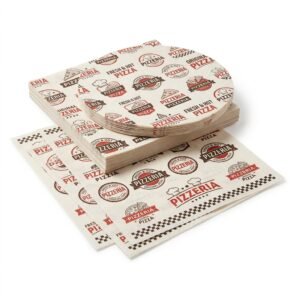
- Branding opportunities: Supports printed logos, colors, and product information.
- Production efficiency: Can integrate with compatible heat-sealing processes.
The actual barrier performance depends on the paper structure, coatings, seal quality, and intended application.
How Heat Seal Paper Helps Maintain Food Freshness
Freshness is a major concern for food businesses. Air, moisture, grease, and handling conditions can affect product quality during storage and distribution. Suitable packaging helps manage these risks and maintain a more consistent customer experience.
Printed Heat Seal Paper can support food packaging operations by combining functional sealing properties with clear product presentation. For example, a snack manufacturer may use compatible heat-sealable packaging to close individual portions before distribution.
Reducing Exposure During Storage and Handling
A properly formed seal helps limit unwanted openings during normal handling. This can support cleaner storage and reduce the risk of accidental product exposure.
However, heat sealing alone does not guarantee extended shelf life. Food brands must consider product sensitivity, moisture levels, storage temperature, packaging barriers, and hygiene procedures. Shelf-life claims should be supported by suitable testing.
Why Custom Printed Heat Seal Paper Matters for Food Brands
Packaging is also a communication tool. Customers often notice the wrapper before they examine the product itself. A consistent design can help a food business appear more professional and recognizable.
Custom Printed Heat Seal Paper allows brands to include:
- Business logos and brand names
- Product varieties and flavor details
- Brand colors and visual patterns
- Handling or storage instructions
- Relevant product information
A snack company, for instance, may use different printed designs for several product flavors while maintaining the same overall brand style. This makes product identification easier and supports consistency across retail shelves.
Custom Printed Papers and Coordinated Food Packaging
Food businesses often use several paper-based packaging components across production, storage, and retail operations. Customized Printed Papers help connect these materials through a consistent visual identity.
Heat-sealable paper can work alongside branded liners, wrapping sheets, inserts, and Custom Printed Boxes. A bakery might use printed heat-seal packaging for selected products and matching boxes for larger orders. A specialty food brand may coordinate its packaging colors and logos across individual packs and shipping materials.
This coordinated approach can improve brand recognition without making packaging unnecessarily complicated. It also helps customers identify products across different sales channels.
Choosing Personalized Heat Seal Paper for Different Products
Different foods require different packaging characteristics. A dry snack may have different barrier needs from a product containing oil or moisture. Therefore, packaging specifications should be selected according to the product rather than appearance alone.
Personalized Heat Seal Paper should be evaluated through several practical considerations:
1. Barrier Requirements
The packaging should match the product’s sensitivity to moisture, oxygen, grease, and other environmental factors. Suppliers should provide clear specifications about the material’s barrier performance.
2. Sealing Compatibility
The paper must work with the business’s heat-sealing equipment. Temperature, pressure, and sealing time should be tested to achieve reliable closures.
3. Material and Food Safety
Food-contact materials should meet applicable regulatory requirements. Businesses should request documentation confirming suitability for the intended food application.
4. Printing and Appearance
Artwork should remain clear and consistent across production runs. Logo placement, ink suitability, and readability should be reviewed before final approval.
5. Packaging Format
Rolls, sheets, and other formats serve different production needs. The selected format should support the packing process and minimize unnecessary material waste.
Branded Heat Seal Paper for Stronger Market Recognition
Consistent packaging can help customers recognize a brand across multiple products. Branded Heat Seal Paper gives food businesses an opportunity to combine functional packaging with a distinctive visual identity.
A Heat Seal Paper with Logo design can make individual food packs easier to identify. It can also support a coordinated appearance when products are displayed together in stores or delivered through online orders.
For growing brands, consistent artwork across packaging formats may help strengthen customer familiarity. This is especially useful when products are sold through supermarkets, cafés, distributors, and eCommerce platforms.
Buying Custom Heat Seal Paper in Bulk or Wholesale
Businesses with regular packaging requirements often consider larger orders to maintain supply and manage purchasing costs. Custom Heat Seal Paper in Bulk can support production planning when demand and storage capacity are understood.
Before selecting a supplier, purchasing teams should review:
- Minimum order quantities and pricing structure
- Material specifications and barrier performance
- Heat-sealing compatibility and sample results
- Printing quality and artwork approval
- Production lead times and delivery arrangements
- Storage requirements and reorder flexibility
Wholesale Heat Seal Paper can be useful for businesses with predictable demand. However, larger quantities should be based on realistic production forecasts to avoid excess inventory and unnecessary storage costs.
Heat Seal Paper Canada: What Businesses Should Check
Food companies sourcing Heat Seal Paper Canada options should evaluate product suitability, supplier reliability, and delivery arrangements. Businesses ordering Custom Heat Seal Paper Canada solutions should also confirm that the material meets applicable Canadian food-contact requirements.
A supplier’s technical documentation can help purchasing teams compare available options. Clear information about sealing conditions, material construction, and intended applications supports better decisions.
For businesses operating across multiple locations, consistent specifications are especially important. Standardized materials can help maintain packaging performance and visual quality across production facilities.
Common Mistakes to Avoid When Selecting Heat Seal Paper
Poor material selection can lead to weak seals, packaging failures, and unnecessary production delays. Several common mistakes deserve attention:
- Ignoring equipment compatibility: Incorrect sealing conditions can create unreliable closures.
- Choosing based only on price: Low-cost materials may not meet performance requirements.
- Overlooking barrier needs: Different food products require different levels of protection.
- Skipping sample testing: Production trials can reveal sealing or printing issues.
- Ignoring food-contact documentation: Packaging must be suitable for its intended application.
Testing samples under actual production conditions helps identify problems before large orders are placed.
Conclusion
Effective food packaging must protect products while supporting reliable operations and a consistent brand experience. Custom Heat Seal Paper can help food businesses create suitable sealed packaging, improve product presentation, and support organized production when the material matches the product and equipment requirements.
Careful evaluation of barrier properties, sealing compatibility, printing quality, and supplier capabilities helps reduce packaging risks. For businesses exploring dependable paper-based packaging solutions, Custom Papers Wholesale remains a practical option to consider when evaluating packaging requirements.
Frequently Asked Questions
1. What is Custom Heat Seal Paper used for?
Custom Heat Seal Paper is used for packaging selected food products through heat-sealing processes. Its applications may include snacks, confectionery, dry foods, and other products compatible with the material.
2. Does heat seal paper help keep food fresh?
A suitable heat-sealed package can help reduce exposure to external contaminants and environmental factors. Actual freshness and shelf life depend on the food, barrier properties, seal integrity, and storage conditions.
3. Can heat seal paper include a company logo?
Yes. Heat Seal Paper with Logo designs can feature brand names, colors, product details, and custom artwork, subject to printing and material specifications.
4. Is Custom Printed Heat Seal Paper suitable for all foods?
No. Different foods have different moisture, grease, and barrier requirements. Businesses should confirm material suitability and food-contact compliance before selecting packaging.
5. Can businesses order Custom Heat Seal Paper in Bulk?
Yes. Bulk ordering may help businesses manage recurring packaging requirements. Buyers should compare minimum quantities, production timelines, pricing, and storage capacity.
6. What affects the quality of a heat seal?
Seal quality depends on material construction, temperature, pressure, dwell time, and equipment condition. Production testing helps establish suitable sealing settings.
7. What should buyers check before choosing wholesale heat seal paper?
Buyers should review barrier specifications, food-contact documentation, equipment compatibility, print quality, sample performance, and supplier reliability.