Electricity plays an important role in almost every business. Offices rely on computers and communication systems, warehouses use powered equipment, and industrial sites depend on machinery to maintain production. When the electricity supply is interrupted, even a short outage can affect normal operations.
For businesses that cannot afford unnecessary downtime, planning an alternative power supply is important. Emergency generator hire can provide temporary electricity when the usual supply is unavailable or when additional power is required.
Rather than waiting for an outage to happen, businesses can assess their power needs in advance and understand what temporary solutions may be suitable.
Why Power Outages Can Affect Business Operations
A loss of electricity can create different problems depending on the type of business. Some operations may be able to pause for a short period, while others need electricity to maintain essential services.
Common consequences include:
- Production equipment stopping unexpectedly.
- Computer systems and communication equipment losing power.
- Refrigeration and temperature-controlled storage being affected.
- Security systems and site lighting becoming unavailable.
- Delays to deliveries, projects and customer services.
- Additional costs caused by interrupted operations.
The effect of an outage depends on its duration, the equipment involved and whether alternative arrangements are available.
Identify Which Equipment Needs Emergency Power
Before arranging an emergency power supply, businesses should identify which systems need to remain operational during an interruption.
Not every electrical appliance will necessarily need to run from a generator. Prioritising essential equipment can help create a more accurate power requirement.
For example, a warehouse may prioritise security systems, essential lighting and selected handling equipment. A manufacturing site may need to maintain critical machinery or control systems. An office may focus on communications, IT equipment and essential building services.
Create a list that includes:
- The equipment that must continue operating.
- The electrical rating of each item.
- Whether equipment operates continuously or intermittently.
- Any higher starting power requirements.
- The number of systems that may operate simultaneously.
This information provides a useful starting point when discussing generator capacity.
Choosing a Suitable Emergency Generator
Selecting a generator involves more than comparing output ratings. The equipment must match the electrical requirements and operating conditions of the site.
Power capacity: Calculate the combined electrical demand of the essential equipment. Include starting loads where relevant, as some motors and machinery require additional power when switched on.
Voltage and phase: Confirm whether the application requires single-phase or three-phase electricity. The generator and connected distribution equipment must be compatible with the installation.
Operating period: Consider whether temporary power may be needed for a few hours, several days or a longer period. Expected running time can influence the equipment and fuel arrangements required.
Installation space: Check where the generator could be positioned and whether there is suitable access for delivery, installation and servicing.
Distribution requirements: A generator may need suitable cables, distribution panels and connection equipment to supply different parts of a site.
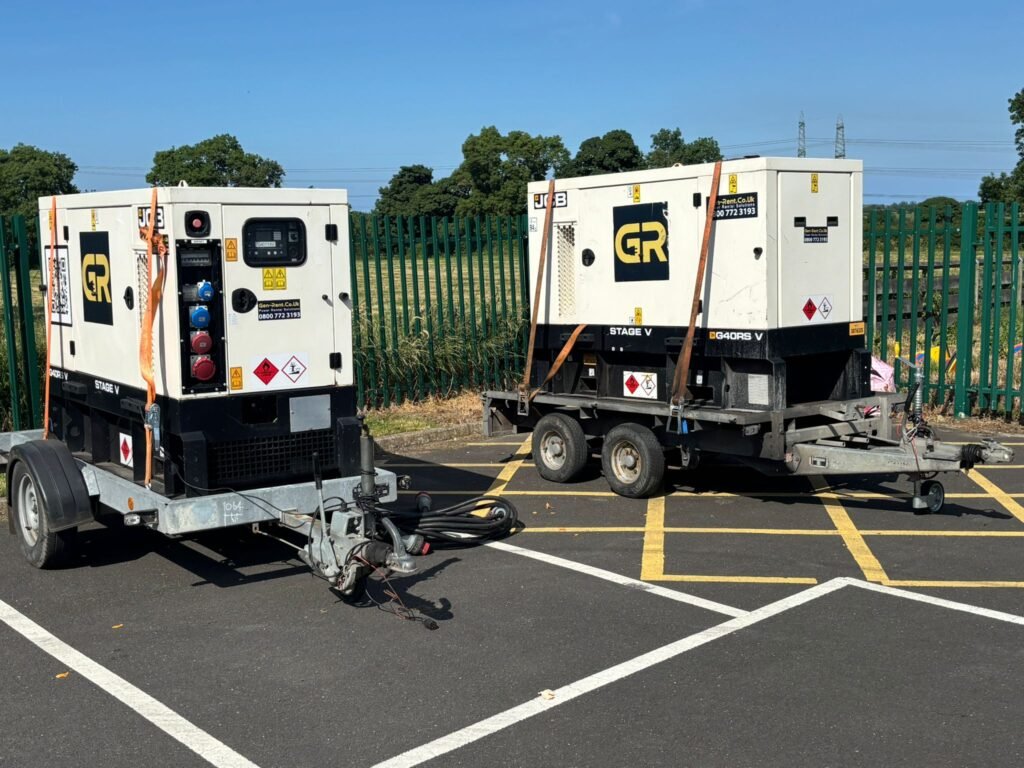
Gen-Rent UK offers generator hire capacities from 30–2,000kVA, subject to availability and project requirements. The correct option should be assessed against the actual site load and application.
Prepare a Temporary Power Connection Plan
Having a generator available is only one part of emergency power planning. Businesses should also understand how electricity will reach the equipment that needs it.
A temporary power plan should identify the proposed generator location, cable routes, connection points and distribution arrangements. It should also consider access routes and the protection of cables from physical damage.
Electrical connections should be designed and completed by competent personnel. The installation must be suitable for the equipment, electrical loads and site conditions.
Businesses should avoid relying on improvised connections during an emergency. Planning the arrangement beforehand can help reduce delays when temporary power is required.
Consider Fuel, Access and Site Conditions
The location and operating environment can affect how an emergency generator is selected and managed.
Businesses should consider how fuel will be supplied, whether the generator can be accessed safely and what arrangements are needed for routine checks. Noise, ventilation and the surrounding environment may also influence the installation location.
Where a generator is positioned near occupied buildings or working areas, its location should be assessed carefully. Appropriate safety arrangements and manufacturer guidance should always be followed.
Why Arrange Generator Hire Instead of Buying?
Purchasing a generator may be suitable for businesses with regular backup power requirements and the resources to manage their own equipment. However, not every organisation needs to own a generator.
Emergency generator hire can provide access to temporary power equipment when it is needed. This may be useful for businesses that experience occasional outages, planned maintenance work or temporary increases in electricity demand.
Hiring can also avoid the need to store equipment that may remain unused for long periods. The appropriate arrangement will depend on how frequently backup power is required and the nature of the business.
Make Emergency Power Part of Business Continuity Planning
A business continuity plan should consider how essential operations will continue during unexpected interruptions. Power supply is an important part of that process.
Businesses can improve their preparation by reviewing electrical loads, identifying critical systems, planning generator connections and deciding who will coordinate temporary power arrangements.
It is also useful to review the plan when equipment, premises or operational requirements change. A power arrangement that was suitable several years ago may no longer meet current demand.
Explore Generator Hire with Gen-Rent UK
Preparing for a power interruption starts with understanding which operations need electricity and how much power they require.
Gen-Rent UK provides generator hire solutions for commercial, industrial and project-based requirements across the UK. Its generator hire capacities range from 30–2,000kVA, subject to availability and project requirements.
Businesses planning temporary or emergency power can visit Gen-Rent UK to explore its generator hire services and discuss their requirements.