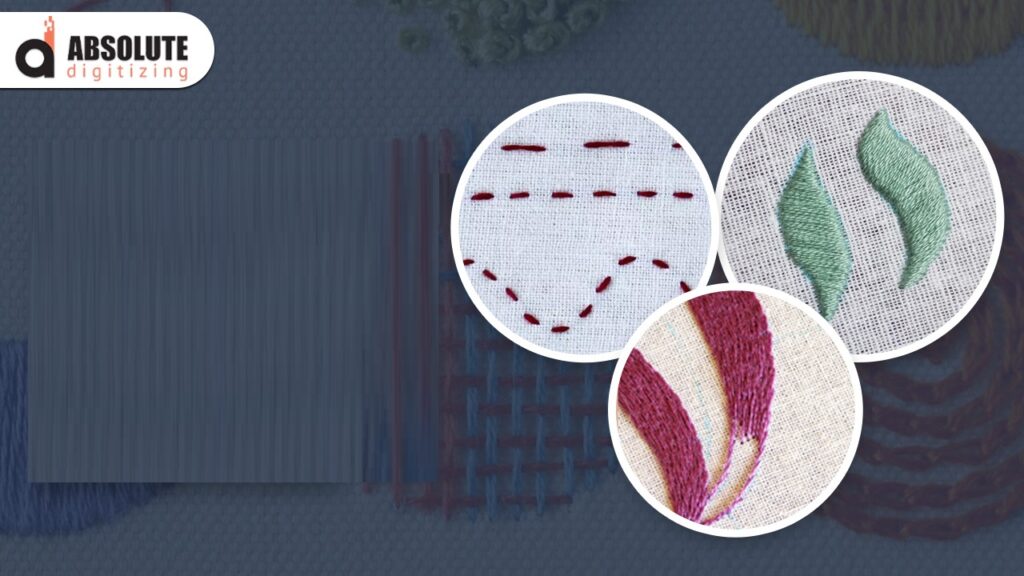
Machine Embroidery Stitches Guide
Introduction
If you’ve ever admired a beautifully embroidered logo, patch, or monogram, you might think the secret lies in the machine itself. While a quality machine helps, the real magic often comes from choosing the right stitch type.
Machine embroidery is much like painting. Instead of brushes and colors, you use stitches to create texture, detail, and dimension. Understanding different embroidery stitches can dramatically improve your results, whether you’re a beginner or a seasoned embroidery enthusiast.
This Machine Embroidery Stitches Guide will walk you through the most common stitch types, when to use them, and how they contribute to professional-looking embroidery.
What Are Machine Embroidery Stitches?
Machine embroidery stitches are the building blocks of every embroidery design. They determine how the design appears, feels, and performs on fabric.
Different stitches serve different purposes, such as:
- Creating outlines
- Filling large areas
- Adding fine details
- Building texture
- Enhancing durability
Professional digitizers carefully select stitch types to ensure designs stitch smoothly and look their best.
Why Stitch Selection Matters
The wrong stitch can lead to:
- Thread breaks
- Poor coverage
- Fabric puckering
- Loss of detail
Choosing the right stitch helps improve embroidery quality and machine performance.
The Most Common Machine Embroidery Stitches
Running Stitch
The running stitch is one of the simplest and most widely used embroidery stitches.
It consists of a series of single stitches placed in a line.
Best Uses for Running Stitch
- Fine outlines
- Detail work
- Decorative accents
- Lightweight designs
Because it uses fewer stitches, it creates a clean and delicate appearance.
Benefits of Running Stitch
- Fast stitching
- Low thread consumption
- Minimal fabric stress
Satin Stitch
Satin stitch is one of the most popular embroidery stitch types.
It consists of closely spaced stitches that create a smooth, shiny surface.
Best Uses for Satin Stitch
- Text lettering
- Borders
- Monograms
- Small logos
Satin stitches provide excellent coverage and a polished appearance.
Advantages of Satin Stitch
- Sharp edges
- Smooth finish
- Professional look
This stitch is often used for high-end embroidery projects.
Fill Stitch
Fill stitch, also known as tatami stitch, is used to cover large embroidery areas.
Instead of long stitches, fill stitch uses a patterned arrangement of shorter stitches.
Best Uses for Fill Stitch
- Large logos
- Background areas
- Patch designs
- Complex graphics
Benefits of Fill Stitch
- Excellent coverage
- Improved stability
- Reduced fabric distortion
Fill stitches are ideal when large sections need consistent coverage.
Specialty Embroidery Stitches
Zigzag Stitch
Zigzag stitches create a wider coverage area and are often used as underlay or decorative elements.
Common Applications
- Appliqué projects
- Edge finishing
- Decorative embroidery
Motif Stitch
Motif stitches use repeating decorative patterns to add texture and visual interest.
These stitches are commonly used in creative embroidery and decorative projects.
Bean Stitch
A bean stitch repeats each stitch multiple times to create a bold, thicker line.
Best Uses
- Decorative outlines
- Handcrafted effects
- Emphasized details
Bean stitches help designs stand out with added dimension.
Understanding Underlay Stitches
The Hidden Foundation
Underlay stitches are placed beneath visible embroidery.
Although they are hidden, they play a critical role in:
- Stabilizing fabric
- Supporting top stitches
- Improving design clarity
Think of underlay as the foundation of a building. Without it, the entire structure becomes less stable.
Benefits of Underlay
- Reduced puckering
- Better stitch coverage
- Sharper details
- Improved durability
How Digitizers Choose Stitch Types
Professional digitizers don’t select stitches randomly.
They consider factors such as:
Fabric Type
Different fabrics require different stitch approaches.
Examples include:
- Cotton
- Polyester
- Denim
- Stretch fabrics
- Performance garments
Design Size
A small logo may rely heavily on satin stitches, while larger designs often require fill stitches.
Detail Level
Highly detailed artwork often combines multiple stitch types for the best results.
Common Stitching Mistakes to Avoid
Using Satin Stitches for Large Areas
Very wide satin stitches can snag and lose stability.
Fill stitches are usually a better choice for larger sections.
Overcrowding Small Designs
Too many stitches in a small space can create bulky embroidery and poor readability.
Ignoring Fabric Characteristics
Each fabric reacts differently during stitching. Always adjust stitch settings accordingly.
Tips for Better Machine Embroidery Results
Start With Quality Digitizing
Even the best stitch type won’t perform well if the design is poorly digitized.
Professional digitizing ensures:
- Proper density
- Efficient stitch paths
- Balanced underlay
At Absolute Digitizing, experienced digitizers carefully select stitch types and settings to create embroidery files optimized for smooth machine performance and clean results.
Test Before Production
Always perform a sample stitch-out to verify:
- Stitch quality
- Design accuracy
- Fabric compatibility
Testing can prevent costly production errors.
Maintain Your Equipment
Regular machine maintenance helps ensure:
- Consistent tension
- Cleaner stitches
- Fewer thread breaks
Why Understanding Stitches Improves Embroidery
Knowing how embroidery stitches work gives you greater control over design quality.
You’ll be able to:
- Choose better designs
- Troubleshoot issues faster
- Improve production efficiency
- Achieve more professional results
Whether you’re creating logos, patches, uniforms, or custom apparel, stitch knowledge is a valuable skill.
Conclusion
A solid understanding of embroidery stitch types can transform the quality of your embroidery projects.
From running stitches and satin stitches to fill stitches and underlay, each stitch serves a unique purpose. Choosing the right stitch for the right application helps create cleaner, stronger, and more visually appealing embroidery.
By combining proper stitch selection, quality digitizing, and careful testing, embroidery professionals can consistently achieve outstanding results.
At Absolute Digitizing, expert digitizers use advanced stitch strategies to create embroidery-ready files that deliver professional-quality embroidery across a wide range of fabrics and applications.
FAQs
What is the most common machine embroidery stitch?
The satin stitch is one of the most commonly used embroidery stitches because it provides smooth coverage and sharp details.
What is a fill stitch used for?
Fill stitches are used to cover large design areas and provide stable, even embroidery coverage.
Why are underlay stitches important?
Underlay stitches stabilize the fabric and support top stitches, helping improve embroidery quality and durability.
Which stitch works best for lettering?
Satin stitches are typically the best choice for embroidery lettering because they create smooth, clean edges.
How can I improve my embroidery stitch quality?
Use professionally digitized files, choose appropriate stabilizers, maintain proper machine tension, and always perform test stitch-outs before production.