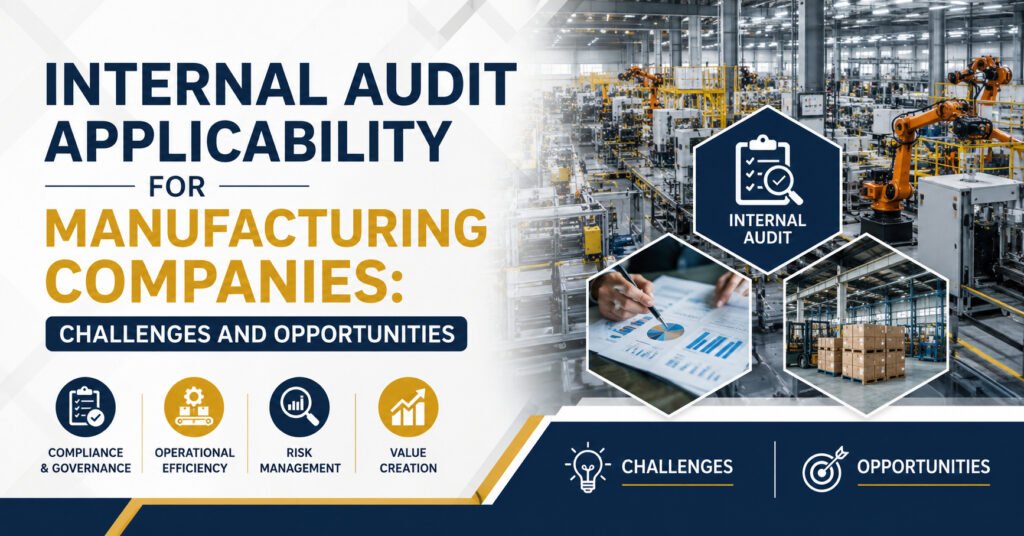
Manufacturing businesses are complex environments with a range of activities from procurement through to production, inventory management, quality control and regulatory compliance. The operational efficiency, reduction of risks is a key business goal, with multiple processes running concurrently. That’s where the concept of internal audit applicability in manufacturing companies becomes crucial. Internal audits applicability enable organizations to assess their systems, determine their strength and weaknesses and enhance their overall performance
The importance of the internal control continues to grow as the manufacturing business grows in size and involves new technologies. The internal audit is a powerful tool for learning which contributes to sustainable growth and good decision making.
Understanding Internal Audit Applicability for Manufacturing Companies
Internal audit applicability is not only about the requirements of the regulatory bodies in the manufacturing companies. In some instances, companies may be expected to have internal audits in place in accordance with established monetary thresholds, but many manufacturers choose to have internal audit systems to enhance governance and operational efficiency.
Raw materials, machinery, vendors, and workforce management can often be large quantities that manufacturing organizations face. These activities allow for opportunities to be inefficient, incorrect, and non-compliant. These can be systematically monitored in a business with the help of internal audits and ensure that the rules are being followed.
Key Challenges Faced by Manufacturing Companies
The increasing focus on internal audit applicabilityin manufacturing companies is attributed primarily to the diversity of challenges manufacturing companies face in the day-to-day conduct.
Inventory Management
A manufacturer keeps a large stock of raw materials, work-in-progress goods and finished goods. If inventory is not controlled properly, stock discrepancies or excess inventory may occur or production may be delayed. Internal audits are used to confirm inventory records and detect any missing areas in inventory management.
Procurement and Vendor Risks
Procurement processes are complex processes that include a number of suppliers, contracts and payment cycles. Weak controls can result in unauthorized purchases, overcharging or vendor fraud. Internal audits evaluate procurement processes and help maintain transparency in vendor management.
Compliance Requirements
There are several tax, environmental, labor and safety laws that must be adhered to by manufacturing businesses. The consequences of not following the rules are penalties and damage to reputation. Organizations can use regular audits to keep an eye on compliance and resolve any potential issues before they get out of hand.
Production Inefficiencies
Inadequate operations may lead to higher production costs and lower profit. Internal audits check production processes and uncover ways to improve the use of resources and the effectiveness of processes.
The fact that these are challenges are so important for manufacturing companies to maintain stability in their operations is evident by the application of the internal audit.
Internals audits are a catalyst for creating opportunities
While many businesses see audits as a compliance activity, an audit can also provide a huge opportunity for improvements.
Internal audits support management to have a better understanding of the performance of the activities. They find bottlenecks, minimise waste and enhance departmental consistency. Auditors give independent evaluations, which enables organisations to put into practice corrective measures that bring about measurable business benefits.
Another advantage of internal audit applicability for manufacturing companies is improved risk management. Audits are a proactive way to identify financial, operational and compliance risk issues, instead of reacting to them after the fact.
In addition, internal audits help to make informed choices by giving precise and trustworthy data on operations within the business.
Conclusion
The relevance of internal audit applicability for manufacturing entities has been growing due to their increasing complexity of operations and growing regulatory expectations. Interior audits can assist organizations to adhere to compliance standards and discover opportunities to improve efficiency, enhance controls, and manage risks more effectively. Implementing internal audit applicability is significant in hastening the efficiency of operations within a manufacturing unit, which also contributes to the sustainable growth, and builds a strong foundation for success in the future.