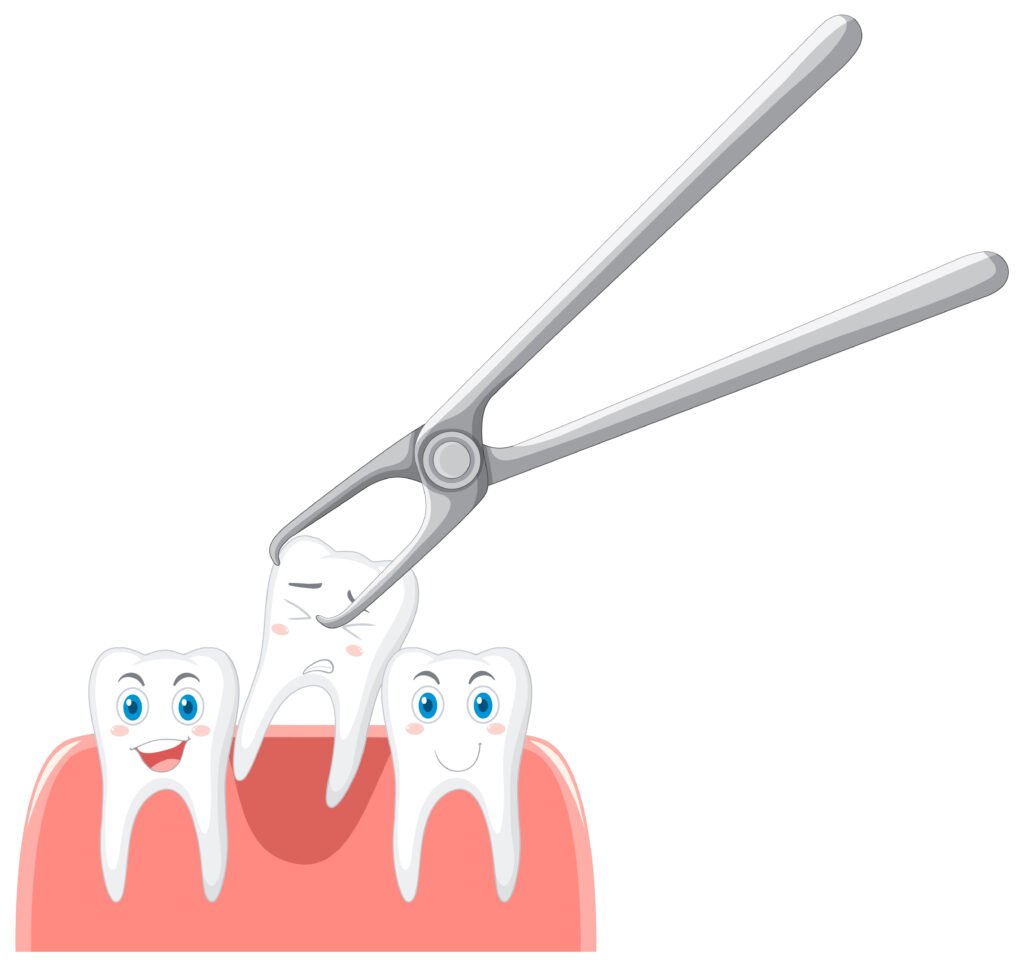
Cartoon teeth extraction on white background illustration
A cracked tooth that won’t stop aching. A wisdom tooth pushing against its neighbors. Sometimes the body sends clear signals that a tooth extraction is the only way forward. This guide walks through why extractions happen, what the procedure actually involves, and how healing works, so you know what to expect before you’re sitting in the chair.
Why Dentists Recommend Removing a Tooth
Not every damaged tooth can be saved, and that’s a hard truth for a lot of patients to hear. Severe decay that has eaten past the enamel and into the root often leaves no structure worth repairing. In these cases, a tooth extraction stops the infection from spreading to nearby teeth or the jawbone.
Overcrowding is another common reason. Orthodontic treatment sometimes requires more room in the mouth, and pulling a tooth creates the space needed for proper alignment. Trauma from an accident, advanced gum disease, or an impacted wisdom tooth can all lead to the same recommendation. A Ramsey family dentist will usually try every conservative option first, including fillings, crowns, or root canals, before suggesting removal.
When Wisdom Teeth Become a Problem
Wisdom teeth deserve their own mention because they cause more extractions than almost any other issue. Most jaws simply don’t have enough room for a third set of molars. When these teeth grow in sideways or only partially break through the gum, they trap food, bacteria, and pain in places a toothbrush can’t reach.
Left alone, an impacted wisdom tooth can damage the roots of the tooth next to it or lead to a cyst. This is one of the few situations where waiting almost always makes things worse, not better.
What Happens During the Procedure
A tooth extraction is far less intimidating than most people imagine. The area gets numbed thoroughly with local anesthesia, and patients typically feel pressure rather than pain. Simple extractions involve loosening the tooth with specialized instruments and lifting it free, usually within minutes.
Surgical extractions are a bit more involved. These are needed when a tooth hasn’t fully erupted or has broken below the gumline. The dentist may need to make a small incision or remove a bit of bone to access the tooth. Sedation options are available for patients who feel anxious, and most procedures wrap up in under an hour regardless of complexity.
Recovery in the First 48 Hours
The first two days after a tooth extraction matter more than people realize for long-term healing. A blood clot forms in the socket almost immediately, and protecting that clot is the entire game plan. Avoid rinsing forcefully, using straws, or smoking, since suction can dislodge it and lead to a painful complication called dry socket.
Swelling peaks around day two, so ice packs applied in short intervals help keep it manageable. Soft foods like yogurt, mashed potatoes, and smoothies (eaten with a spoon) are the safest bet while the gum tissue starts to close. Most people return to normal activities within a few days, though full bone healing takes several weeks behind the scenes.
Caring for the Socket as It Heals
Gentle salt water rinses, started about 24 hours after the procedure, keep the area clean without disturbing the healing tissue. Brushing nearby teeth can continue as usual, just with extra care around the extraction site itself. Pain typically fades noticeably by day four or five, and any prescribed medication should be taken as directed rather than skipped once discomfort eases.
Watch for warning signs like fever, worsening pain after day three, or a foul taste that won’t go away. These can point to infection and deserve a quick call to the office. A Ramsey family dentist will usually schedule a follow-up to confirm the socket is healing the way it should, especially after surgical extractions.
Replacing the Tooth Afterward
Once healing is complete, patients often explore options like implants, bridges, or partial dentures to fill the gap. Leaving a space empty for too long can cause neighboring teeth to shift, so it’s worth discussing replacement early, even if the actual procedure happens months later.
Making the Recovery Process Easier
Preparation makes a bigger difference than most people expect. Stock the fridge with soft foods beforehand, arrange a ride if sedation is planned, and clear the calendar for a day of rest. A Ramsey family dentist can walk through personalized aftercare instructions based on the specific type of extraction performed.
A tooth extraction often marks the start of a healthier, pain-free mouth rather than the end of something. Trust the healing process, follow aftercare closely, and that temporary gap becomes the first step toward a stronger smile ahead.