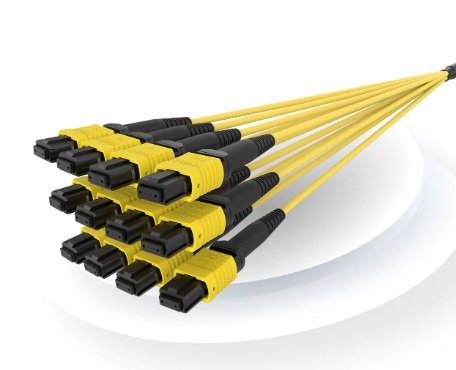
As fiber networks expand, organizations need connectivity components that can support increasing capacity without making infrastructure unnecessarily difficult to manage. FSG Network provides fiber connectivity solutions for environments where dependable optical links, structured cabling, and future scalability are important considerations. In applications with numerous fiber connections, pre-assembled multi-fiber solutions can offer a practical alternative to managing individual fiber links separately.
MPO cable assemblies are pre-terminated fiber assemblies that use multi-fiber connectors to bring multiple optical channels into a single connection arrangement. They can simplify the deployment of structured fiber infrastructure by combining cables and connectors into a ready-to-install solution. This makes them useful for data centers, telecommunications facilities, enterprise networks, and other environments where efficient multi-fiber connectivity is required.
What Are MPO Cable Assemblies?
An MPO cable assembly generally consists of a multi-fiber optical cable terminated with MPO connectors. Instead of requiring technicians to terminate each fiber individually during installation, a factory-assembled solution can arrive prepared for connection according to its specified configuration.
The exact design varies depending on the application. Fiber count, fiber type, connector configuration, cable length, polarity, and connector gender can all differ between assemblies. These specifications should be confirmed before purchasing because the assembly needs to match the equipment and other components used in the network.
Pre-assembled connectivity does not eliminate the need for planning. It simply shifts much of the connection preparation into the manufacturing process, allowing installation teams to work with standardized assemblies.
Supporting Scalable Fiber Infrastructure
Scalability is an important consideration for modern networks. Businesses may expand their equipment, increase bandwidth requirements, or introduce additional connections as their operations develop.
MPO assemblies can support this growth by allowing multiple fiber channels to be handled within a compact connection format. Instead of creating a separate route for every individual fiber, infrastructure designers can incorporate multi-fiber assemblies into a structured architecture.
The value of this approach depends on proper planning. Network teams should determine current connection requirements while considering how equipment layouts and fiber capacity may change over time.
Reducing Installation Complexity
Large fiber installations can involve substantial numbers of individual connections. Preparing each connection separately can require considerable time and careful coordination.
Factory-assembled solutions can help standardize the physical connection process. When assemblies are manufactured according to defined specifications, installation teams can focus on routing and connecting the components rather than preparing every fiber termination on site.
This can be particularly useful in data centers where multiple racks or equipment areas need to be connected according to a consistent design.
However, installers should still inspect assemblies before deployment and confirm that the supplied configuration matches the project documentation.
Understanding Polarity
Polarity is one of the most important technical considerations in multi-fiber systems. Each optical channel must follow the intended transmit and receive path between connected equipment.
Because MPO assemblies contain several fibers within one connector, polarity planning needs to be completed before installation. Different network designs may use different polarity methods, and the selected assembly must correspond with the architecture.
When purchasing MPO cable assemblies, buyers should confirm polarity requirements instead of assuming that all assemblies follow the same arrangement. Proper documentation can also make future troubleshooting and network modifications much easier.
Connector and Equipment Compatibility
MPO assemblies can be used with various optical components, but compatibility should always be verified. Connector gender, key orientation, fiber count, fiber type, and interface design can influence whether an assembly is appropriate for a specific connection.
Equipment requirements should also be reviewed. A cable assembly should support the optical characteristics and connection format required by the network equipment at each end.
For larger projects, standardizing compatible assemblies can help simplify installation and inventory management. Using clearly defined specifications across multiple links may also make maintenance more predictable.
Cable Management in High-Density Environments
A scalable fiber network should remain organized after installation. Cable routing, bend-radius control, labeling, and service access are all important parts of effective infrastructure management.
MPO assemblies can reduce the number of individual cables that need to be routed through certain areas, but the remaining assemblies still need to be managed correctly. Poor routing can create congestion and make it difficult for technicians to access equipment.
Clear labeling is especially useful when multiple multi-fiber connections are installed within the same rack. Identifying cable destinations and connection points helps technicians understand the infrastructure without tracing every fiber manually.
Maintenance and Handling
Optical connectors should be handled carefully to protect their end faces from contamination and physical damage. Unused connectors should remain capped, while connected interfaces should be inspected and cleaned according to suitable procedures.
Cable assemblies should also be protected from unnecessary pulling, crushing, or sharp bends. Good installation practices can help preserve the physical condition of the cable while making future servicing easier.
Regular documentation updates are valuable as well. When equipment or cable routes change, network records should be revised so that the documented infrastructure continues to reflect the actual installation.
Choosing the Right Assembly
The correct assembly depends on the complete application. Before ordering, consider fiber count, fiber type, connector format, polarity, cable length, routing requirements, equipment compatibility, and environmental conditions.
FSG Network can be considered when evaluating fiber connectivity products for scalable network infrastructure. Buyers can benefit from reviewing technical specifications carefully and matching each assembly to the intended connection path.
It is also useful to consider future requirements. Selecting standardized configurations where appropriate can make it easier to expand the network without introducing unnecessary variations into the existing cabling system.
Building Reliable and Adaptable Connectivity
Modern optical infrastructure needs to balance performance, organization, scalability, and maintainability. Pre-terminated multi-fiber solutions can support these goals when they are selected and installed as part of a carefully planned architecture.
Using MPO cable assemblies can help organizations manage multiple optical channels through structured connection points while simplifying certain aspects of installation. The most effective approach is to evaluate fiber configuration, polarity, connector compatibility, cable routing, and future expansion before purchasing. With thoughtful planning and proper handling, FSG Network solutions can contribute to fiber infrastructure that remains organized, scalable, and practical for evolving network requirements.