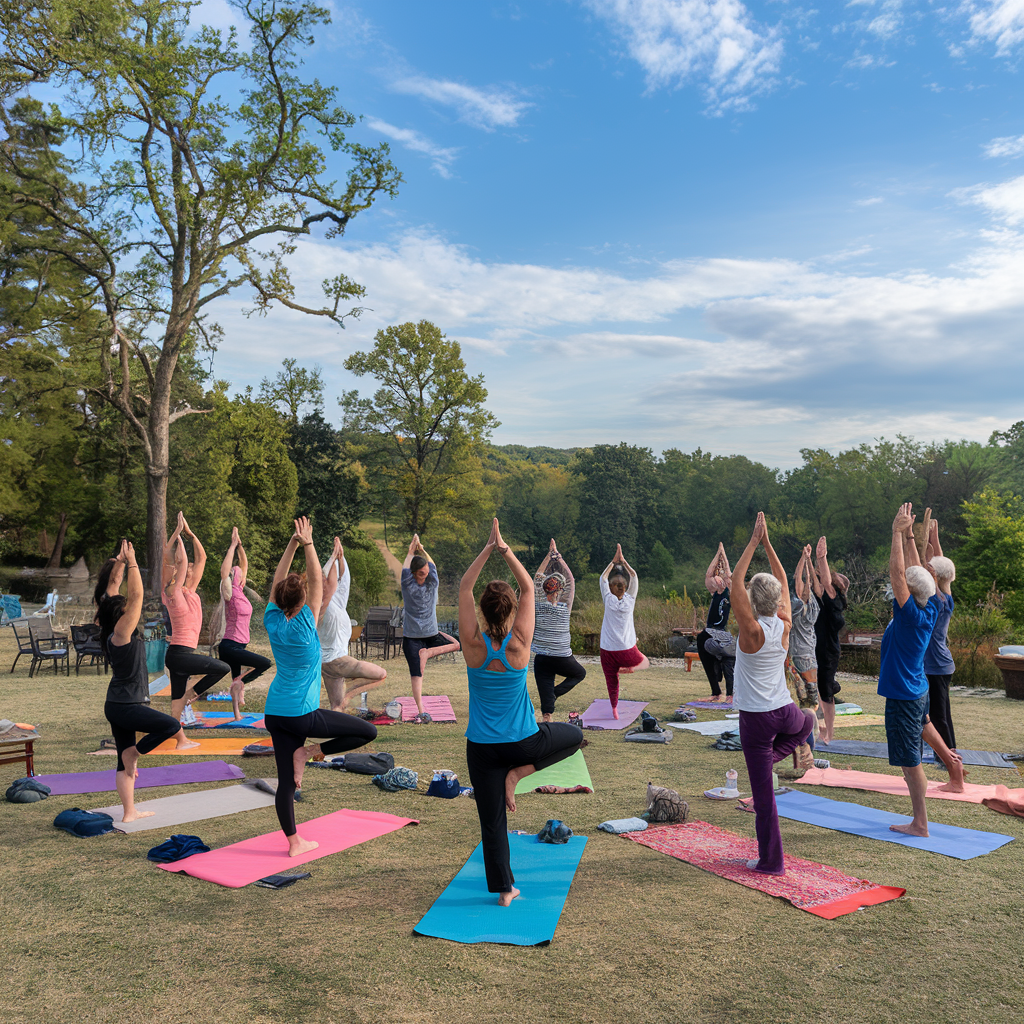
Yoga often begins as a simple practice. You may step onto a mat to improve flexibility, become more active, manage everyday stress, or simply create some quiet time for yourself. With regular practice, however, yoga can become much more than a physical routine. It can encourage greater awareness of the body, breath, thoughts, habits, and the way we respond to everyday experiences.
At some point in their practice, many yoga practitioners begin to wonder what lies beyond the basic postures. They may want to understand the philosophy behind yoga, learn more about anatomy and breathing techniques, or discover how to guide others through a meaningful practice. This is where a Yoga Teacher Training Course can become an important step.
Teacher training is not only for people who want to become professional yoga instructors. It can also be an opportunity to study yoga in greater depth, develop a stronger personal practice, and understand how different aspects of yoga connect with one another.
What Is a Yoga Teacher Training Course?
A Yoga Teacher Training Course is a structured educational program designed to teach students about the theory and practice of yoga. While the exact curriculum differs between schools, comprehensive programs generally combine physical practice with subjects such as yoga philosophy, anatomy, breathing techniques, meditation, teaching methodology, and class sequencing.
The experience can vary depending on the training format. Some programs are intensive residential courses, while others take place over weekends or several months. Online and blended options are also available.
The goal is generally to help students understand yoga beyond simply performing postures. Trainees learn how to practise with greater awareness and, where the course is designed for certification, how to safely and effectively guide other practitioners.
Deepening Your Understanding of Yoga
One of the main reasons people choose teacher training is to understand the wider context of yoga.
When attending regular classes, students may learn a sequence of postures without necessarily having time to explore why those practices are included. A teacher training course provides a more structured environment for asking these questions.
Students may explore topics such as:
- The history and development of yoga
- Traditional yoga philosophy
- Different approaches to yoga practice
- Meditation and mindfulness
- Pranayama and breath awareness
- Asana practice
- Basic anatomy and physiology
- Teaching methodology
- Class planning and sequencing
This broader understanding can change the way a person approaches their own practice. A posture is no longer just a physical movement; it can become part of a larger practice involving concentration, awareness, breathing, and presence.
Developing a Stronger Personal Practice
You do not need to teach yoga to benefit from teacher training.
Many practitioners enrol because they want to develop their own practice. Spending dedicated time studying yoga can create an opportunity to move beyond familiar routines and explore areas that may not be covered in a standard class.
For example, a student may discover that their practice has focused mainly on physical postures. During training, they may become more interested in meditation, pranayama, philosophy, or mindful movement.
Regular practice combined with theoretical learning can also help students understand their own habits. They may notice how they respond when a posture feels challenging, how they approach discomfort, or how easily their attention becomes distracted.
This type of self-observation can become an important part of personal development.
Learning the Principles Behind Asana
Yoga postures are often the most visible part of yoga, but understanding them requires more than memorising their names.
Teacher training can introduce students to the principles behind alignment, movement, stability, mobility, and individual anatomical differences.
Two people can perform the same posture while experiencing it very differently. Differences in body proportions, joint structure, mobility, strength, previous experience, and other factors can affect how a posture feels.
Learning basic functional anatomy can help future teachers understand these differences and offer appropriate variations.
For personal practitioners, this knowledge can also encourage a more thoughtful approach to their own bodies. Instead of trying to force themselves into a particular shape, they can learn to pay closer attention to sensation and movement.
Understanding Pranayama and Breath Awareness
Breathing is closely connected with many yoga practices. Pranayama introduces different ways of working with the breath, while simple breath-awareness practices can help practitioners become more attentive to their breathing patterns.
A teacher training course may introduce students to a range of traditional breathing practices and discuss how they are approached within the particular tradition being taught.
Learning about breath can also change the experience of physical practice. Instead of treating breathing as something that happens automatically in the background, students can begin to recognise it as an important part of their practice.
Teachers also need to understand how to communicate breathing practices clearly and responsibly, especially when working with students who have different levels of experience.
Exploring Meditation and Mindfulness
Meditation is another important area that may be included in yoga teacher education.
For people accustomed to physically active yoga sessions, meditation can initially feel very different. Instead of focusing on movement, the practitioner is invited to observe thoughts, sensations, emotions, or the breath.
Mindfulness does not necessarily mean having a completely empty mind. Rather, it can involve developing the ability to notice what is happening without immediately becoming caught up in it.
Teacher training can provide students with time to explore different approaches to meditation and understand how these practices can be incorporated into yoga classes.
This may also help trainees become more comfortable creating moments of quiet and reflection when teaching.
Learning How to Teach Others
If your goal is to become a yoga teacher, training provides the opportunity to develop practical teaching skills.
Knowing how to perform a posture does not automatically mean knowing how to teach it. A teacher needs to explain movements clearly, offer useful cues, observe students, manage time, create appropriate sequences, and respond to different needs.
During training, students may practise:
- Demonstrating postures
- Giving verbal instructions
- Creating class sequences
- Offering modifications
- Using props
- Managing transitions
- Guiding relaxation
- Leading breathing exercises
- Creating a supportive class environment
Teaching practice is particularly valuable because students can receive feedback and gradually become more comfortable speaking in front of a group.
Building Confidence Through Practice
Confidence is often developed through experience rather than simply through theoretical knowledge.
A good teacher training environment gives students opportunities to practise teaching before they begin leading regular classes independently.
At first, giving instructions to a group may feel uncomfortable. Students may worry about forgetting a sequence, speaking too quickly, or not knowing how to respond to an unexpected situation.
With repeated practice and constructive feedback, these concerns can become easier to manage.
The goal is not to become a perfect teacher overnight. Instead, training can provide a foundation from which students can continue developing their own teaching style.
Connecting With Yoga Philosophy
Yoga has a long philosophical tradition that extends beyond physical exercise.
Depending on the school and curriculum, teacher training may introduce students to concepts from classical yoga texts and traditions. These studies can encourage reflection on ideas such as awareness, discipline, contentment, self-study, and ethical living.
For many students, philosophy provides a different perspective on why they practise yoga.
Rather than seeing yoga only as a method for stretching or fitness, they may begin to understand it as a broader discipline involving the relationship between body, mind, behaviour, and awareness.
Studying philosophy does not mean that every student will interpret these teachings in exactly the same way. Instead, it can create opportunities for thoughtful exploration and discussion.
Developing a Mindful Approach to Teaching
A yoga teacher works with people who have different bodies, backgrounds, experiences, and expectations.
Teacher training can help students understand the importance of creating an environment where practitioners feel respected and supported.
This may involve learning to offer choices instead of assuming that one version of a posture is suitable for everyone.
A mindful teacher also understands the importance of clear communication. Instructions should be understandable, and students should be encouraged to pay attention to their own experience rather than comparing themselves with others.
This approach can make classes more welcoming for beginners as well as experienced practitioners.
Creating Meaningful Yoga Sequences
Sequencing is another skill that can take time to develop.
A yoga class is more than a random collection of postures. The teacher needs to consider the purpose of the session, how poses relate to one another, the experience level of the students, and how the class will progress from beginning to end.
Training may introduce different sequencing principles and give students opportunities to design their own classes.
With practice, teachers can learn how to create sessions with a clear structure while still allowing enough flexibility to respond to the group in front of them.
Learning From Experienced Teachers
Another benefit of teacher training is the opportunity to learn directly from experienced instructors.
Watching an experienced teacher can reveal details that are difficult to understand from books alone. Students can observe how teachers communicate, demonstrate postures, manage a classroom, respond to questions, and create a particular atmosphere.
Training also provides opportunities to learn alongside other practitioners.
Everyone comes to yoga with different experiences. Sharing a learning environment with people who have different perspectives can make the training experience richer and encourage students to consider approaches they may not have encountered previously.
Building a Yoga Community
A teacher training course can also create connections that continue beyond the training itself.
Students often form friendships and professional relationships with people who share an interest in yoga and wellness. These connections can provide encouragement during the early stages of teaching and personal development.
A supportive community can be particularly valuable when a new teacher is developing confidence or looking for opportunities to continue learning.
Yoga does not have to be a solitary practice. Being part of a community can create opportunities for shared learning, discussion, practice, and growth.
Choosing the Right Yoga Teacher Training Course
Not every teacher training program is structured in the same way. Before enrolling, it is important to research the course carefully.
Consider factors such as:
Course Curriculum
Review what subjects are included. Look for a balance between practical training and theoretical education.
Training Format
Consider whether an intensive residential program, part-time course, online program, or blended format fits your lifestyle and learning preferences.
Practical Teaching Experience
If you want to teach professionally, find out how much supervised teaching practice is included.
Trainer Experience
Research the instructors and their background in yoga education and teaching.
Course Requirements
Check whether the program has prerequisites relating to previous yoga experience, attendance, assessments, or other requirements.
Learning Environment
Consider whether you prefer a smaller group, residential setting, urban studio, retreat environment, or another type of learning space.
Taking time to research these factors can help you choose a program that matches your goals.
What Happens After Teacher Training?
Completing a training course is not necessarily the end of your yoga education. It can be the beginning of a longer learning journey.
New teachers can continue developing through regular personal practice, workshops, specialist courses, mentorship, reading, observation, and teaching experience.
Every class can become an opportunity to learn. Students may ask questions that encourage teachers to research new topics, while teaching different groups can reveal the importance of adapting communication and sequencing.
Continued education is particularly important because yoga encompasses many different traditions and approaches. Remaining curious can help teachers avoid becoming overly rigid in their teaching.
Yoga Teacher Training as a Personal Journey
Perhaps one of the most meaningful aspects of teacher training is that the experience can be personal as well as professional.
Spending dedicated time with yoga can encourage practitioners to examine their relationship with discipline, patience, self-awareness, and challenge.
Some days may feel physically demanding. Other days may involve more reflection or theoretical study. The combination can encourage students to understand themselves from different perspectives.
This does not mean that teacher training will automatically transform every aspect of a person’s life. Everyone experiences the process differently. However, creating dedicated time for learning and self-reflection can become a valuable part of a long-term yoga journey.
Final Thoughts
Choosing a Yoga Teacher Training Course can be a meaningful step for anyone who wants to explore yoga beyond the physical practice.
Whether your goal is to become a professional teacher, strengthen your personal practice, understand yoga philosophy, explore meditation, or develop a deeper appreciation of mindful movement, structured training can provide a valuable learning environment.
The journey involves much more than learning how to demonstrate postures. It can include anatomy, breathing, meditation, philosophy, communication, sequencing, observation, and personal practice.
Most importantly, teacher training can encourage a different way of approaching yoga. Instead of focusing only on how a posture looks or how flexible the body becomes, practitioners can learn to pay attention to awareness, intention, breath, and individual experience.
With continued practice and learning, a Yoga Teacher Training Course can become not simply a step toward teaching others, but an opportunity to deepen your own relationship with yoga and carry its principles into everyday life.