A building’s facade is usually the first thing people notice, and honestly it can start to feel a bit tired over time. For commercial buildings, office blocks, retail spaces, and other types of property, the exterior can look dated because of weather exposure, fading finishes, colours that no longer feel right, or just general wear and tear. Replacing the entire facade might seem like the obvious route, but it’s not always the only option or even the best one.
Another great option could be glass spraying, which is a way to refresh and modernise existing building exteriors. With the right preparation, coatings, and application methods, tired glass and aluminium surfaces can get a fresher look, without needing to scrap the whole facade.
So, how does it actually work, and where do terms like ‘curtain wall spraying‘, ‘curtain wall repairs’, and ‘site spraying’ fit in?
What Is Glass Spraying, and How Does It Transform a Building Facade?
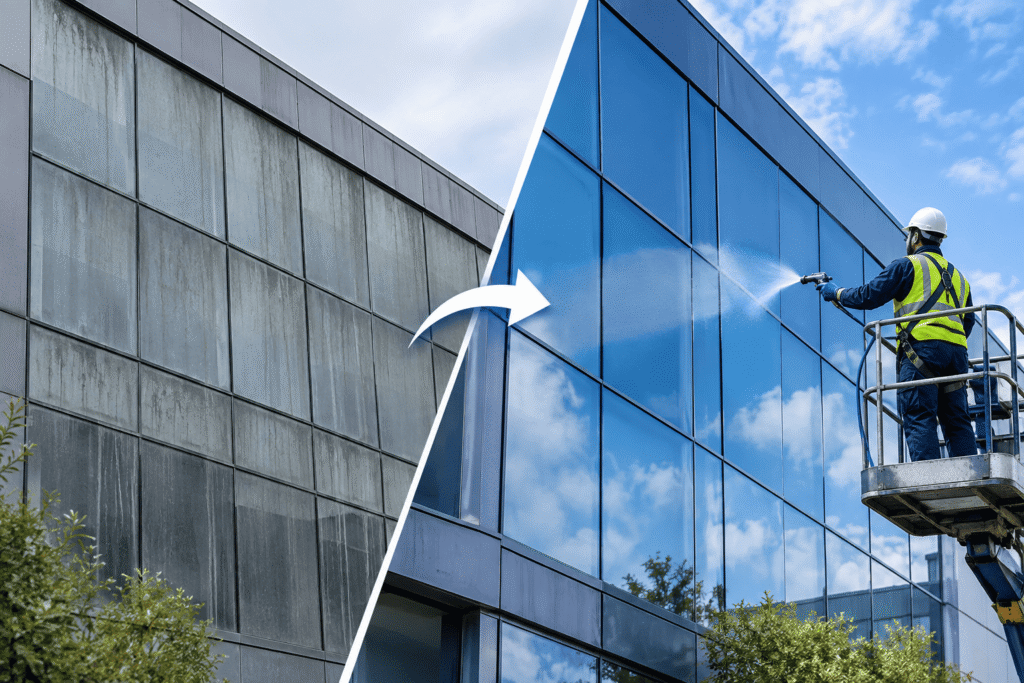
Glass spraying is a specialist finishing process, basically used to apply a coating to glass and other suitable surfaces. Instead of leaving things as they are, it can shift the colour, change the overall appearance, and give the completed surface a new kind of finish.
This approach can be especially handy for commercial property refurbishment, facade renovation, and building restoration projects when you want something that looks updated but you don’t want to automatically replace everything.
Depending on what the project needs, spraying can help you:
- Refresh faded or dated surfaces
- Make the colour more consistent across existing elements
- Bring a more current look to commercial buildings
- Match and complement a new architectural design
- Improve the visual uniformity of a facade
- Support refurbishment without full replacement
The end result is often a cleaner, more modern appearance, while still keeping the existing building components that are suitable to remain in place.
Why Is Glass Spraying Useful for Modern Facade Renovation?
Most new buildings seem to have big sheets of glass, curtain wall systems, and aluminium framing. If you replace these things, it usually means a lot of planning, specific access needs, some disruption, and a high cost. Sometimes it’s not even practical.
So a spray-applied coating system can be a different route, where the existing base material is still fine enough for refurbishment.
For owners and contractors, the potential perks can include, but aren’t always limited to:
- Facade modernisation without always replacing every single element
- More flexibility when you change colour schemes
- A more consistent finish across separate facade components
- Less visual disruption than doing widespread replacement work
- The ability to update older commercial buildings
Still, every building is different. The substrate condition, any existing coatings, the glass specification, access constraints, exposure, and the finish you actually need should be reviewed before a spraying system is chosen.
What Is Curtain Wall Spraying?
Curtain wall spraying means applying specialist coatings to suitable parts of a curtain wall facade.
You’ll see curtain walls used a lot on offices, commercial buildings, retail developments and other contemporary structures. They often include glass panels, aluminium framing, and other architectural features.
Over time, those surfaces can end up looking:
- Faded
- Discoloured
- Weathered
- Scratched or marked
- Visually inconsistent
- Outdated in colour or finish
Instead of assuming the whole curtain wall system must be replaced, refurbishment can be considered when the existing structure is still serviceable.
With curtain wall spraying, you can often get a refreshed look across the facade while still keeping the original architectural design.
When Are Curtain Walling Repairs Necessary?
Not every facade problem can be fixed with just a fresh coating; sometimes the root cause is deeper in the system. If the underlying framework shows physical defects or gradual deterioration, curtain walling repairs may be needed. You know, a slow breakdown that you can’t always see at a glance.
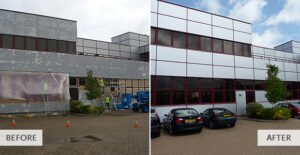
Before any spraying starts, contractors should take time to inspect the facade properly and spot anything that might need attention. This early check is important because if there’s damage under the surface, a new layer on top can turn into a failed attempt later.
Possible repair needs can include:
- Damaged or deteriorated components
- Failed seals
- Issues around joints
- Surface damage
- Loose or defective elements
- Areas that need preparation before coating
This is also where facade inspection and surface prep become sort of non-optional. Putting a coating over an unsuitable or already damaged area can compromise the final look and performance, even if the application seems fine at first.
So a sensible refurbishment plan should balance what the facade should look like with what the current system can actually handle.
How Does Site Spraying Work?
The specialist coating work that can be carried out on the building is site spraying, which is a great alternative to taking curtain wall sections off-site and transporting them somewhere else.
That approach can be especially helpful for bigger commercial buildings where removing lots of facade elements would create extra logistical headaches and timing delays.
A usual project might include:
- Initial assessment: the surface and the existing coating are checked.
- Preparation: dirt, contaminants, loose material, and incompatible coatings are dealt with.
- Repairs: any curtain walling repairs or substrate fixes are completed.
- Protection: nearby areas are masked carefully and protected.
- Application: the chosen coating is applied using the right spraying equipment.
- Inspection: the result is checked for uniformity, coverage, and overall appearance.
The exact sequence can vary depending on the substrate, the coating spec, the building surroundings, and the specific needs of the job, so details can shift a bit from one site to another.
Is Glass Spraying an Alternative to Facade Replacement?
In some cases yes, but it should not be treated like a one-size-fits-all substitute for a new facade.
If the current glass, framing, and curtain wall system are still structurally and functionally sound, then glass spraying plus related refurbishment methods can help refresh the look without having to swap the whole thing out.
On the other hand, if there are major structural problems, performance issues, or material troubles, then you may end up needing more involved repairs or even full replacement.
So, the best route is really about a professional evaluation rather than just focusing on appearance, period.
Final Thoughts
A tired building facade does not automatically mean that every component needs replacing; it doesn’t. In some suitable situations, glass spraying can be a practical way to refresh the look of existing architectural surfaces and give them a more contemporary, sort of up-to-date finish.
From curtain wall spraying and curtain walling repairs, to site spraying, modern facade refurbishment includes several routes for improving commercial building exteriors.
The most effective solution really will depend on the building itself, the substrate, the existing condition, the desired finish, and the project requirements too. With the correct assessment and specialist application, a dull facade can become a distinctive feature of the building again.