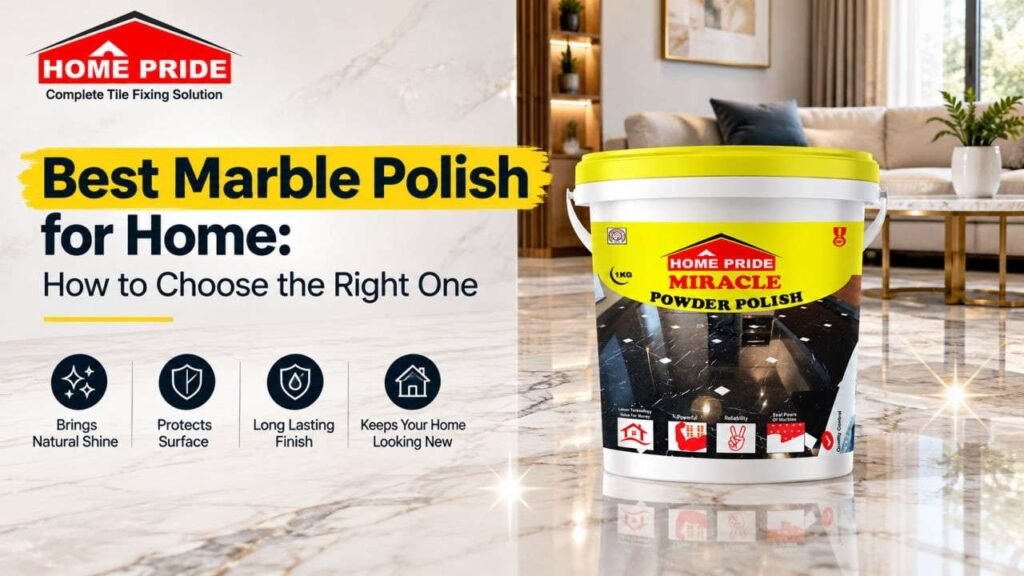
Marble flooring adds elegance, brightness, and a premium appearance to residential spaces. However, daily foot traffic, dust, spills, unsuitable cleaning products, and gradual surface wear can reduce its natural shine. Choosing the best marble polish for home can help improve the appearance of marble surfaces, maintain their finish, and support long-term care when the product is appropriate for the stone.
Not every marble surface requires the same polishing treatment. Some floors need routine cleaning, while others may have etching, scratches, stains, or a worn finish that requires professional restoration. Understanding the differences between polishing products, marble sealer, and regular cleaning solutions helps homeowners make informed decisions.
This guide explains how to choose a suitable marble polish for home, compares Marble Polish Liquid and Marble Polish Powder, and shares practical maintenance tips for keeping marble surfaces attractive.
What Is the Best Marble Polish for Home Use?
The best marble polish for home depends on the marble type, existing surface condition, desired finish, and manufacturer’s instructions. A suitable product should be compatible with the stone and the intended application method.
For routine maintenance, use a pH-neutral cleaner formulated for natural stone. For dullness or minor surface wear, a compatible marble polishing product may help restore the finish. Deep scratches, severe etching, and uneven surfaces often require professional honing or polishing rather than a simple liquid or powder treatment.
Before purchasing a best marble polish product, consider these factors:
- Marble type: White, green, beige, and other marble varieties may respond differently to treatments.
- Surface finish: Polished, honed, and textured marble require different care approaches.
- Type of damage: Dirt, stains, scratches, and chemical etching are different problems and need different solutions.
- Application method: Check whether the product is designed for manual use or machine application.
- Safety and compatibility: Follow the product label and confirm suitability for the specific marble surface.
Choosing according to the actual condition of the floor is more effective than selecting a product based on shine claims alone.
Why Does Marble Lose Its Natural Shine?
Marble is a natural stone primarily composed of calcium carbonate. Although it is durable, its surface can be sensitive to acidic substances and abrasive cleaning methods.
Several factors can affect its appearance.
1. Dust and Everyday Foot Traffic
Dust, sand, and small particles can accumulate on marble floors. When people walk over these particles, they may cause fine surface abrasion over time.
2. Acidic Spills
Lemon juice, vinegar, certain bathroom cleaners, and other acidic substances can react with marble. This reaction may create dull marks called etching. Etching is surface damage, not simply dirt, so ordinary cleaning may not remove it.
3. Incorrect Cleaning Products
Strong acidic cleaners, harsh chemicals, and abrasive powders can damage the finish. Using a product designed for ceramic tiles does not automatically make it suitable for marble.
4. Inadequate Maintenance
Leaving spills unattended, dragging heavy furniture, and failing to remove grit can gradually affect the appearance of marble.
Identifying the cause of dullness is the first step toward choosing the right marble polish for home.
Types of Marble Polish for Home
Marble polishing products differ in their formulation, application method, and intended results. Two commonly discussed options are liquid polish and polishing powder.
1. Marble Polish Liquid
Marble Polish Liquid products are generally designed for convenient application, although their exact uses vary by formulation. Some are intended for routine surface enhancement, while others are professional treatments that require specific tools or techniques.
Potential benefits:
- Convenient application when the product is designed for manual use.
- May help improve the appearance of compatible marble surfaces.
- Can be suitable for selected maintenance or finishing applications.
- Often easier to apply over smaller areas than some machine-applied treatments.
What to check before use:
Read the label carefully to determine whether the liquid is suitable for floors, countertops, or other marble surfaces. Check its application instructions, drying time, and whether buffing is required.
A liquid polish should not be assumed to remove deep scratches, repair acid etching, or replace a proper restoration process.
2. Marble Polish Powder
Marble Polish Powder is used in certain marble polishing systems, often with water and suitable polishing equipment. Some formulations are designed for professional use and may chemically or mechanically enhance the stone’s finish when applied correctly.
Potential benefits:
- Can help restore gloss on suitable marble surfaces.
- May be useful for selected restoration or finishing applications.
- Can provide consistent results when used with the specified equipment and technique.
Important precautions:
Not every polishing powder is suitable for every marble variety. Incorrect dilution, excessive friction, unsuitable equipment, or improper residue removal can produce uneven results or damage the surface.
Check whether the powder is intended for residential use or professional application. If the floor has deep scratches, extensive etching, or an uneven finish, consult a marble restoration professional.
Marble Polish Liquid vs Marble Polish Powder
| Feature | Marble Polish Liquid | Marble Polish Powder |
| Typical format | Liquid formulation | Dry powder formulation |
| Application | Depends on product instructions | Often mixed or applied according to the specified method |
| Best suited for | Compatible maintenance or finishing tasks | Selected polishing and restoration tasks |
| Equipment | May require cloths, pads, or a machine | May require suitable polishing equipment |
| Main consideration | Confirm the intended surface and application | Confirm the formulation, technique, and safety requirements |
Neither option is universally better. The right choice depends on the manufacturer’s directions, the condition of the marble, and the finish you want to achieve.
Marble Polish vs Marble Sealer: What Is the Difference?
A marble sealer and a marble polish serve different purposes. Understanding the distinction helps prevent unnecessary treatments and unrealistic expectations.
A marble polish is intended to enhance or restore the appearance of a surface, depending on its formulation. A sealer is designed to reduce the penetration of certain liquids and staining substances into porous stone.
What Does Marble Polish Do?
Depending on the product and method, polishing can improve surface gloss and help restore the stone’s appearance. Professional polishing may involve mechanical abrasion and carefully controlled finishing techniques.
What Does a Marble Sealer Do?
A suitable marble sealer penetrates the stone or otherwise protects it according to the product formulation. Many impregnating sealers reduce staining risk but do not make marble completely stain-proof or prevent all surface damage.
A sealer generally does not restore a scratched, etched, or dull surface. If the marble needs restoration, that work may need to be completed before sealing.
Practical tip: Check the marble’s condition and the sealer manufacturer’s guidance before application. Not all marble surfaces need sealing at the same interval, and some finishes or products may have specific requirements.
How to Choose the Best Marble Polish for Different Areas of Your Home
Different areas experience different types of use, so consider the location before choosing a product.
1. Living Room and Bedroom Floors
These areas generally experience regular foot traffic and dust accumulation. Sweep or dust-mop frequently, use a pH-neutral stone cleaner, and consider a compatible polishing treatment if the finish becomes dull.
2. Kitchen Marble Countertops
Kitchen marble can be exposed to oil, food spills, acidic ingredients, and staining substances. Clean spills promptly and avoid placing acidic liquids directly on the stone. Choose products specifically approved for food-preparation surfaces when relevant.
3. Bathroom Marble
Bathroom marble may be exposed to soap residue, cosmetics, hard-water deposits, and moisture. Use a compatible stone cleaner and dry the surface when practical. Avoid acidic bathroom cleaners unless the product is explicitly approved for the particular stone and application.
4. Marble Staircases and High-Traffic Areas
Staircases and entrance floors may develop visible wear more quickly. Routine cleaning helps remove abrasive grit, but heavily worn areas may need professional polishing. Avoid treatments that create an excessively slippery finish.
Step-by-Step Guide to Maintaining Polished Marble at Home
Following a consistent care routine can help preserve the finish and reduce the need for frequent restoration.
Step 1: Remove loose dirt. Use a soft dust mop or vacuum attachment suitable for hard floors. Remove grit before wet cleaning.
Step 2: Clean with a suitable product. Use a pH-neutral cleaner formulated for natural stone and follow its dilution instructions.
Step 3: Wipe up spills promptly. Blot liquids rather than spreading them across the surface. Take particular care with acidic foods and drinks.
Step 4: Rinse if required. Follow the cleaner’s instructions to avoid leaving residue that can make the surface look dull.
Step 5: Dry the surface. Use a clean, soft cloth or mop where appropriate to reduce water marks and residue.
Step 6: Assess the finish. If dullness remains after cleaning, determine whether the problem is residue, staining, etching, or physical wear before selecting a treatment.
Step 7: Test before applying polish. Try the recommended product on a small, inconspicuous area and allow it to dry fully before assessing the result.
For stubborn marks, extensive damage, or large floor areas, professional assessment may be safer than experimenting with multiple products.
Common Mistakes to Avoid When Using Marble Polish
Even a good product can produce poor results if it is used incorrectly.
- Using vinegar or lemon juice: These acidic substances can etch marble.
- Using abrasive household powders: They may scratch or dull the finish.
- Applying too much product: Excess product can leave residue or uneven patches.
- Ignoring product instructions: Incorrect mixing or buffing can affect the result.
- Expecting polish to remove every stain: Stains, etching, and scratches require different treatments.
- Skipping a patch test: An inconspicuous test area helps identify compatibility issues.
- Assuming a sealer replaces polishing: A sealer provides a different function and does not repair surface damage.
These precautions help homeowners protect their marble while making better decisions about maintenance and restoration.
How Home Pride Fits Into Marble Surface Care
When evaluating marble-care products, homeowners should prioritize surface compatibility, clear application instructions, and suitability for their specific maintenance needs. Home Pride can be considered as part of a broader search for appropriate home-care and surface-maintenance solutions, provided the selected product is explicitly intended for the marble application in question.
Before choosing a marble polish for home, verify the product’s intended use, application method, and care instructions. Do not assume that a tile cleaner, general-purpose surface treatment, or polishing compound is automatically suitable for natural marble.
A careful selection process is more useful than relying on claims such as instant shine or universal compatibility. For significant damage, seek advice from a qualified stone-care professional.
Conclusion
Choosing the best marble polish for home starts with understanding the stone, identifying the cause of dullness, and selecting a compatible treatment. Marble Polish Liquid may suit certain maintenance or finishing tasks, while Marble Polish Powder can be appropriate for specific polishing applications. The right choice depends on the formulation, surface condition, and required technique.
A marble sealer serves a different purpose by helping reduce the penetration of certain staining substances. Neither polishing nor sealing eliminates the need for appropriate cleaning and regular care.
For long-lasting results, remove dust frequently, use pH-neutral stone cleaners, clean spills promptly, and avoid acidic or abrasive products. Home Pride encourages an informed approach to surface care: understand the problem first, verify product compatibility, and choose the treatment that meets your marble’s actual needs.
Frequently Asked Questions (FAQs)
1. Which is the best marble polish for home use?
The best marble polish for home depends on the marble type, existing finish, and the problem you want to address. Choose a product specifically formulated for your surface and follow the manufacturer’s instructions. Deep scratches and acid etching may require professional restoration.
2. Is Marble Polish Liquid better than Marble Polish Powder?
Neither is always better. Marble Polish Liquid may suit certain maintenance or finishing tasks, while Marble Polish Powder is used in specific polishing systems. Compare the intended applications, equipment requirements, and compatibility with your marble before buying.
3. What is the difference between marble polish and marble sealer?
Marble polish is intended to enhance or restore the surface appearance, depending on its formulation. A marble sealer helps reduce the penetration of certain liquids and staining substances. Sealing does not repair scratches or reverse acid etching.
4. Can I polish marble floors at home?
Some compatible maintenance products can be applied at home by following the label instructions. However, deep scratches, extensive etching, and uneven finishes may require specialist equipment and professional skills. Always test the product in an inconspicuous area first.
5. How can I maintain marble shine for a longer time?
Dust-mop regularly, use a pH-neutral natural-stone cleaner, wipe spills promptly, and avoid acidic cleaners and abrasive materials. Place protective pads under furniture and follow suitable care instructions. If the surface remains dull after cleaning, identify the cause before applying a polish or arranging professional restoration.
For More Information Click Here:- https://homepride.in/