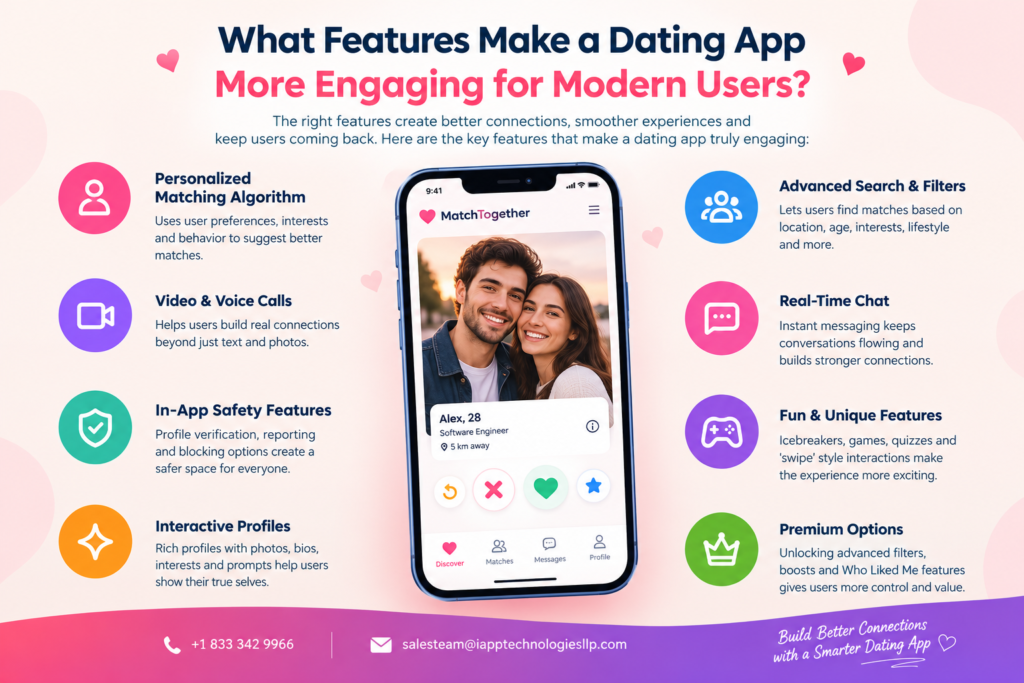
Modern dating has moved far beyond exchanging a few messages and hoping for a connection. People now use dating apps to discover compatible partners, explore different relationship goals, express their personalities, and build connections that feel meaningful in an increasingly digital world. As expectations evolve, simply offering a swipe interface and a list of nearby profiles is no longer enough to create an engaging experience.
Today’s users want dating platforms that understand their preferences, respect their time, protect their privacy, and make conversations feel natural. They also expect smooth navigation, authentic profiles, inclusive experiences, and features that help them move from online introductions to real-world relationships.
For dating app businesses, this shift presents an important opportunity for growth and innovation. A reliable Dating App Development Company can help businesses create user-centric features that encourage meaningful interactions and long-term engagement. Engagement should not be measured only by how many times someone opens an app or how many profiles they swipe through. Meaningful engagement also includes the quality of conversations, the confidence users feel while interacting, and their ability to find connections that match their intentions.
So, what features make a dating app more engaging for modern users? The answer lies in combining intelligent technology with thoughtful design, user safety, personalization, and genuine opportunities for connection.
1. AI-Powered Matchmaking That Understands Compatibility
Traditional matchmaking often relies on basic information such as age, location, interests, and appearance. Although these details help users discover potential partners, they do not always reveal whether two people might connect emotionally, socially, or intellectually.
Artificial intelligence can make matchmaking more relevant by considering a broader range of preferences. With users’ permission, a dating app can learn from their stated relationship goals, preferred communication styles, shared interests, lifestyle choices, and feedback on previous recommendations.
For example, one user might prefer quiet weekends, thoughtful conversations, and long-term commitment, while another may enjoy spontaneous outings and frequent social activities. Instead of presenting these individuals with recommendations based primarily on proximity, a compatibility system can consider how their expectations align.
Useful AI-powered matchmaking features include:
- Personalized match recommendations based on declared preferences.
- Compatibility indicators that explain why two profiles may be a good fit.
- Adjustable filters for lifestyle, interests, and relationship intentions.
- Feedback options that allow users to improve future recommendations.
- Controls that let people understand and influence how their profiles are recommended.
Transparency is essential. An app should avoid presenting an algorithm’s predictions as guaranteed romantic compatibility. Users should be able to understand the general factors behind a recommendation and correct inaccurate assumptions.
The strongest matchmaking experience is not necessarily the one that generates the most matches. It is the one that helps users discover people they would genuinely want to know better.
2. Rich Profiles That Reveal Personality
A profile is often the first opportunity for someone to communicate who they are beyond their appearance. Unfortunately, profiles built around a handful of photographs and short biographies can make people seem interchangeable.
Modern dating apps can improve this experience by offering creative ways to express personality. Instead of relying entirely on written descriptions, users can combine photographs, short audio introductions, interest badges, personal prompts, and optional video clips.
For example, a profile might answer questions such as, “What could you talk about for hours?”, “What does your ideal Sunday look like?” or “Which small thing instantly improves your day?” These prompts encourage more specific answers than generic statements about loving travel or enjoying good food.
Other useful profile features include:
- Optional voice introductions that communicate tone and personality.
- Interest collections covering music, books, hobbies, food, and activities.
- Short video introductions with clear privacy controls.
- Lifestyle preferences that help users identify practical compatibility.
- Profile completion suggestions that encourage authenticity without demanding excessive personal information.
Dating platforms should also make it easy to update profiles as interests and circumstances change. A profile that evolves naturally is more useful than one that feels like a permanent advertisement.
Rich profiles create better conversation starters, reduce uncertainty, and help people make decisions based on more than a photograph. They can make the discovery process feel more human before the first message is even sent.
3. Conversation Starters That Reduce First-Message Anxiety
Matching with someone can be exciting, but starting a conversation is often the point where enthusiasm disappears. Users may hesitate because they do not know what to say, worry about sounding uninteresting, or feel uncomfortable sending the same greeting repeatedly.
A dating app can address this problem with interactive conversation starters connected to profile information.
For instance, if two people share an interest in independent films, the app might suggest a question about a memorable movie experience. If both enjoy hiking, it could suggest discussing their favorite outdoor destinations.
Effective conversation features include:
- Profile-based opening questions.
- Shared-interest prompts that encourage mutual participation.
- Lighthearted question games for newly matched users.
- Optional message suggestions for people who need inspiration.
- Follow-up prompts that help conversations move beyond basic introductions.
AI-generated suggestions should remain optional and editable. Users should not feel that every message has been written by an algorithm, especially when the purpose is to establish a personal connection.
Another promising feature is a shared question card that both people answer independently before seeing each other’s responses. This creates a small moment of discovery without forcing either person to reveal anything sensitive.
The objective is not to automate romance. It is to remove the awkward friction that prevents genuine conversations from beginning.
4. Voice and Video Dating for More Natural Interaction
Text messaging is convenient, but it can leave out important parts of communication, including tone, timing, facial expression, and conversational rhythm. Voice and video features can help users establish a stronger sense of familiarity before deciding whether to meet.
A well-designed dating app can offer several levels of interaction, allowing users to choose what feels comfortable.
Voice notes are a useful starting point because they feel more personal than text while allowing people to respond at their convenience. Optional audio calls can provide a natural next step, while in-app video calls can help matched users communicate without immediately exchanging personal phone numbers.
To make these features practical, platforms should include:
- Clear controls for accepting or declining calls.
- Optional call scheduling.
- Microphone and camera previews.
- Blocking and reporting options during calls.
- Privacy protections that limit unnecessary exposure of personal details.
- Simple controls for ending a conversation immediately.
Some users may prefer text for accessibility, comfort, or personal reasons. Voice and video should therefore expand the available choices rather than become requirements for using the platform.
When introduced thoughtfully, these tools help people assess conversational chemistry, reduce uncertainty, and make the transition from messaging to a possible date feel less intimidating.
5. Strong Verification and Trust Features
An engaging dating experience depends on trust. Users are less likely to participate confidently when they suspect profiles are fake, photographs are misleading, or people are using the platform to deceive others.
Verification features can help address these concerns, provided the app explains what each verification label actually means.
A platform might offer selfie-based checks, optional video verification, or other proportionate identity-confirmation methods. Different badges should communicate distinct claims rather than suggesting that every verified user has been thoroughly investigated.
Important trust-building features include:
- Visible indicators showing which verification process a profile completed.
- Easy reporting for impersonation, harassment, and suspicious behavior.
- Automated detection of spam and repeated abusive activity.
- Human review for serious or disputed reports.
- Warnings about common romance scams and requests for money.
- Clear explanations of how verification data is collected and retained.
Verification should not become a promise that a person is completely safe. Even a genuine profile can belong to someone who behaves dishonestly. Apps should communicate this limitation clearly.
Trust also depends on fair moderation. Users should receive understandable explanations when action is taken against an account, alongside appropriate ways to appeal mistakes.
When safety measures are visible, understandable, and effective, users have more confidence to participate. That confidence can contribute to healthier conversations and a stronger long-term relationship with the platform.
6. Privacy Controls That Put Users in Charge
Dating involves personal information, emotional vulnerability, and sometimes sensitive details about identity, relationships, and location. Consequently, privacy is not simply a technical requirement. It is an important part of the overall user experience.
Modern users should have meaningful control over what they reveal, who can see it, and how their information is used. A platform that makes privacy settings difficult to find can discourage people from participating, even if its matchmaking features are excellent.
Useful privacy features include:
- Flexible profile visibility: Let users choose whether their profiles appear to everyone, selected audiences, or only people they have liked.
- Precise location protection: Display approximate distances or neighborhoods instead of exact locations.
- Incognito browsing: Allow users to explore profiles without automatically making themselves visible to everyone.
- Photo controls: Give users clear options for managing, replacing, or removing profile images.
- Data management: Make it easy to review permissions, download personal information where applicable, and request account deletion.
- Communication controls: Allow users to limit messages, hide their online status, or control read receipts.
Privacy settings should use plain language rather than technical explanations that leave users uncertain about what they are agreeing to. Sensitive permissions should be optional wherever possible, and consent should be specific and informed.
Developers should also minimize the information they collect. If a feature can work without accessing an entire photo library or storing precise movement history, the app should consider less intrusive alternatives.
A privacy-first experience creates a stronger foundation for trust. When people feel in control of their digital identity, they can focus more comfortably on discovering compatible partners.
7. Inclusive Design for Different Identities and Relationship Goals
There is no single definition of modern dating. Some people are seeking long-term partnerships, while others want casual relationships, companionship, or opportunities to explore their preferences. People also differ in their identities, cultural backgrounds, communication needs, and expectations.
A dating app becomes more engaging when it accommodates this diversity without forcing everyone into the same experience.
Inclusive design begins with profile creation. Users should have relevant options for gender identity, sexual orientation, and relationship intentions, with flexible visibility settings for sensitive information. The available choices should be thoughtfully designed and reviewed with the communities they are intended to serve.
Other important features include:
- Relationship-goal filters that help align expectations.
- Pronoun fields that users can choose to complete.
- Accessibility support for screen readers and assistive technologies.
- Adjustable text sizes, readable contrast, and clear navigation.
- Options for different communication preferences.
- Community guidelines that address harassment and discriminatory behavior.
Localization matters, too. A dating app operating across different countries may need relevant languages, culturally appropriate prompts, locally useful filters, and safety information that reflects regional circumstances.
Inclusivity does not mean adding an endless list of settings without considering their usefulness. It means identifying real differences in user needs and providing respectful, practical ways to accommodate them.
When users can represent themselves accurately and discover people with compatible expectations, the app feels less restrictive and more relevant to their lives.
8. Social Dating Features That Make Discovery More Interactive
Dating can feel surprisingly isolating when every decision takes place between two strangers behind separate screens. Social features can introduce a sense of shared discovery, making the process more relaxed and enjoyable.
For example, a dating app could offer optional double-date matching, where two friends coordinate with another pair for a group outing. It might also provide themed social rooms, virtual icebreaker events, or interest-based meetups.
These features give users additional ways to connect without making every interaction feel like a high-pressure romantic interview.
Consider a platform that hosts a virtual cooking conversation, a music discovery session, or a small group discussion about favorite travel experiences. People can participate because they enjoy the activity, while romantic connections can develop naturally.
Potential social features include:
- Group matching for friends who prefer a shared first-date experience.
- Interest-based communities with clear moderation.
- Virtual speed-dating sessions.
- Local activity discovery for consenting, interested users.
- Shared event invitations between compatible matches.
- Optional friend-assisted matchmaking, with permission from everyone involved.
Social discovery must be carefully moderated. Group settings should not expose users to unwanted attention, reveal private profile information, or pressure people into participating.
The most effective social features offer an alternative to traditional one-to-one matching rather than replacing it. They create more opportunities for users to express themselves and find common ground through activities they already enjoy.
9. Real-World Date Planning and Offline Experiences
A successful dating app should make it easier to progress from a promising conversation to a comfortable real-world meeting. Yet users often have to leave the app, search for venues, coordinate schedules, and work out the details themselves.
An integrated date-planning experience can reduce this friction.
Once two people express interest in meeting, the app might offer suggestions for public venues, compatible activities, or mutually convenient times. Users could share a shortlist of cafes, bookstores, restaurants, museums, or outdoor activities and decide together.
Useful planning features include:
- Shared availability selection.
- Public-place recommendations based on both users’ preferences.
- Activity suggestions based on shared interests.
- In-app invitations with clear acceptance controls.
- Optional calendar integration with explicit permission.
- Safety check-ins and trusted-contact sharing.
- Easy cancellation or rescheduling without awkward explanations.
For example, two people who enjoy art could choose a gallery visit instead of struggling to plan a conventional dinner date. Users who prefer quieter environments might choose a daytime cafe meeting.
The app should never automatically reveal a person’s exact location or calendar details to a match. Venue suggestions should also account for accessibility and practical preferences when possible.
Real-world planning is particularly valuable because it focuses the experience on progress rather than endless messaging. By making the next step easier, the platform can help users turn digital interest into meaningful experiences.
10. Smart Notifications That Respect Users’ Time
Notifications can bring people back to a dating app, but excessive alerts can quickly become irritating. Repeated reminders about inactive matches, artificial urgency, and vague messages designed to trigger curiosity may increase short-term activity while damaging long-term trust.
A better notification system prioritizes relevance and user choice.
Instead of sending a generic alert every few hours, an app could notify users when a compatible person responds, when a scheduled event is approaching, or when an important conversation needs their attention.
An effective notification system should provide:
- Adjustable notification categories.
- Quiet hours and do-not-disturb settings.
- A digest option for less urgent activity.
- Clear controls for disabling promotional alerts.
- Relevant reminders without manufactured urgency.
- Easy access to notification preferences.
Personalization can improve timing, but the system should not exploit emotional vulnerability. For example, notifications should not suggest that a user is missing their only chance at love simply because they have not opened the app.
The aim is to make returning feel useful, not obligatory. A user who receives fewer but more meaningful notifications may develop a healthier relationship with the platform.
11. Gamification That Encourages Genuine Connection
Gamification introduces playful elements into an app, making certain interactions more enjoyable. However, dating platforms must distinguish between rewarding meaningful participation and encouraging endless swiping.
A well-designed system might introduce weekly conversation challenges, shared-interest quizzes, profile-building milestones, or themed discovery activities. These features can encourage users to explore the platform without making romantic attention feel like a competition.
Examples include:
- A daily question that matched users can answer together.
- Optional compatibility quizzes.
- Personal milestones for completing an authentic profile.
- Shared challenges based on common interests.
- Seasonal events that encourage thoughtful introductions.
- Positive feedback for respectful communication.
Developers should avoid public popularity rankings, manipulative streaks, and rewards that encourage users to send unwanted messages. Romantic interest should never become a score that determines someone’s personal worth.
Gamification works best when it creates a reason to interact more thoughtfully. A short activity that helps two people discover a shared passion can be more valuable than dozens of superficial interactions.
By keeping the emphasis on curiosity, creativity, and mutual participation, dating apps can make engagement enjoyable without compromising the purpose of dating.
12. Performance, Accessibility, and an Effortless User Interface
Even the most innovative dating features can fail if an app is slow, confusing, or difficult to navigate. Technical performance is often an invisible part of engagement: users may not notice a well-optimized interface, but they will notice when messages fail to send or profiles take too long to load.
A modern dating app should deliver a consistent experience across different devices, network conditions, and accessibility needs.
Important design priorities include:
- Fast profile loading and responsive navigation.
- Reliable message delivery and clear delivery indicators.
- Efficient image compression without unnecessary loss of quality.
- Simple onboarding with a manageable number of steps.
- Clear explanations for permissions and account settings.
- Accessible buttons, readable text, and screen-reader support.
- Useful error messages and straightforward recovery options.
Onboarding deserves particular attention. Asking for too much information before users understand the platform can lead to abandonment. A better approach is to collect essential details first and allow users to complete optional profile sections later.
The interface should also make important actions predictable. Blocking someone, changing a privacy setting, or deleting an account should not require navigating through confusing menus.
A smooth experience reduces unnecessary effort and allows users to spend more time on the interactions that matter.
13. AI Dating Assistants That Support, Rather Than Replace, Users
Artificial intelligence can improve more than profile recommendations. Used responsibly, it can help users navigate the practical challenges of dating, from presenting themselves clearly to communicating their intentions.
An AI dating assistant might suggest ways to improve an unclear profile description, recommend conversation topics, or help someone express a boundary politely. It could also explain app features and help users identify suspicious messages.
For example, someone who wants to communicate that they are looking for a serious relationship could receive suggestions for expressing that preference naturally. The user would remain responsible for choosing the final wording.
Valuable AI assistant features include:
- Optional profile-writing guidance.
- Conversation prompts based on shared interests.
- Suggestions for expressing preferences respectfully.
- Explanations of safety tools and privacy settings.
- Context-aware warnings about potentially harmful messages.
- Personalized discovery recommendations that users can adjust.
However, there is a meaningful difference between helping someone communicate and impersonating them. If AI writes every message, users may develop expectations based on a personality that does not reflect the person they eventually meet.
Dating apps should preserve authenticity by making AI assistance optional and giving users control over its use. They should also explain how personal information is processed and avoid making sensitive inferences without appropriate consent.
The best AI assistant is not one that manufactures the perfect romantic persona. It is one that helps people communicate more confidently while remaining themselves.
14. Better Feedback Systems and Meaningful Engagement Metrics
Dating app developers need to understand which features actually improve the experience. However, measuring engagement exclusively through screen time, daily logins, or swipe counts can produce misleading results.
A person who spends hours browsing profiles may be struggling to find a suitable match. Another person who finds a compatible partner quickly may stop using the app because it has fulfilled its purpose.
For this reason, product teams should measure both activity and user outcomes.
Useful indicators include:
- The proportion of matches that lead to conversations.
- The percentage of conversations with meaningful two-way participation.
- User satisfaction with match recommendations.
- Reports of unwanted messages and fraudulent profiles.
- Retention associated with positive user experiences.
- Successful use of safety and privacy controls.
- Feedback about the transition from matching to meeting.
Apps can also invite users to provide optional feedback after conversations or dates. These surveys should be discreet and should never pressure users to disclose intimate details.
Privacy-preserving analytics can help teams identify friction without collecting more personal information than necessary. Developers should also investigate whether their algorithms unfairly disadvantage certain groups or repeatedly recommend profiles that users have rejected.
The central question is simple: does a feature help users make better connections, feel safer, or use their time more effectively?
When product decisions are guided by those outcomes, engagement becomes a measure of value rather than a competition for attention.
15. Transparent Premium Features and Fair Monetization
Many dating platforms rely on subscriptions, paid upgrades, and in-app purchases. These business models can support continued product development, but monetization choices also influence whether users perceive the app as trustworthy.
Premium features may include advanced filters, additional profile customization, visibility controls, or enhanced discovery tools. The important distinction is between charging for convenience and making basic safety or respectful participation dependent on payment.
A fair monetization strategy should include:
- Clearly displayed subscription prices.
- Transparent renewal and cancellation terms.
- A useful free experience.
- Optional upgrades with understandable benefits.
- No misleading claims about guaranteed matches.
- Accessible account and billing management.
Dating apps should avoid using artificial scarcity or emotional pressure to encourage purchases. For example, telling users that they must pay immediately to avoid losing a supposedly ideal partner can undermine trust.
Premium tools should offer genuine utility without making non-paying users feel that meaningful connections are impossible.
A sustainable business model depends on users recognizing value in the service. When paid features improve convenience while the platform continues to prioritize safety, fairness, and authentic connections, commercial success and user satisfaction can support one another.
Conclusion: Build for Better Connections, Not Just More Clicks
The most engaging dating apps are not necessarily those with the largest feature lists. They are the platforms that combine useful technology with empathy, simplicity, authenticity, and trust.
AI-powered matchmaking can make discovery more relevant. Rich profiles can help users express their personalities. Conversation starters can reduce first-message anxiety, while voice and video tools can make communication more natural. Verification, privacy controls, inclusive design, and responsive moderation help people feel more confident about participating.
Social activities, real-world date planning, thoughtful notifications, and carefully designed gamification can further improve the experience. Meanwhile, accessible interfaces, responsible AI assistance, transparent monetization, and outcome-focused analytics help ensure that innovation remains useful over time.
For businesses developing or improving a dating app, the priority should be to identify the problems users experience at each stage of their journey. Start with the fundamentals: reliable messaging, relevant matches, easy-to-understand profiles, strong safety measures, and meaningful privacy choices. Introduce more advanced features when they solve a clear user problem rather than simply making the app appear more innovative.