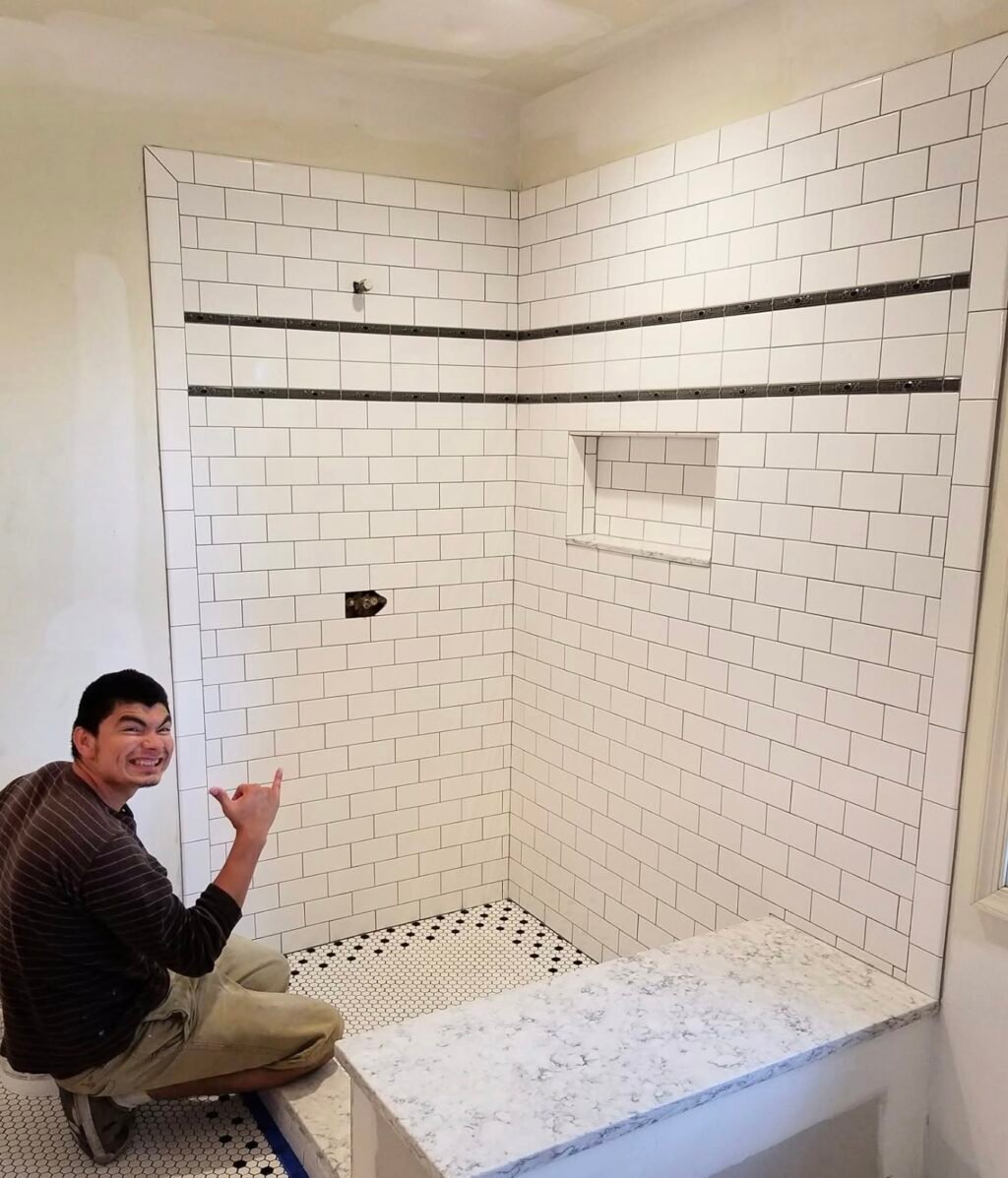
Water doesn’t care how nice your tile looks. That’s the thing about showers. You can spend four grand on gorgeous stuff and if what’s behind it isn’t right, the water finds its way in anyway, quietly, for months, until you notice a soft spot on the wall outside the bathroom or a smell you can’t place.
I’ve seen it enough times to say this plainly. The difference between a shower that lasts and one that turns into a money pit usually has nothing to do with the tile. It comes down to the people installing it. Good shower tile installation contractors do a bunch of boring, invisible things that nobody ever sees or thanks them for, and that’s exactly what keeps your walls dry. So let’s walk through what they actually do.
What Do Contractors Do Before Any Tile Goes Up?
They inspect and prep what’s behind the wall. That means checking for existing moisture, rot, or soft framing, then fixing it first. Tiling over a problem hides it, it doesn’t solve it. A solid install starts with a solid, dry, flat base, not tile.
This is the step lazy installers skip, honestly. Demo goes quick, everybody wants to see tile on the wall, and prep feels like wasted time. It’s not. If a contractor spends real time poking around in your old shower before quoting, that’s a good sign, not a delay.
How Does Waterproofing Actually Work in a Shower?
Tile and grout aren’t waterproof. Water passes through grout lines slowly. A membrane behind the tile, either liquid-applied or sheet style, is what actually blocks it. Pros apply it across walls, floor, corners, and around the drain, with every seam sealed.
Corners and the drain area are where most leaks start, so those get extra attention. A good contractor will happily tell you which system they use and why. If they get vague, or say “oh, the tile does that,” keep looking. That answer should end the conversation.
Why Does the Slope of the Shower Floor Matter?
The floor needs to slope toward the drain, usually about a quarter inch per foot. Without it, water pools and sits against grout and tile all day, wearing them down faster. Professionals check the slope with a level before tile ever goes down, not after.
Sounds small. It isn’t. Standing water is the enemy of everything in a shower. Pooling also means more mildew, slippery spots, and grout that discolors in months instead of years. Getting this right takes skill, which is part of what you’re paying for.
What Materials Help Prevent Water Damage?
Cement board, foam shower panels, or similar water-tolerant backing beats standard drywall every time. Epoxy grout resists moisture and staining better than cement-based grout. Flexible silicone goes in corners where grout would crack. Quality materials cost more upfront but cost less than a redo.
Here’s a rough idea of how costs tend to stack when you’re comparing options, lowest to highest:
- Re-tiling an existing shower with the same footprint and basic waterproofing
- A standard walk-in shower rebuild with new membrane, backer board, and fixtures
- Custom builds with natural stone, built-in niches, and premium glass or fixtures
Prices shift with size and material, so get a real walkthrough instead of trusting numbers you find online.
Why Do Corners, Niches, and Seams Need Special Care?
Because that’s where water gets in. Flat walls rarely fail, joints and transitions do. Contractors use flexible sealant in corners, slope niche shelves slightly outward so water drains, and seal around fixtures. These details are tiny but they’re where leaks actually start.
A built-in shelf looks great and also happens to be a classic failure point if it’s flat and poorly sealed. Ask any contractor you’re interviewing how they handle the niche specifically. You’ll learn more from that one answer than from a whole portfolio of pretty photos.
What Should You Look for in Tile Installation Services?
Look for companies whose tile installation services include waterproofing, prep, and plumbing coordination, not just setting tile. Ask for proof of licensing and insurance, recent local project photos, and a written, itemized quote. Companies that handle the whole process tend to catch problems earlier.
A single contractor handling tile, plumbing, and remodeling means fewer finger-pointing moments when something goes wrong. Integrity Tile and Home takes that all-in-one approach for local homeowners, which is worth considering when you compare bids. And whoever you hire, check their reviews for actual details about leaks, callbacks, and how they handled problems, since every company runs into one eventually.
Final Thoughts
Preventing water damage in a shower isn’t magic. It’s a chain of small decisions done correctly, prep, waterproofing, slope, materials, sealing, and a contractor who understands why each step matters. Skip any link and the whole thing gets shaky, even if it looks perfect for the first couple years.
When you’re hiring, ask the uncomfortable questions. How do you waterproof? What do you do at the corners? What happens if something leaks later? Honest, confident answers mean you’ve probably found someone good. Defensive or vague ones mean keep shopping. You’ll pay a bit more for the right crew, and you’ll never think about your shower walls again, which is exactly the point.