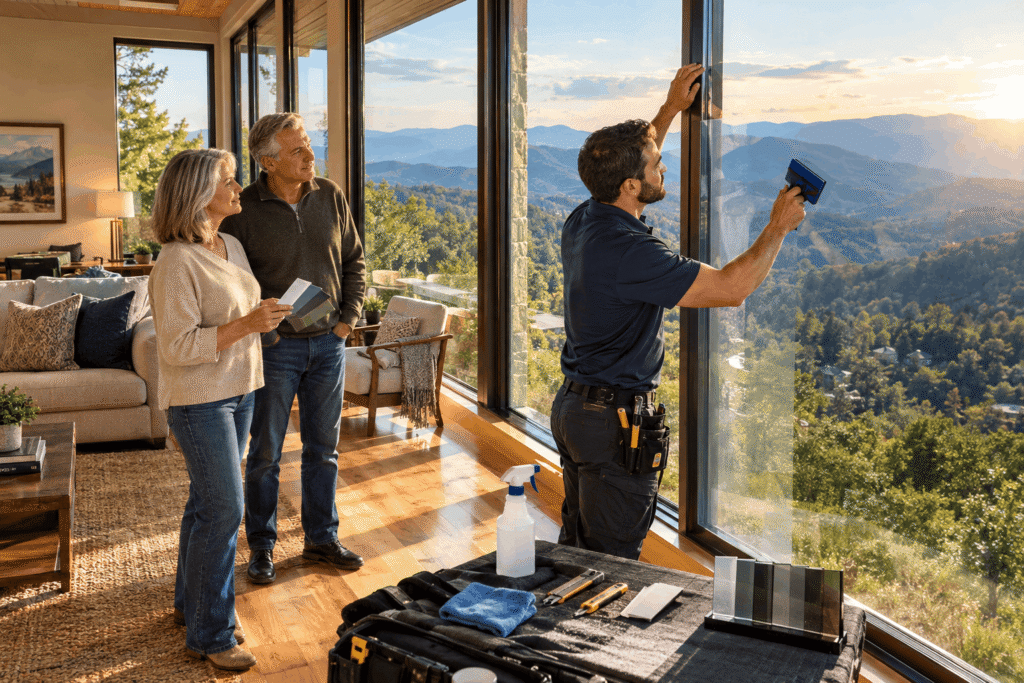
On a clear afternoon in the Blue Ridge Mountains, sunlight can pour through a living room window with surprising force. The view may be beautiful, but the glare on the TV, the heat on the couch, and the slow fading of the hardwood floor tell another story. That’s why more homeowners are looking into Premium Residential Window Tint near Mars Hill, NC as a practical way to keep their homes comfortable without blocking the scenery they love.
Window film has changed a lot over the years. It’s no longer the dark, bubbly plastic many people picture from older cars. Today’s residential films are thin, often nearly clear, and designed for specific problems like heat, UV damage, and privacy.
Why Mountain Homes Face Unique Sunlight Challenges
Homes in western North Carolina deal with conditions that flatland houses often don’t. Higher elevations bring stronger UV exposure, and many mountain homes are built to face long-range views. That usually means large windows, sliding doors, and sometimes whole walls of glass.
Those big windows are a major reason people buy property in the area. But they also let in a lot of solar energy. In summer, rooms facing south or west can heat up fast, even when the outdoor air feels mild.
Winter brings its own issues. The sun sits lower in the sky, so light comes in at a sharper angle and hits eyes, screens, and furniture more directly. Many homeowners notice glare more in January than in July.
How Residential Window Film Actually Works
Window film is a thin layer applied to the inside surface of the glass. Depending on the type, it reflects or absorbs part of the sun’s energy before it fully enters the room.
Most quality films block up to 99 percent of ultraviolet rays. UV light is the main cause of fading in fabrics, rugs, artwork, and wood finishes. Some films also target infrared light, which is the part of sunlight people feel as heat.
There are several common types. Dyed films are budget-friendly but tend to fade over time. Metallic films reject heat well but can look shiny and may interfere with cell signals. Ceramic and spectrally selective films are often considered the higher-end choice, since they reduce heat while staying clear and low-reflective.
Some newer films are built with insulating properties, sometimes called low-e films. These help keep warm air inside during colder months, which can matter in a region where winter nights get chilly.
The Everyday Benefits Homeowners Notice
Glare reduction is often the first thing people notice. A home office that was hard to use in the afternoon can suddenly become comfortable. Families who gave up on watching TV during daylight hours often find the screen easy to see again.
Heat control comes next. Rooms that once felt stuffy by mid-afternoon stay closer to the temperature of the rest of the house. This can ease the load on air conditioning and reduce hot and cold spots between rooms.
Fade protection is quieter but just as valuable. Sun damage happens slowly, so many people don’t notice it until a rug shows a clear line where light hit it each day. Blocking UV helps furniture, flooring, and keepsakes hold their color longer.
Privacy is another reason people consider film. Some options let residents see out clearly during the day while making it harder for anyone to see in. Frosted or decorative films work well for bathrooms, entry doors, and street-facing windows.
There’s also a comfort factor that’s hard to measure. Sitting near a window without squinting or feeling the sun’s heat on your skin simply makes a room more pleasant.
Real-World Situations Where Tint Makes Sense
Picture a retired couple with a west-facing sunroom. They built it to enjoy sunsets, but by 4 p.m. it’s too hot and bright to sit in. A clear heat-rejecting film can make the space usable again without changing the view.
Or think about a family with young kids and a playroom full of bright plastic toys and painted shelves. Within a couple of years, colors start to look washed out. UV-blocking film can slow that fading in a way blinds alone often can’t.
Remote workers face a different problem. A desk placed near a window may get great natural light in the morning, then blinding glare on the monitor after lunch. Many people try curtains first, only to find the room feels dark and closed in.
Vacation homeowners have their own concerns, too. A cabin that sits empty for weeks still gets daily sun on its furniture and floors. That’s one reason people searching for Expert Residential Window Tint in Cashiers, NC, where many seasonal homes sit at high elevation, often focus on long-term UV protection.
What to Think About Before Choosing a Film
Not every film suits every window. Some double-pane or low-e glass has specific requirements, and the wrong film can, in rare cases, raise the risk of thermal stress. A trained installer will usually check glass type and window age before suggesting a product.
It’s also worth checking how a film affects the manufacturer’s window warranty. Many reputable film makers offer coverage that protects the glass if a problem is tied to the film.
Appearance matters as well. Some homeowners want film that’s almost invisible from the street, while others prefer a slightly tinted look. Asking to see samples on actual glass, in daylight, is one of the best ways to avoid surprises.
Installation quality makes a real difference. Dust, poor edge work, or rushed application can lead to bubbles and peeling. That’s why many homeowners in Mars Hill compare a few local professionals before deciding, looking at experience, film brands carried, and warranty terms.
Regional companies such as EcoArc Home & Office Window Tinting, Inc. are among those that work across western North Carolina mountain communities. Comparing several providers helps homeowners get a clear sense of options and fair pricing.
Is Window Tint Worth It for Mountain Homes?
For many households, the answer depends on how they use their rooms. If certain spaces feel too bright, too warm, or too exposed, film can be a simple fix that keeps the view intact.
Like most home upgrades, results depend on choosing the right product for the right window. Homeowners who take time to learn the basics tend to be happiest with the outcome, whether they live in a mountain town or a busier area like those searching for Expert Residential Window Tint in Cashiers, NC.
In the end, looking into Premium Residential Window Tint near Mars Hill, NC is less about changing a home’s look and more about making daily life inside it more comfortable.
Frequently Asked Questions
Does residential window tint make rooms darker?
Not necessarily. Many modern films are nearly clear and block heat and UV rays without noticeably reducing natural light.
How long does home window film last?
Quality residential films often last 10 to 20 years or more, depending on sun exposure, film type, and installation quality.
Can window tint help lower energy bills?
It can reduce heat gain in summer and, with some films, heat loss in winter. Savings vary based on the home, window size, and climate.
Will window film damage double-pane windows?
In most cases, no. Choosing a film rated for your glass type and having it professionally installed greatly lowers any risk.
Can you see out of tinted windows at night?
Reflective films can act like a mirror from the inside after dark when interior lights are on. Low-reflective films reduce this effect.