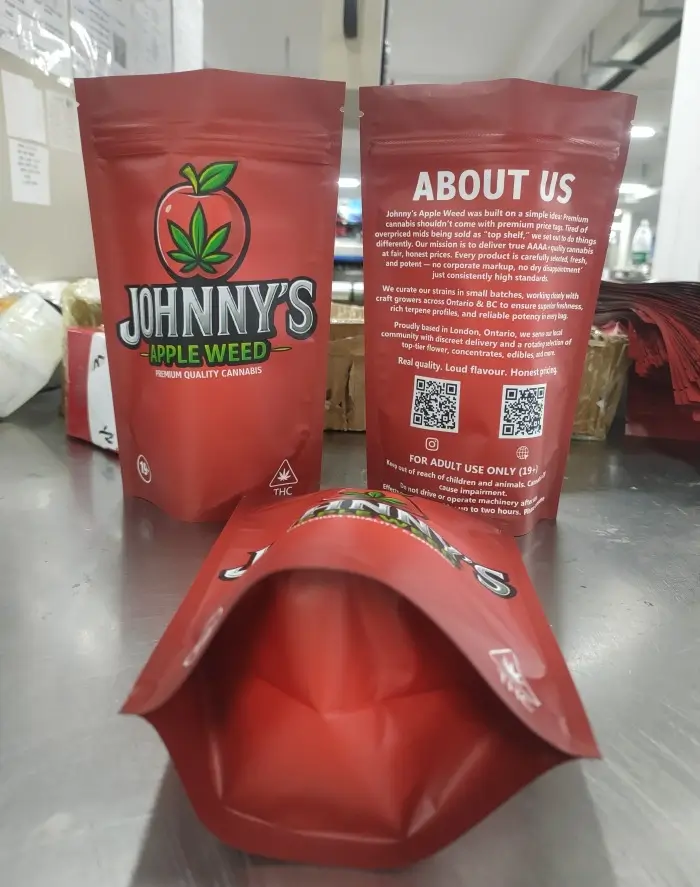
Understanding why certain pouches outperform others often comes down to material science rather than marketing claims printed on packaging. A film’s molecular structure, layer arrangement, and metallization process together determine how well moisture, oxygen, and light are kept away from stored contents. Businesses making purchasing decisions benefit from grasping these underlying mechanisms rather than relying solely on supplier assurances. This examination of Mylar Bags Canada breaks down the scientific principles governing barrier performance across different applications. The sections below explore each mechanism in sequence.
Polymer Layers Forming The Base Structure
Foundation films typically consist of polyester or polyethylene layers selected for specific mechanical properties. Biaxially oriented polyester, often abbreviated BOPET, provides tensile strength and dimensional stability that pure polyethylene alone cannot match. Layer thickness within this base structure influences puncture resistance far more than surface appearance suggests. Multiple polymer types are frequently combined, each contributing distinct properties to overall pouch performance. Selection among these base materials establishes the mechanical foundation everything else builds upon.
Metallization Process Creating Barrier Properties
Vacuum deposition applies an extremely thin aluminium layer onto polymer film, creating the reflective barrier associated with mylar-style packaging. Vapour-deposited aluminium, measured in nanometres, blocks light transmission while adding minimal weight to the overall structure. Thickness consistency across this metallized layer determines barrier effectiveness, with thinner or uneven deposition allowing greater permeability. Quality control during this process significantly affects how well finished pouches perform once filled and sealed. Variation between suppliers often traces back to differences in metallization equipment and process control.
Lamination Bonding Multiple Film Layers Together
Adhesive lamination joins separate film layers into a single cohesive structure capable of combined barrier properties. Solvent-based and solvent-free adhesives both serve this purpose, though solvent-free options are increasingly favoured for reduced emissions during manufacturing. Bond strength between layers affects overall pouch durability, since delamination under stress compromises barrier integrity entirely. Curing time and temperature during lamination influence final bond quality in ways that rushed production sometimes overlooks. Proper lamination transforms individual films into a unified barrier system.
Oxygen Transmission Rate Measurement Standards
Quantifying barrier performance requires standardized testing rather than subjective assessment of film appearance. Oxygen transmission rate, expressed in units per square metre per day, provides a measurable benchmark for comparing different film structures. Lower transmission rates indicate stronger oxygen resistance, directly correlating with extended shelf life for sensitive contents. Testing conditions, including temperature and humidity during measurement, must be standardized for meaningful comparison between suppliers. Requesting this data during evaluation removes guesswork from barrier performance claims.
Water Vapour Transmission Testing Methods
Moisture resistance follows similar measurement principles applied to vapour rather than oxygen movement through film structures. Water vapour transmission rate testing exposes film samples to controlled humidity gradients, measuring how much moisture passes through over time. Results vary considerably between film types, with metallized structures typically outperforming clear plastic alternatives significantly. Seasonal humidity variation across Canadian regions makes this metric particularly relevant for businesses shipping nationwide. Comparing transmission rates across candidate materials supports more informed specification decisions.
Seal Strength Testing Under Controlled Conditions
Closure reliability depends on measurable seal strength rather than visual inspection alone determining adequate bonding. Tensile testing equipment applies controlled force to sealed seams, quantifying the pressure required before separation occurs. Results are compared against minimum thresholds established for specific applications, ensuring seals withstand expected handling stress. Testing across multiple seal locations within a single pouch reveals whether consistency holds throughout the entire closure length. This measurement approach replaces guesswork with verifiable performance data.
Puncture Resistance Under Standardized Force
Mechanical durability testing determines how much force a film structure withstands before failure occurs. A few standardized methods commonly assess this property:
- Dart drop testing measuring impact resistance under controlled weight
- Probe puncture testing quantifying force required for penetration
These measurements help predict how packaging will perform against sharp product edges or rough handling during transit.
Static Charge Behaviour in Fine Powders
Electrostatic properties affect how certain film structures interact with powder-based contents during filling and storage. Anti-static treatments applied during manufacturing reduce charge buildup that would otherwise cause clumping or adhesion to interior surfaces. Testing typically involves measuring charge decay time after controlled static generation, quantifying how quickly a treated film returns to neutral. This property matters particularly for supplement powders and finely milled food products prone to static-related handling issues.
Recyclability Assessment for Mono-Material Films
Environmental evaluation increasingly requires understanding how film composition affects end-of-life processing options. Near-infrared sorting technology, used across recycling facilities, identifies polymer types to route materials correctly through appropriate processing streams. Mono-material structures sort cleanly, while mixed-composition laminates often get rejected or downcycled due to separation difficulty. Understanding these sorting mechanisms helps explain why material simplification has become a genuine engineering priority rather than a marketing talking point.
Applying Testing Data to Specification Decisions
Translating laboratory measurements into practical purchasing decisions requires matching test results against actual storage and shipping conditions a product will encounter. Consultation with an experienced supplier such as Universal Packaging helps interpret this data within the context of specific business requirements. Sample testing under realistic conditions, rather than laboratory extremes alone, often reveals performance differences that specification sheets fail to capture fully. This applied approach ensures the protection of the product matches genuine rather than theoretical requirements.
Conclusion
Considered together, these scientific principles explain why certain barrier pouches genuinely outperform simpler alternatives rather than merely appearing more expensive. Polymer selection, metallization quality, and lamination integrity each contribute measurably to overall performance rather than acting as isolated specifications. Standardized testing removes ambiguity from these claims, allowing businesses to compare options based on verifiable data rather than marketing language. Detailed guidance on interpreting these measurements, including sample testing support, remains available through Universal Packaging, helping Canadian businesses select barrier specifications grounded in genuine scientific understanding rather than assumption.