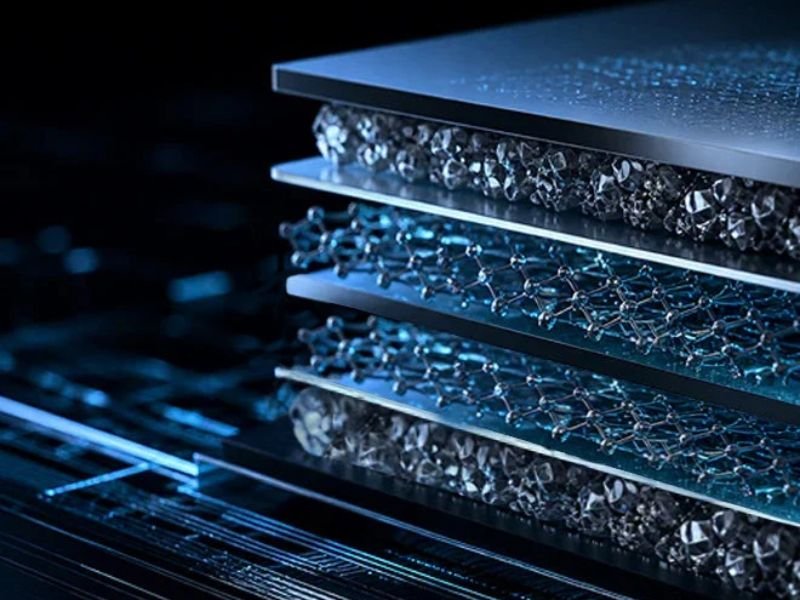
The growth of solid state batteries is creating new opportunities for safer, more efficient, and higher energy storage systems. As research moves from laboratory concepts toward practical cells, choosing the right solid-state battery material supplier can make a meaningful difference. Ampcera supports this work through advanced battery materials, engineering services, and solutions for solid state battery research and development.
Why Do Solid State Batteries Need Advanced Materials?
Solid state batteries replace the traditional liquid electrolyte with a solid electrolyte. This change can offer a path toward improved safety and higher energy density, but it also creates new material and processing challenges.
Electrolytes must provide suitable ionic conductivity and work well with other cell components. Cathode materials need to maintain good electrochemical performance while forming stable interfaces with the solid electrolyte. Manufacturing processes must also control moisture, pressure, particle size, and material compatibility.
For these reasons, a solid-state battery material supplier is not simply a source of powders. Researchers often need materials that are consistent, well characterized, and suitable for controlled experiments.
How Ampcera Supports Battery Development?
Ampcera focuses on materials and services for advanced energy storage, with particular attention to solid state battery technology. Its product portfolio includes sulfide solid electrolytes, coated cathode materials, battery research tools, and engineering services.
This broad approach can be useful when teams are comparing materials or developing new cell designs. Instead of treating every material as an isolated component, researchers can consider how electrolytes, cathodes, processing methods, and testing conditions work together.
Sulfide Solid Electrolytes
Sulfide electrolytes are widely studied for solid state batteries because they can offer high ionic conductivity and good mechanical properties. Ampcera provides sulfide electrolyte materials for research and development applications.
Material selection still depends on the specific cell design. Researchers may need to evaluate ionic conductivity, particle characteristics, air sensitivity, compatibility with cathodes, and processing requirements before selecting a material.
Coated Cathode Materials
Cathode surface coatings can help manage reactions at the interface between cathode particles and electrolyte. Ampcera offers coated cathode materials using coating systems such as lithium niobium oxide and lithium zirconium oxide.
These materials can be useful for teams studying nickel rich cathodes and other advanced battery chemistries. The purpose of a coating is not simply to add another layer. The coating must work with the underlying cathode and the solid electrolyte while maintaining suitable electrochemical behavior.
Battery Processing and Engineering Services
Materials are only one part of solid state battery development. Processing can have a major effect on the final cell.
Ampcera provides services for dry process electrode fabrication and sulfide electrolyte film processing. These services can help research teams explore electrode and electrolyte formats without building every processing capability internally.
What Should You Look for in a Material Partner?
Selecting a solid-state battery material supplier involves more than comparing product names. A useful evaluation should consider the technical requirements of the project.
Important factors may include:
- Material composition and specifications
- Particle size and morphology
- Ionic or electronic properties
- Electrochemical compatibility
- Moisture and air sensitivity
- Batch consistency
- Available technical documentation
- Processing support
- Scale up potential
- Testing and engineering services
Clear specifications are especially important in battery research. Small changes in particle size, composition, surface treatment, or processing conditions can affect cell results.
The Role of Material Consistency
Consistency matters because battery research depends on repeatable experiments. If a material changes significantly from one batch to another, it can become difficult to determine whether a performance difference came from the cell design or the material itself.
A solid-state battery material supplier should therefore provide clear information about material specifications and intended applications. Researchers can then build experiments around known inputs and compare results more effectively.
Ampcera’s focus on advanced materials and engineering reflects this need for controlled development. Its portfolio is designed to support different stages of battery research, from material evaluation to cell prototyping.
Why Coating Matters for Advanced Cathodes?
High performance cathode materials can face challenging interfacial conditions. Direct contact between a cathode and solid electrolyte may lead to unwanted reactions, depending on the chemistry and operating conditions.
A carefully designed coating can act as a protective interface. It may help reduce undesirable reactions while supporting lithium ion transport. The exact benefit depends on the coating chemistry, thickness, cathode structure, electrolyte, and test conditions.
For researchers, coated materials provide another variable to investigate. Instead of changing the entire cathode chemistry, teams can study how surface engineering influences cell behavior.
Supporting Solid State Battery Research
The development of solid state batteries involves many connected steps. Material selection, powder handling, electrode preparation, electrolyte processing, cell assembly, pressure control, and testing can all influence results.
Working with a solid-state battery material supplier that also understands these connected processes can simplify research planning. Ampcera combines material products with services and tools intended for battery research and pilot development.
This can be valuable for teams that want to move beyond small material experiments and evaluate complete cell concepts.
From Laboratory Research to Prototyping
Early research often begins with small material quantities and basic electrochemical testing. As a concept develops, researchers may need larger batches, processed films, dry electrodes, specialized cell hardware, or controlled environments.
A practical materials partner can support these changing needs. Ampcera’s portfolio includes materials and services that address several parts of this development path.
The goal is not to remove the need for testing. Instead, reliable materials and processing support can help researchers spend more time studying their battery design and less time solving basic supply or fabrication problems.
Applications for Advanced Energy Storage
Solid state battery research is relevant to several markets. Electric vehicles are one major area because higher energy density and improved safety are important goals. Consumer electronics can also benefit from advances in battery materials and cell design.
Other potential areas include stationary energy storage, aerospace systems, and specialized power applications. Each application has different requirements, so material selection should always be based on the intended cell architecture and operating conditions.
A solid-state battery material supplier can support these projects by offering materials that researchers can evaluate under their own specific conditions.
Building a Better Development Workflow
A structured workflow can make battery material research more efficient. Teams can begin by defining the target cell chemistry and performance requirements. They can then select suitable electrolyte and cathode materials, establish processing conditions, and create a repeatable testing plan.
A useful workflow may include:
- Define the battery chemistry and target application.
- Identify compatible electrolyte and cathode materials.
- Review material specifications and handling requirements.
- Establish electrode and electrolyte processing conditions.
- Assemble test cells using controlled procedures.
- Measure electrochemical and physical performance.
- Compare results and refine the material or process.
This approach helps separate material effects from processing effects and makes future experiments easier to reproduce.
Why Is Ampcera Relevant to Solid State Battery Development?
Ampcera brings together advanced materials, engineering knowledge, and battery development services. Its offerings cover sulfide solid electrolytes, coated cathodes, dry processing, electrolyte films, testing equipment, and dry room solutions.
For companies, universities, and research groups, this range can provide a starting point for evaluating different solid state battery approaches. The right combination of materials will still depend on the project, but having several compatible options available can make development more flexible.
As the industry continues to investigate solid state battery technology, access to specialized materials and processing expertise will remain important. Ampcera’s focus is on helping researchers and developers explore these technologies with practical material solutions.
Frequently Asked Questions
What does a solid-state battery material supplier provide?
A solid-state battery material supplier may provide electrolytes, cathode materials, coatings, processing services, testing equipment, or other components used during battery research and development. The exact offering varies by supplier.
Why are sulfide electrolytes important?
Sulfide electrolytes are studied because many compositions can provide high ionic conductivity and useful mechanical characteristics. However, they can also be sensitive to moisture and air, so appropriate handling and processing are important.
What are coated cathode materials used for?
Coated cathode materials are used to study and manage the interface between cathode particles and electrolyte. Researchers can evaluate whether a selected coating improves stability or other electrochemical characteristics under their chosen conditions.
Can Ampcera support prototype development?
Ampcera offers materials and processing services intended for research, prototyping, and advanced battery development. The appropriate combination depends on the project’s chemistry, cell format, and technical requirements.
Conclusion
Choosing a solid-state battery material supplier is an important step for teams developing next generation energy storage. The right materials can provide a reliable foundation for controlled research, while processing and engineering support can help turn laboratory findings into practical prototypes.
Ampcera offers a range of advanced battery materials and development services, including sulfide solid electrolytes, coated cathodes, dry processing, electrolyte films, and battery research equipment. By bringing these capabilities together, Ampcera supports researchers and developers as they investigate new solid state battery designs and work toward future energy storage solutions.