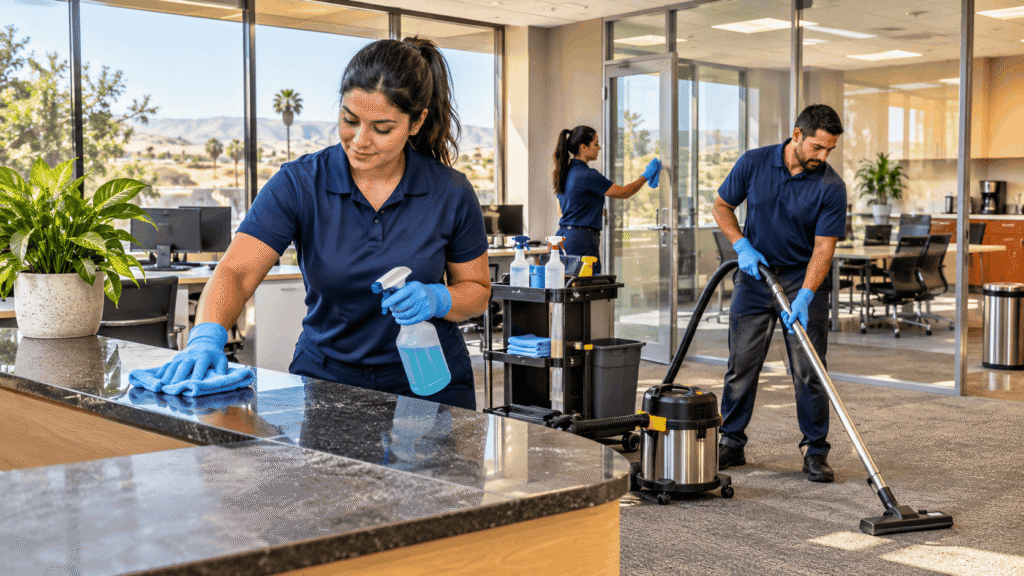
On a Monday morning, the first thing employees notice is usually the building. The trash bins are full, the breakroom counters are sticky, and a fine layer of dust covers every desk. Nobody says much, but the mood shifts. This is why commercial cleaning services in Bakersfield, CA have become a regular part of how local businesses operate, not an occasional extra.
Commercial cleaning covers far more than a quick vacuum after hours. It includes routine upkeep, deep cleaning, restroom sanitation, floor care, and specialized work for spaces like medical offices or warehouses.
This guide covers what commercial cleaning involves, why it matters in a Central Valley city, and how different businesses use it.
What Commercial Cleaning Actually Involves
Commercial cleaning is professional cleaning for business spaces. That includes offices, retail stores, clinics, schools, gyms, restaurants, and industrial buildings.
Residential cleaning focuses on comfort. Commercial cleaning has a different goal. It supports health, safety, and the way a business presents itself to customers and staff.
A typical arrangement covers routine tasks such as:
- Emptying trash and recycling
- Dusting desks, shelves, and surfaces
- Vacuuming and mopping floors
- Cleaning and restocking restrooms
- Wiping breakrooms and kitchen areas
- Disinfecting door handles, light switches, and other high-touch points
Beyond the basics, many businesses schedule periodic services. Carpet extraction, floor stripping and waxing, window washing, and post-construction cleanup usually happen monthly, quarterly, or as needed.
Key takeaway: Commercial cleaning is a schedule of tasks built around how a space is used, not a single job.
Why Local Conditions Matter in Bakersfield
Cleaning needs aren’t the same everywhere. Bakersfield sits at the southern end of the San Joaquin Valley, and that shapes what buildings deal with every day.
Dust is the biggest factor. Agriculture, oil field activity, construction, and dry summers all put fine particles into the air. That dust gets tracked through entryways, settles on surfaces, and builds up in vents and filters faster than many newcomers expect.
Heat plays a role too. Long, hot summers keep HVAC systems running hard, so buildings stay closed up for months. Indoor air, carpets, and upholstery hold onto more dirt and allergens when fresh air is limited.
The local economy is also varied. One cleaning approach doesn’t fit a downtown law firm, a medical clinic near the hospital district, and a distribution warehouse off Highway 99. Each space has its own traffic patterns, surfaces, and standards.
Key takeaway: Valley dust and heat mean local buildings often need more frequent entryway, floor, and air-vent attention than similar spaces in milder climates.
Office Cleaning vs. Broader Commercial Cleaning
People often use these terms interchangeably, but there’s a useful difference.
Office Cleaning Services in Bakersfield, CA usually focus on workspaces such as cubicles, conference rooms, reception areas, and breakrooms. The work is routine and predictable. It often happens in the evening so it doesn’t disrupt the workday.
Commercial cleaning is the wider category. It can include retail floors, industrial areas, healthcare settings, and facilities that need specialized equipment or certified procedures.
For a small business owner, the difference matters when comparing providers. A company that handles basic office upkeep well may not have the training or tools for a dental clinic’s sterilization standards or a warehouse’s sealed concrete floors.
The Real Benefits of Professional Cleaning
A Healthier Workplace
Shared spaces spread germs quickly. Keyboards, phones, coffee makers, and door handles get touched dozens of times a day.
Regular disinfection of these surfaces can help reduce the spread of colds and flu through an office. Fewer sick days mean steadier productivity, especially for small teams where one absence is felt right away.
Better First Impressions
Customers notice details. A smudged glass door, a dusty lobby plant, or an untidy restroom can quietly affect how a business is judged.
This matters most for client-facing businesses such as law offices, real estate agencies, and medical practices. A clean space signals care and professionalism before anyone says a word.
Time Back for Staff
In many small businesses, cleaning falls to employees by default. Someone takes out the trash, someone else wipes the counters, and resentment slowly grows.
Moving that work to a dedicated crew lets staff focus on the jobs they were hired to do. It also removes an awkward source of workplace tension.
Longer-Lasting Facilities
Carpets, hard floors, and furniture are expensive to replace. Grit ground into carpet fibers wears them down faster. Neglected tile grout and finished floors lose their protective layers.
Routine professional care extends the life of these surfaces. Over several years, that can mean real savings on replacements.
Compliance and Safety
Some industries have strict cleanliness rules. Food service, healthcare, and childcare facilities face health inspections and regulatory standards.
Trained cleaning crews understand proper chemical use, cross-contamination prevention, and waste handling. That knowledge lowers the risk of failed inspections or safety incidents.
What This Looks Like in Practice
The Growing Accounting Firm
Picture a 15-person accounting office downtown. During tax season, staff work long hours and the breakroom becomes a mess of takeout containers and coffee spills.
Before hiring help, a rotating chore chart caused constant friction. After switching to nightly cleaning, the team arrived each morning to a reset space. The office manager described it as one less thing to argue about during the most stressful months of the year.
The Medical Clinic
A family practice clinic has very different needs. Exam rooms need disinfection between patients, while waiting areas and restrooms need thorough cleaning every day.
Here, the cleaning crew’s training matters as much as their schedule. Clinics often look for teams familiar with healthcare-grade disinfectants and proper handling of sensitive areas.
The Warehouse Operation
A distribution center on the city’s edge deals mostly with dust, tire marks, and debris on large concrete floors. Office space is a small part of the building.
For this kind of facility, periodic floor scrubbing with industrial equipment matters more than daily dusting. The cleaning plan reflects how the building is actually used.
The Retail Shop
A boutique in a busy shopping center needs spotless glass, clean fitting rooms, and floors that hold up to steady foot traffic. Many retail businesses schedule cleaning early in the morning, before opening, so the store looks its best when doors unlock.
If this sounds like your business: Start by listing your highest-traffic areas and the times your space is empty. Those two details shape almost every cleaning plan.
How Businesses Typically Choose a Cleaning Provider
You might be thinking that any cleaning company will do. In practice, the right fit depends on a few factors.
Most business owners compare providers based on:
- Experience with similar spaces, such as offices, clinics, or industrial sites
- Insurance and bonding, which protect the business if something goes wrong
- Flexible scheduling that avoids disrupting operations
- Clear communication, including a simple way to report issues
- Customizable checklists instead of one-size-fits-all packages
Local providers often have an edge because they understand regional conditions. Teams that know Valley dust and summer heat tend to plan entryway care and filter-related cleaning more realistically. Companies like G Bravo Cleaning Services are examples of locally based teams that work within these conditions.
Asking for a walkthrough before signing any agreement is a common practice. It lets both sides agree on expectations, frequency, and pricing based on the actual space.
Common Mistakes to Avoid
Choosing on price alone is the most frequent misstep. A low quote can mean rushed work, untrained staff, or skipped tasks that show up weeks later.
Another mistake is setting a schedule once and never revisiting it. A business that grows from 10 to 30 employees needs more frequent service, but contracts often stay the same.
Finally, many owners forget to define expectations in writing. A shared checklist prevents confusion about what “clean” means for each room.
Key takeaway: Review your cleaning plan whenever your staff size, hours, or space changes.
Final Thoughts
A clean workplace affects health, productivity, customer trust, and the lifespan of a building. In the Central Valley, dust and heat make consistent cleaning even more important.
Whether the space is a small office, a clinic, or a large warehouse, the best results come from a plan that matches how the building is used. Businesses exploring Office Cleaning Services in Bakersfield, CA or broader commercial options benefit most when they start with a clear list of needs.
A good next step is simple. Walk through your space, note the areas that get dirty fastest, and use that list to start conversations with potential providers.
Frequently Asked Questions
How much do commercial cleaning services cost in Bakersfield?
Pricing depends on square footage, cleaning frequency, and the type of facility. Many providers charge by the hour, by the square foot, or with a flat monthly rate. An on-site estimate usually gives the most accurate number.
How often should an office be professionally cleaned?
Most offices benefit from cleaning between two and five times per week. High-traffic spaces, medical settings, and food areas often need daily service. Smaller, low-traffic offices may do well with weekly visits.
What is the difference between janitorial and commercial cleaning?
Janitorial work usually means routine daily tasks like trash removal and restroom upkeep. Commercial cleaning is broader and can include deep cleaning, floor care, and specialized services. Many providers offer both.
Do commercial cleaners bring their own supplies?
In most cases, yes. Professional crews typically bring their own equipment, tools, and cleaning products. Some businesses provide specific supplies, such as eco-friendly products, if they have a preference.
Is it better to clean during or after business hours?
After-hours cleaning avoids disrupting staff and customers, which is why most offices prefer it. However, some spaces, like restrooms in busy buildings, benefit from additional daytime touch-ups.