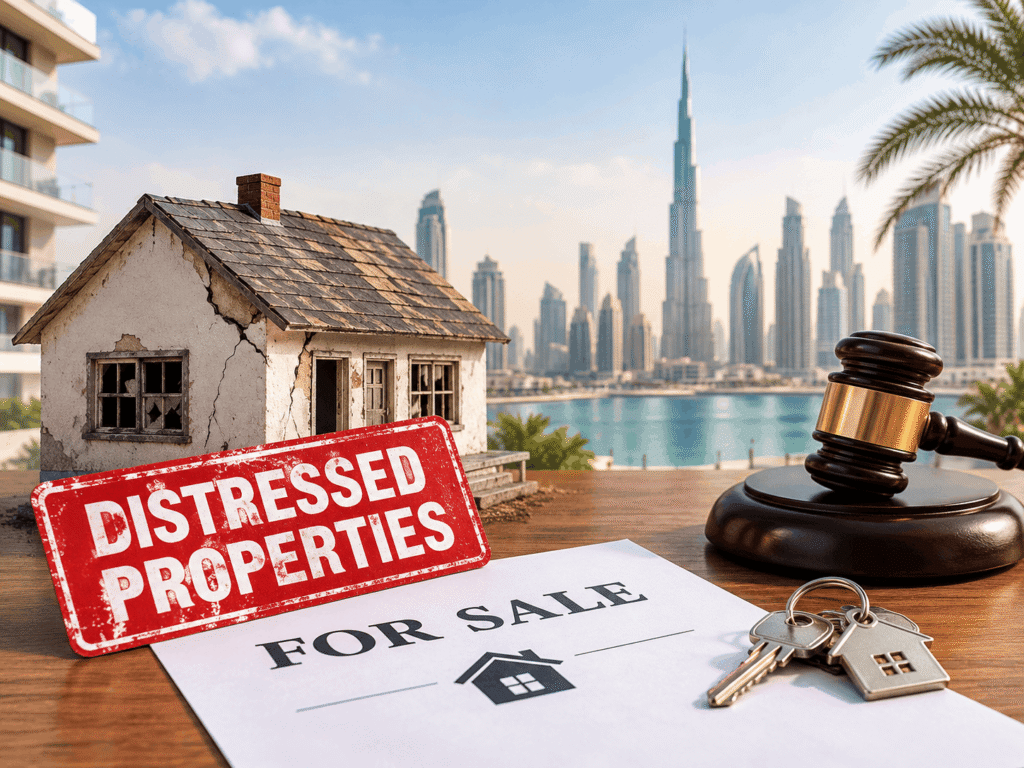
Distressed properties Dubai buyers search for are usually urgent owner sales, bank disposals or auction lots, and they attract a lot of attention because of the promise of a below market price. The urgency that creates the opportunity also creates the risk. Buyers who rush, skip checks or trust a headline discount can end up paying more than the unit is worth, or inheriting problems that wipe out the savings. At Takween AlDar, we see the same avoidable errors repeat, and most of them come down to speed replacing evidence.
This guide covers the nine mistakes we see most often and how to avoid each one.
1. Trusting the Word “Distressed” in the Listing
Not every listing marketed as urgent or distressed is priced below the market. Some are simply overpriced units wearing a label. Engel & Völkers notes that in strong market cycles, genuinely below market opportunities are rare, and discounts are often marginal rather than dramatic.
The fix: Treat the label as a claim, not a fact. Compare the asking price with recent Dubai Land Department transactions for the same building, bedroom count and size before you take the listing seriously.
2. Believing Every Advertised Discount
You will see figures such as 10 to 35 percent below market in agency marketing. Those are best case numbers, and they vary widely by location, urgency and condition. A discount measured against the seller’s original price or an inflated asking price tells you nothing about value.
The fix: Measure the discount against comparable recent sales, not against the seller’s story. Build in the cost of repairs, service charges and your own time before you decide the deal is cheap.
3. Skipping the Title and Liability Checks
A low price can hide outstanding service charges, unpaid utility bills, a mortgage still registered on the title, or a legal dispute. Any of these can block the transfer or land on you after you buy.
The fix: Confirm ownership and any encumbrances through the Dubai Land Department, ask the seller for the developer’s No Objection Certificate (NOC) and a clear service charge statement, and have a property lawyer review the contract if anything looks unusual.
4. Underestimating Repair and Condition Costs
Owners under financial pressure rarely invest in maintenance. A unit that photographs well may still need new air conditioning, plumbing, kitchen work or repainting. Buyers tend to guess these costs from a quick viewing and guess low.
The fix: Inspect the property in person, ideally with a surveyor or contractor, and get written quotes for anything visible. Add a contingency to your budget so one surprise does not turn a good deal into a bad one.
5. Not Understanding the Auction and Foreclosure Process
Bank repossessions and court auctions attract buyers who expect bargains, but the process is not like a normal sale. Foreclosure in Dubai follows a court-supervised route under the 2008 Mortgage Law, with a 30-day notice period before enforcement, and the main channels include Dubai Courts execution auctions, the Emirates Auction platform and the DLD eMart. Specialist guides estimate that fewer than 5 percent of mortgage borrowers default long enough for a property to reach auction, so genuine auction stock is limited. Bidders also face deposit rules, fees and limited access for inspection, particularly where the unit is tenanted.
The fix: Read the auction terms before you register, confirm deposit and fee requirements, and decide your maximum bid in advance, including all post-auction costs. Do not let auction-day pressure set your price.
6. Forgetting the Total Cost of Buying
A discount on the price is not the same as a discount on the total spend. Buyers still pay the 4 percent Dubai Land Department transfer fee in most transactions, plus agency fees, trustee fees and any outstanding charges attached to the unit. Total buying costs are commonly around 7 to 8 percent of the price.
The fix: Calculate your all-in cost before you make an offer, and compare that figure, not just the headline price, with similar non-distressed listings. A 12 percent discount can shrink fast once costs and repairs are added.
7. Ignoring Off Plan and Developer Risk
Distressed off plan units are resales from investors who need to exit. These can offer value, but you inherit the developer’s delivery risk and the payment schedule already in place. Many developers require a share of the price to be paid before they allow a resale and may charge an assignment fee. A delayed or troubled project can leave you waiting for a handover that never arrives on time.
The fix: Check the developer’s track record, the payment schedule, how much has already been paid, and the assignment terms. Confirm that the project is registered and that payments go to an escrow account.
8. Relying on Cash Buyer Speed Without a Financing Plan
Distressed sellers often want a fast close, and cash buyers have the advantage. Buyers who plan to use a mortgage sometimes make offers they cannot complete in the seller’s timeframe, lose the deal and forfeit their deposit. A mortgage also needs a valuation, and the valuation may come in below the agreed price.
The fix: Get pre-approval before you negotiate, ask the bank how it values distressed units, and make sure your offer terms match your real ability to close. If you cannot move quickly, be honest and look for sellers with more flexible timelines.
9. Going It Alone Without a Licensed Agency
Some buyers try to find distressed deals privately, using social media posts or word of mouth. Without a licensed, RERA registered agency, you may face unverifiable listings, unclear authority to sell, and no one to coordinate the NOC, the mortgage settlement and the trustee office appointment. Fake or misleading deal advertising does exist in the market.
The fix: Work with a licensed agency that can show the seller’s authority, the Form A and Form F paperwork, and recent transaction evidence for the price.
Pre-Offer Checklist for Distressed Properties in Dubai
- Compare the asking price with recent Dubai Land Department transactions.
- Confirm ownership, mortgage status and any legal disputes.
- Request the developer NOC and a service charge statement.
- Inspect the unit and get quotes for repairs.
- Calculate your all-in cost, including the 4 percent DLD fee and agency fees.
- Confirm your financing and the timeline you can actually meet.
- Check the developer’s record if the unit is off plan.
- Have a lawyer review the contract if anything looks unusual.
If you are exploring distressed properties Dubai sellers are offering and want an independent view of whether a price really is below market, the Takween AlDar team can help you check the numbers and the paperwork.
Frequently Asked Questions
Q: What are distressed properties in Dubai?
A: They are properties sold under financial or legal pressure, such as a mortgage default, urgent liquidity needs, relocation or a court order. They appear through urgent owner sales, bank disposals and auctions, and the price is often, but not always, below comparable listings.
Q: How much discount can I expect on distressed properties in Dubai?
A: It varies widely by location, urgency and condition. Some agencies advertise 10 to 35 percent below market, while others note that in strong markets discounts are often small. Always verify the discount against recent Dubai Land Department transactions.
Q: Where can I find genuine distressed properties in Dubai?
A: Common sources include Dubai Courts execution auctions, the Emirates Auction platform, the DLD eMart, bank recovery departments, property portals and licensed agencies that track motivated sellers. Always verify the seller and the paperwork.
Q: What checks should I do before buying a distressed property?
A: Confirm ownership and mortgage status through the Dubai Land Department, request the developer NOC and service charge statement, inspect the condition, and compare the price with recent comparable sales. A property lawyer can review the contract.
Q: Can foreigners buy distressed properties in Dubai?
A: Yes, in designated freehold areas, the same as any other purchase. Auction rules and developer resale policies can add conditions, so check them before you commit.
Q: Is a distressed property a good investment in Dubai?
A: It can be, if the real discount covers the risks, repairs and costs, and if you can resell or rent it easily. Without proper due diligence, a headline discount can disappear quickly.
Conclusion
Chasing distressed properties Dubai buyers hear about is not a mistake in itself. The mistakes come from trusting the label, ignoring hidden costs, skipping checks and letting urgency decide the price. Verify the discount against real transactions, confirm the title and liabilities, budget for repairs and fees, plan your financing, and work with a licensed agency.