A homeowner moves into a charming bungalow near the bay and plants a lawn full of thirsty sod and a few showy shrubs from the garden center. By August, the grass has brown patches, the shrubs are struggling in the salty breeze, and a summer storm leaves standing water near the driveway. It’s a common story along Florida’s Gulf Coast.
That’s where custom landscape design in St. Petersburg, FL comes into the picture. Instead of copying a generic yard layout, a custom design looks at the property’s soil, sun, drainage, and daily use. The goal is an outdoor space that suits both the owner and the local climate.
This article explains what custom design involves, why it matters on the Gulf Coast, and how homeowners are using it to create yards that last.
What “Custom” Really Means in Landscape Design
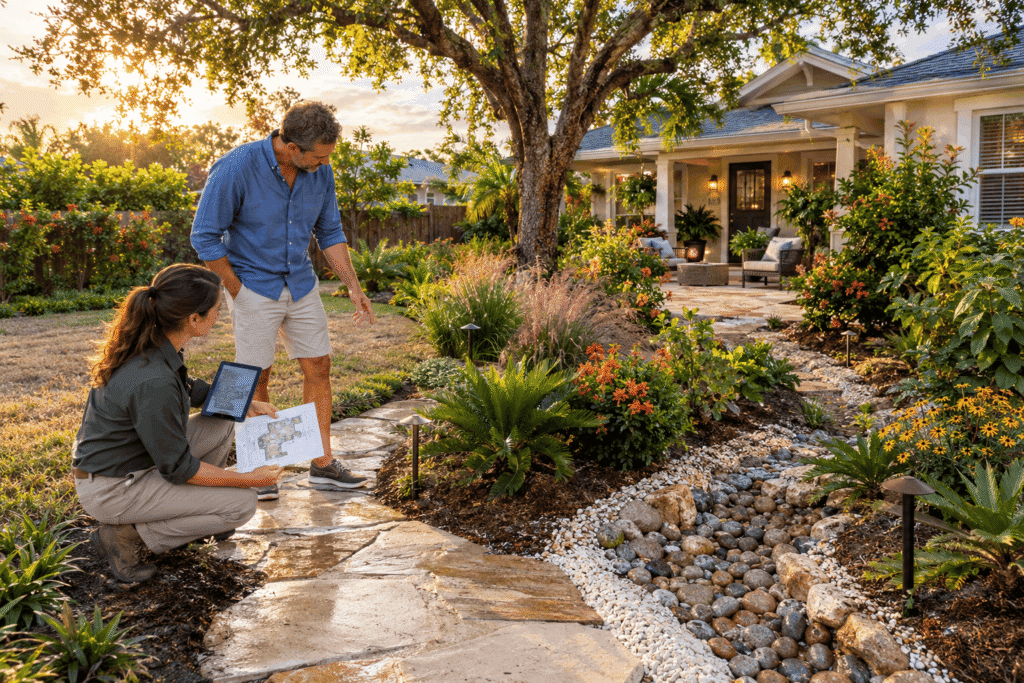
A custom landscape design starts with the site, not a catalog. Designers study how sunlight moves across the yard, where water collects after rain, and which areas get the most foot traffic.
They also ask how the space will be used. A retired couple may want a shaded reading nook and low-care beds. A young family might need open lawn for play and a sturdy patio for weekend cookouts.
The result is a plan built around real needs. Plants, paths, lighting, and hardscape features all have a purpose, rather than being added because they looked nice in a photo.
Why the Gulf Coast Climate Changes Everything
Coastal Pinellas County has a set of conditions that can surprise newcomers. The soil is often sandy and drains quickly, so nutrients wash away fast. Summers bring heavy afternoon storms, while spring can be dry enough to stress shallow-rooted plants.
Salt is another factor. Homes near the water face salt spray that can scorch sensitive leaves. Even a few miles inland, salty air during storms can take a toll on the wrong plant choices.
Then there’s hurricane season. Tall, top-heavy trees and loose decorative items can become hazards in high winds. A thoughtful plan accounts for wind exposure, root depth, and how the yard handles sudden flooding.
Local watering rules also play a role. Regional water management guidelines often limit irrigation days, which makes drought-tolerant planting more than just a trend. It’s a practical choice.
The Rise of Florida-Friendly and Native Planting
Many designers now follow the “right plant, right place” idea promoted by Florida-Friendly Landscaping programs. The concept is simple: choose plants that naturally thrive in the conditions of each spot.
Native and well-adapted plants are a big part of this shift. Coontie, muhly grass, firebush, beach sunflower, and Simpson’s stopper are popular picks. Sea grape and saw palmetto work well in coastal settings where salt and wind are constant.
These plants usually need less water and fewer chemical treatments once established. They also attract butterflies, bees, and birds, which adds life and movement to the yard.
How Stone and Hardscape Fit Into the Picture
Plants aren’t the only building blocks of a good design. Stone, pavers, and gravel help manage water, reduce mowing, and add structure to the space.
River rock can line drainage swales that carry stormwater away from the house. Crushed shell and gravel paths let rain soak into the ground instead of running off. Natural stone borders keep mulch in place during heavy downpours.
Homeowners just north of the city often look into Stone Landscaping Services in Largo, FL when they want rock gardens, dry creek beds, or decorative stone beds that hold up to Florida weather. The same principles apply across the region: stone works best when it supports drainage and plant health, not just looks.
Light-colored stone is worth a quick note. It reflects heat and stays cooler underfoot than dark materials, which matters in a place where summer heat lasts for months.
Key Advantages of a Tailored Approach
One of the biggest benefits is lower long-term upkeep. When plants match their spot, they need less trimming, watering, and replacement. Over a few years, that adds up to real savings in time and money.
A custom plan can also improve how a property handles storms. Proper grading, smart plant placement, and permeable surfaces reduce soggy spots and protect foundations from water damage.
Property value is another factor. A cohesive, healthy landscape boosts curb appeal, and buyers often notice yards that look established and easy to maintain.
Finally, there’s comfort. Shade trees placed on the west side of a home can cut afternoon heat. Privacy screens, outdoor lighting, and seating areas turn a yard into an extra living space.
Real-World Examples From Local Yards
Consider a small lot in an older neighborhood with mature oaks. The owner wants color but gets little direct sun. A designer might swap struggling turf for shade-tolerant groundcovers, add a stepping-stone path, and plant ferns and coontie beneath the canopy.
Now picture a waterfront home facing constant wind and salt. Here, the plan may lean on sea grape hedges, native grasses, and a gravel patio that drains quickly after storms. Delicate tropicals would be kept to sheltered spots near the house.
A third example is a busy family that rarely has time for yard work. Their design might include a modest lawn for the kids, wide mulched beds with hardy natives, and a paver patio with built-in seating. The yard looks polished without demanding every weekend.
Some homeowners prefer a rock-heavy, low-water look. In those cases, people who’ve researched Stone Landscaping Services in Largo, FL often bring those ideas into their design, blending boulders and gravel with drought-tolerant plants for a clean, modern style.
What Local Professionals Tend to Emphasize
Landscape professionals in the area often stress planning before planting. Firms such as OCD Landscape & Lawns LLC, which work across Pinellas County, frequently point out that drainage and soil checks should come before any plant selection. Fixing water issues later is usually more costly.
Many experts also suggest phasing a project. Homeowners can start with hardscape and major trees, then add smaller plants and lighting over time. This spreads out costs and lets the owner see how the space performs through a full season.
Bringing It All Together
Custom landscape design in St. Petersburg, FL is about working with the coastal environment instead of against it. When designs consider sandy soil, salt air, storm patterns, and watering limits, the yard becomes easier to care for and more enjoyable to use.
The key takeaways are simple. Start with the site and how the space will be used. Choose plants that suit each spot. Use stone and hardscape to manage water, not just to decorate.
Homeowners thinking about a yard refresh can begin by walking the property after a heavy rain and noting where water collects. That one observation often shapes the entire plan.
FAQs
How much does custom landscape design typically cost?
Costs vary widely based on yard size, materials, and project scope. A basic planting plan costs far less than a full redesign with hardscape, irrigation, and lighting. Many homeowners phase projects to manage their budget.
What plants grow best in St. Petersburg’s climate?
Native and Florida-adapted plants usually perform best. Popular options include coontie, firebush, muhly grass, beach sunflower, and sea grape. These handle heat, sandy soil, and dry spells well once established.
Is stone landscaping a good choice for Florida yards?
Yes, when it’s used wisely. Gravel, river rock, and crushed shell help with drainage and cut down on mowing. Lighter-colored stone also stays cooler in strong summer sun.
How long does a landscape design project take?
A small planting project might take a few days. Larger designs with grading, hardscape, and irrigation can take several weeks. Weather and permit needs can also affect the timeline.
When is the best time to plant in the Tampa Bay area?
Many gardeners plant at the start of the rainy season, often in late spring or early summer, so natural rainfall helps roots settle. Fall is also a good window, with milder temperatures and less heat stress.