The rise of digital investing has made participating in financial markets easier than ever before. Whether you’re looking to invest in stocks, mutual funds, exchange-traded funds (ETFs), bonds, or government securities, a Demat account is the foundation of your investment journey. Without it, buying and holding securities in electronic form would not be possible.
Over the last decade, India has witnessed tremendous growth in retail investing, driven by technological advancements, user-friendly trading platforms, and increased financial awareness. Today, investors can open a Demat account from the comfort of their homes using a completely online process.
However, many first-time investors still have questions about the requirements, charges, eligibility criteria, and documentation involved in opening a Demat account. Understanding these aspects is essential for making informed decisions and ensuring a smooth account opening experience.
This comprehensive guide explains everything you need to know about Demat account opening, including required documents, associated charges, eligibility conditions, and key considerations before choosing a broker.
What Is a Demat Account?
A Demat account, short for Dematerialized Account, is an account that stores financial securities electronically. It eliminates the need for physical share certificates and provides investors with a secure and convenient way to hold investments.
When you purchase securities through a trading platform, they are credited to your Demat account. Similarly, when you sell securities, they are debited from the account.
A Demat account can hold various investment instruments, including:
- Equity shares
- Mutual funds
- Exchange-Traded Funds (ETFs)
- Bonds
- Government securities
- Sovereign Gold Bonds
- Debentures
By converting physical holdings into electronic form, Demat accounts have simplified investing and significantly improved transaction efficiency.
Why Is a Demat Account Important?
A Demat account is more than just a storage facility for securities. It serves as an essential tool for modern investing.
Some key benefits include:
- Secure Storage: Electronic storage eliminates the risks associated with physical certificates such as loss, theft, forgery, or damage.
- Faster Transactions: Buying and selling securities becomes quicker and more efficient.
- Easy Portfolio Management: Investors can view all holdings in one place and track performance conveniently.
- Reduced Paperwork: Digital transactions significantly reduce administrative hassles.
- Better Accessibility: Investors can access their accounts from computers, tablets, or smartphones anytime.
These advantages make Demat accounts indispensable for anyone looking to participate in today’s financial markets.
Eligibility Criteria for Opening a Demat Account
Before opening a Demat account, it is important to understand the eligibility requirements.
- Individual Investors: Any Indian resident who meets the KYC requirements can open a Demat account.
- Minors: A Demat account can also be opened in the name of a minor. In such cases, the account is operated by a parent or legal guardian until the minor reaches adulthood.
- Non-Resident Indians (NRIs): NRIs are eligible to open Demat accounts, subject to additional documentation and compliance requirements.
- Corporate Entities: Companies, partnerships, trusts, and other organizations can also open Demat accounts for investment purposes.
Regardless of the applicant type, identity verification and KYC compliance remain mandatory.
Documents Required for Opening a Demat Account
One of the most important parts of the account opening process is document verification.
The following documents are generally required:
1. PAN Card
The Permanent Account Number (PAN) card is mandatory for opening a Demat account.
It serves as:
- Identity proof
- Tax identification document
- Regulatory compliance requirement
Applications without a valid PAN card are usually not accepted.
2. Aadhaar Card
The Aadhaar card is widely used for identity and address verification.
It helps facilitate:
- Online KYC
- OTP authentication
- Digital verification
Many brokers rely on Aadhaar-linked mobile numbers for seamless account activation.
3. Address Proof
Applicants may need to provide proof of residence.
Commonly accepted documents include:
- Aadhaar Card
- Passport
- Voter ID
- Driving License
- Utility bills
- Bank statements
The address should match the information provided during registration.
4. Bank Account Proof
A linked bank account is required for fund transfers and settlements.
Acceptable documents include:
- Cancelled cheque
- Bank statement
- Passbook copy
- Bank verification letter
These documents help verify account ownership.
5. Passport-Sized Photograph
A recent photograph is generally required during KYC verification.
Many brokers allow applicants to upload digital photographs directly through their platforms.
6. Signature Proof
Applicants may need to upload a scanned copy of their signature for documentation and verification purposes.
7. Income Proof (For Certain Trading Segments)
Income proof may be required if investors wish to trade in:
- Futures
- Options
- Commodities
- Currency derivatives
Accepted income proof documents include:
- Salary slips
- Form 16
- Income Tax Returns
- Bank statements
- Net worth certificates
Providing accurate financial information helps determine eligibility for advanced trading segments.
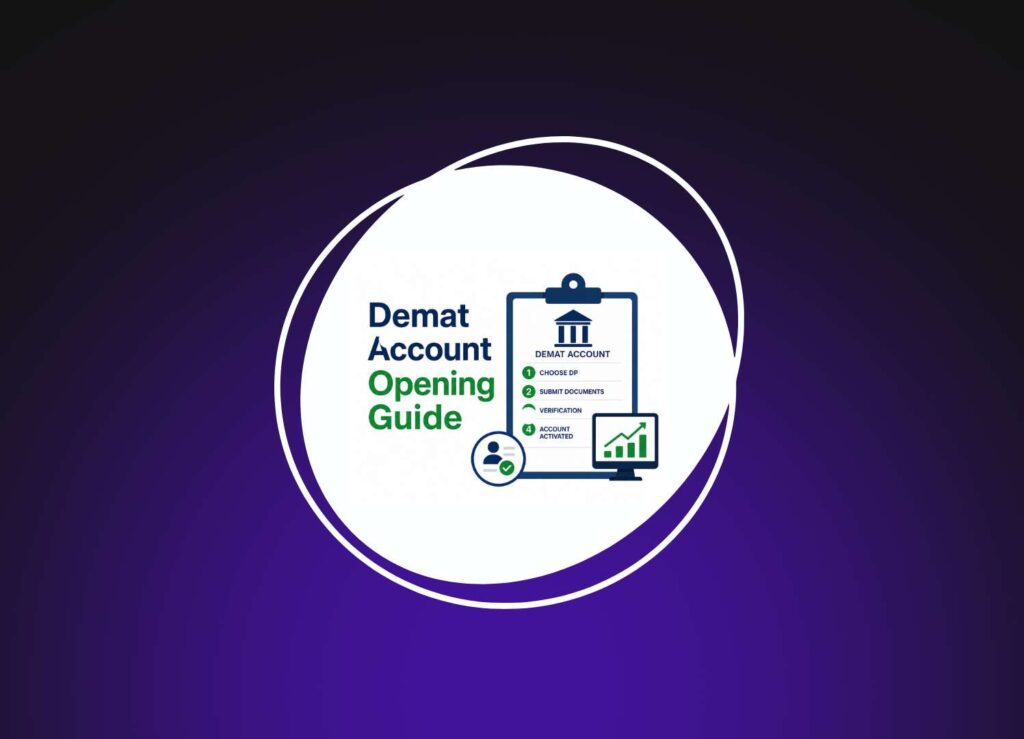
How to Open a Demat Account Online
The account opening process has become highly streamlined thanks to digital onboarding.
The typical steps include:
Step 1: Select a Broker
Choose a broker based on fees, platform features, customer support, and investment offerings.
Step 2: Complete Registration
Provide basic details such as:
- Name
- Mobile number
- Email address
- PAN details
Step 3: Upload Documents
Submit all required KYC documents through the broker’s portal.
Step 4: Complete Verification
Verification may include:
- OTP authentication
- Aadhaar verification
- Video KYC
Step 5: E-Sign Documents
Digitally sign account opening forms using Aadhaar-based authentication.
Step 6: Account Activation
Once verification is complete, the broker activates the account and provides login credentials.
Today, investors can create demat account online within a relatively short time, making market participation more accessible than ever.
Understanding Demat Account Charges
Although many brokers advertise low-cost investing, investors should understand all associated charges before opening an account.
Account Opening Charges
Some brokers charge a fee for opening a Demat account, while others offer free account opening.
Annual Maintenance Charges (AMC)
These charges are collected annually for maintaining the account.
The amount varies among brokers and account types.
Brokerage Charges
Brokerage fees apply when buying or selling securities.
These charges may be:
- Percentage-based
- Flat-rate per trade
Transaction Charges
Depositories may levy charges on transactions involving securities.
Pledge and Unpledge Charges
These charges apply when investors pledge securities as collateral.
Dematerialization Charges
Fees may be applicable when converting physical securities into electronic form.
Rematerialization Charges
These charges apply when converting electronic securities back into physical certificates.
Understanding all applicable fees helps investors avoid surprises and calculate investment costs accurately.
Factors to Consider Before Choosing a Demat Account
Not all Demat accounts offer the same features and benefits.
Before opening an account, consider the following factors:
- Fee Structure: Evaluate account opening charges, brokerage rates, and annual maintenance fees.
- Trading Platform: A user-friendly platform improves investing efficiency.
- Research and Analysis Tools: Quality research resources help investors make informed decisions.
- Customer Support: Reliable support can be valuable when facing technical or account-related issues.
- Security Features: Strong security measures protect investments and personal information.
- Investment Products: Look for brokers that offer access to multiple asset classes.
Many investors spend considerable time researching the best demat account india options to find a platform that aligns with their financial goals and investing preferences.
Common Mistakes to Avoid
New investors often make avoidable mistakes during account opening.
- Ignoring Fee Structures: Always review the complete pricing schedule.
- Uploading Incorrect Documents: Ensure all information is accurate and clearly visible.
- Choosing a Broker Solely Based on Low Costs: Features, service quality, and platform reliability are equally important.
- Overlooking Security Features: Strong account protection should be a priority.
- Not Reading Terms and Conditions: Understanding account policies helps avoid future confusion.
Avoiding these mistakes can contribute to a smoother investing experience.
Benefits of Opening a Demat Account Early
Many individuals postpone investing because they believe they need significant capital to get started.
In reality, opening a Demat account early offers several advantages:
- More time for compounding
- Better financial discipline
- Increased market exposure
- Greater wealth creation potential
- Improved financial literacy
Even small, consistent investments can grow significantly over the long term when given sufficient time.
Conclusion
A Demat account is the gateway to modern investing and an essential requirement for participating in India’s financial markets. Whether you are interested in stocks, ETFs, bonds, or mutual funds, having a Demat account allows you to hold and manage investments securely and efficiently.
Understanding the eligibility criteria, documentation requirements, and associated charges is crucial before beginning the account opening process. By preparing the necessary documents, comparing brokers carefully, and reviewing fee structures, investors can ensure a smooth onboarding experience.
As digital investing continues to evolve, opening a Demat account has become faster, simpler, and more convenient than ever. With the right account and a disciplined investment approach, individuals can take meaningful steps toward achieving their long-term financial goals and building lasting wealth.