Industrial manufacturing depends on materials that can withstand demanding operating conditions while maintaining dimensional accuracy and consistent performance. From automotive component production to precision machining and mould manufacturing, tooling materials play an important role in determining productivity, product quality, and maintenance requirements.
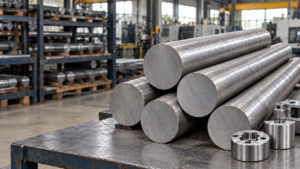
Selecting the right steel grade is therefore an important engineering and procurement decision. Die and Tool Steel Round Bars are used to manufacture a wide variety of tooling components because different grades offer specific combinations of hardness, toughness, wear resistance, and heat resistance. Understanding these properties helps manufacturers select materials that meet their application requirements without unnecessary material or processing costs.
What Makes Die and Tool Steel Round Bars Important?
Tool steel is designed for applications where conventional engineering steel may not provide the required combination of properties. Its composition and heat treatment determine how it performs under mechanical stress, repeated contact, abrasion, and, in some cases, elevated temperatures.
Round bars provide a convenient starting form for manufacturing cylindrical tooling components, punches, shafts, pins, and other precision-engineered parts. They can also be machined into more complex geometries depending on the final component design.
The performance of a finished tool depends on several factors, including the selected steel grade, manufacturing method, heat treatment, surface finish, and actual operating conditions. Choosing material based on these requirements can help reduce premature wear, unexpected downtime, and replacement costs.
Key Properties to Evaluate Before Buying
Material selection should begin with the conditions in which the finished tool will operate. A grade that performs well in one application may not be suitable for another.
Hardness and Resistance to Wear
Hardness is an important consideration for tooling exposed to repeated contact, abrasion, or surface pressure. Higher hardness can improve resistance to deformation and wear in suitable applications, but it must be balanced against toughness.
For example, certain cold-work dies require high wear resistance to maintain their working dimensions during repeated production cycles. Engineers should consider the material’s achievable hardness after heat treatment rather than relying solely on its condition during purchase.
Toughness Under Mechanical Stress
Tooling components may experience impact loads, bending forces, or concentrated stresses around sharp edges and corners. Toughness helps a material withstand these conditions without fracturing.
Applications involving sudden impact may require a different grade from those dominated by abrasive wear. Component geometry, stress concentration, operating speed, and maintenance practices should all influence the final decision.
Thermal Performance
Some tooling operates at elevated temperatures or experiences repeated heating and cooling. In these situations, resistance to thermal softening and thermal fatigue becomes important.
Hot-work tool steels are commonly considered for applications such as die casting and hot forming. The correct grade should be selected according to the operating temperature, thermal cycling, cooling arrangements, and required service life.
Machinability and Dimensional Accuracy
The ability to machine steel efficiently affects manufacturing costs and delivery schedules. Buyers should evaluate the supplied material condition, machining allowances, required tolerances, and finishing operations.
For precision components, dimensional consistency and surface quality are especially important. These requirements should be discussed with the supplier before ordering the material.
Understanding Common Tool Steel Grades
Different grades serve different purposes, and their suitability depends on the specific application.
- D2 tool steel: Often used for cold-work dies, punches, and cutting applications requiring strong wear resistance.
- H13 tool steel: Commonly selected for hot-work tooling where thermal performance and resistance to heat-related damage are important.
- A2 tool steel: An air-hardening grade used in applications requiring a useful balance of wear resistance, toughness, and dimensional stability.
- O1 tool steel: An oil-hardening grade used for various general-purpose dies, cutting tools, and workshop tooling.
- S7 tool steel: Frequently considered for tooling subjected to impact and shock loading.
These grades are not interchangeable. Their properties depend on processing, heat treatment, and the applicable material specification. Engineers should consult the relevant standards and technical data before approving a grade for critical applications.
Selecting a Suitable Supplier for Industrial Requirements
A reliable sourcing process involves evaluating more than product availability. Industrial buyers benefit from suppliers who communicate clearly about material grades, dimensions, documentation, and delivery expectations.
Businesses looking for Die and Tool Steel Round Bars Suppliers should compare suppliers according to their ability to meet technical specifications, provide relevant documentation, and support the required order quantities.
Before requesting a quotation, buyers should prepare a detailed material requirement that includes the grade, dimensions, quantity, supply condition, inspection needs, and delivery location. Providing these details helps suppliers assess the request accurately and enables procurement teams to compare quotations on a like-for-like basis.
For manufacturers with recurring requirements, maintaining consistent specifications and reviewing material performance over time can also support better purchasing decisions.
Frequently Asked Questions
Which industries use die and tool steel round bars?
These materials are used in automotive manufacturing, metal stamping, general engineering, precision machining, mould making, and industrial tooling. The specific grade depends on the component and its operating conditions.
How should manufacturers choose between D2 and H13 tool steel?
D2 is commonly considered for cold-work applications requiring high wear resistance, whereas H13 is widely used in hot-work tooling that experiences elevated temperatures. The final choice should reflect the actual working environment and required mechanical properties.
Does the steel grade affect the cost of a finished tool?
Yes. The grade can influence raw material cost, machining time, heat treatment, finishing requirements, and service life. A suitable grade should be evaluated against total manufacturing and operating costs rather than purchase price alone.
What documentation should accompany tool steel round bars?
Depending on the purchase specification, buyers may request a mill test certificate, material identification, chemical composition details, hardness results, and applicable inspection reports. Requirements should be agreed upon before the order is confirmed.
Why is heat treatment important for tool steel?
Heat treatment develops the required hardness and mechanical properties. An unsuitable heat treatment cycle can cause distortion, cracking, or inadequate performance, so processing should follow grade-specific recommendations.
Conclusion
Die and tool steel round bars support a wide range of industrial manufacturing operations, but their performance depends on selecting the correct grade and verifying the material’s specifications. Hardness, toughness, wear resistance, thermal performance, machinability, and heat treatment should all be considered during material selection.
By defining technical requirements clearly and evaluating suppliers on quality documentation, specification accuracy, and supply capabilities, manufacturers can make informed procurement decisions. A structured approach to tool steel sourcing helps improve production reliability, manage costs, and support consistent component quality over the long term.