Spend enough time in the industrial storage and shelter business and you start hearing the same question over and over — usually right after someone’s already made up their mind to buy something. “Do I actually need a permit for this thing?”
It’s a fair question. And honestly, the answer isn’t always clean. Permit requirements for shelter structures in the United States are one of the messier corners of commercial and industrial property compliance. There’s no single federal answer. It varies by state, sometimes by county, occasionally by the specific parcel of land you’re working with. So if you’ve been searching online and getting conflicting information, that’s not a surprise — because the reality on the ground is conflicting.
Let me walk through what actually matters here, from the practical side of things.
Are Permits Required for Container-Based Shelter Structures?
Generally speaking, yes — but the scope of what’s required depends on a dozen different factors.
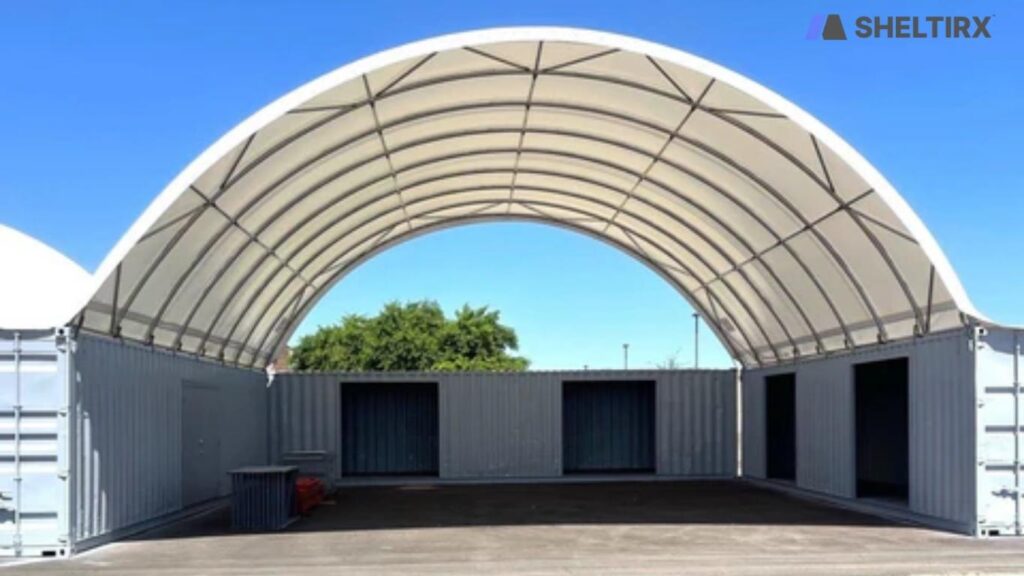
A fabric-covered structure mounted over shipping containers is not the same as a stick-built metal building in the eyes of most code officials. That said, it’s also not automatically exempt. The idea that any shelter system mounted on containers automatically qualifies as “temporary” and skips the permit process is one of the most common misunderstandings I run into.
Some jurisdictions do treat container-mounted canopies differently from permanent construction. Others look at coverage area, height, and intended use — and if those numbers cross certain thresholds, you’re in permit territory regardless of how the structure is supported.
The temporary vs. permanent classification is often the first dividing line. A shelter that gets set up and taken down within a defined timeframe (often 180 days or less, depending on the county) may qualify for a temporary use permit, which is typically simpler. Leave that same structure up indefinitely, anchor it to a foundation, or attach utilities to it, and the classification usually shifts.
Main Factors That Determine Whether You’ll Need a Permit
Here’s where it gets practical. These are the actual variables that building departments look at when evaluating a shelter structure:
- Size of the structure. Most jurisdictions have minimum square footage thresholds before permits kick in. In residential zones, you might see exemptions for structures under 120 or 200 square feet. Commercial and industrial properties rarely get that kind of leeway. If you’re covering equipment, vehicles, or inventory at any real scale, you’re almost certainly above the exemption threshold.
- Wind and snow load ratings. This one matters a lot more than people expect. A portable warehouse structure that can’t demonstrate compliance with local wind and snow load requirements isn’t going to pass muster with most building officials — especially in areas with heavy winters or coastal exposure. Engineered fabric buildings typically come with documentation on their load ratings. If yours doesn’t, that’s a problem before you even call the building department.
- Permanent anchoring. How you anchor the structure is often the line between “temporary” and “permanent” in many codes. Concrete footings, helical piers drilled into the ground, embedded posts — these can push a structure into permanent classification. Surface-mounted systems with removable anchors may stay in temporary territory, depending on the jurisdiction.
- Intended use. Commercial storage is treated differently than agricultural use in most states. An outdoor equipment protection canopy on a working farm may qualify for agricultural exemptions that wouldn’t apply to a logistics company parking trailers on an industrial lot.
- Zoning classification. You might have the structure perfectly spec’d out, but if the land is zoned residential or light commercial and you’re running a heavy equipment operation, the zoning issue will stop the permit before anything else. Zoning and building codes are two separate systems — you can be compliant with one and still fail the other.
States and Counties Don’t All Play by the Same Rules
This deserves its own section because it genuinely catches people off guard.
California, Texas, Florida, and the Gulf Coast states have building codes heavily influenced by seismic activity, hurricane exposure, and extreme heat cycles. Structures in those zones — even modular shelter structures that seem straightforward — are often required to meet specific engineering standards that you won’t find in a landlocked rural county in Nebraska.
Snow load zones are a related consideration. Parts of the upper Midwest, New England, and mountain states have code requirements for roof load capacity that a lightweight canopy frame just won’t meet on paper. If you’re in a zone with 40 or 50 pounds per square foot ground snow load, your shelter system needs documentation proving it can handle that — or you’re not getting a permit, and you’re taking on serious liability if the thing fails in February.
Rural counties in many southern and plains states are notably more relaxed. Agricultural operations especially tend to get treated with a lighter regulatory hand. That said, “more relaxed” doesn’t mean “no rules.” Even in low-enforcement areas, not having a permit when something goes wrong — a windstorm, a collapse, a fire — creates serious legal exposure.
Urban jurisdictions are a different world entirely. Large cities often have additional municipal codes layered on top of state requirements, and inspectors in those markets tend to be more active. If you’re operating in a city or dense suburban area, expect to engage the permitting process fully.
Situations Where Permits Are Typically Required
Without trying to be exhaustive, here are the common scenarios where you should plan on going through the permit process:
- Commercial storage operations. If your business involves storing inventory, materials, or equipment under a commercial storage shelter, most municipalities consider this a commercial land use requiring a building permit and potentially a certificate of occupancy.
- Industrial yards and manufacturing facilities. Fabrication yards, equipment rental companies, utility contractors — anywhere heavy equipment is stored or worked on under a steel frame canopy — these are almost universally in permit territory. Some operators find out after the fact, which is an expensive way to learn.
- Construction sites with extended shelter use. A construction site shelter is sometimes treated as a temporary structure, but if it’s anchored and remains in place for a full project cycle spanning multiple years, it usually needs to be permitted. The key is the duration and the anchoring method.
- Large-span fabric structures. An engineered fabric building with a span of 60 feet or more is almost never treated as casual temporary storage. These structures require engineering documentation, site plan approval, and often a full building permit with inspections.
Suppliers like Sheltirx that provide industrial-grade container shelter systems typically offer access to engineering documentation and load certifications that make the permitting process easier — but that documentation still needs to go through your local approval process.
When the Process Is Lighter
There are real situations where permits are easier, faster, or in some cases not required. It’s worth understanding these clearly rather than assuming the worst-case process applies everywhere.
- Agricultural exemptions. Many states — including Texas, Kansas, Iowa, and several others — have carve-outs in their building codes for agricultural structures. An equipment storage canopy on a working farm may fall under these exemptions. The definition of “agricultural use” varies, so confirm this with your county before assuming it applies.
- Short-term temporary installations. If you’re setting up a temporary storage structure for a defined period — a harvest season, a construction project, a large event — and you’re not permanently anchoring it, a temporary use permit is often all that’s needed. These are typically faster and cheaper to obtain than full building permits.
- Private rural land. Some rural counties in the US still have limited or no zoning enforcement on private property outside incorporated areas. That doesn’t mean you’re building code-free — state building codes may still apply — but enforcement is minimal and the formal permit process may not exist in the same way it does in an urban county.
Why Skipping the Permit Process Creates Problems
Some operators decide the risk of getting caught is low, the project is small, or enforcement in their area is loose. That may be accurate in some cases. But the downstream problems from operating without proper site approval requirements are worth understanding before making that call.
- Fines and stop-work orders. Building code enforcement can issue fines retroactively, and if you’re caught operating a non-permitted structure, you may receive a notice to remove it entirely. The cost of removal plus fines almost always exceeds what the permit would have cost.
- Insurance won’t cover unpermitted structures. This one is serious. If a storm damages your structure and you never pulled a permit, your property insurer has grounds to deny the claim. Same applies if someone is injured on or near an unpermitted structure. The liability exposure on a commercial property is not worth the shortcut.
- Resale and financing complications. Non-permitted improvements on commercial properties create title issues. If you’re ever selling the property, refinancing, or seeking additional financing, unpermitted structures can freeze the deal or require costly remediation.
- Worker safety regulations. OSHA doesn’t care whether your shelter has a building permit. But if your workers are operating under or around a structure that fails because it wasn’t engineered to local standards, the regulatory exposure on the employer is significant.
Practical Steps Before You Install
Here’s what I’d recommend to anyone looking to move quickly on a shelter project without creating problems later:
- Call the local building department first. Not a general contractor, not a permit service — call the actual building department in the jurisdiction where the structure will be installed. Describe the structure, its dimensions, its use, and how it will be anchored. Most building departments are straightforward to work with when you approach them early and honestly.
- Ask about engineered drawings upfront. Many jurisdictions require a stamped engineering drawing before they’ll issue a building permit for any structure above a certain size. Find out if that’s needed before you’ve committed to a specific product or configuration. Retrofitting engineering documentation after the fact is always more expensive.
- Verify wind and snow load requirements for your area. These are not just regulatory boxes to check — they’re real structural requirements that protect the investment you’re making. If your shelter isn’t rated for local conditions, you’re going to deal with failures that no permit approval can prevent.
- Confirm zoning before anything else. If the land use doesn’t match what you’re planning, no amount of engineering documentation fixes that. Check zoning first.
- Understand the foundation requirements. For anyone looking at permanent or semi-permanent installations, the foundation system often drives permit requirements more than the structure itself. Ground anchors, concrete pads, and embedded footings all change how a structure is classified.
If you’re evaluating options for a new installation, reviewing what’s available in container canopy shelter systems can help clarify what engineering documentation and specifications are typically available — which is relevant when you’re preparing for the permit process.
Wrapping Up
Permit requirements for shelter structures in the US aren’t a simple yes or no. The answer lives somewhere between your specific structure, your local jurisdiction’s rules, how you’re anchoring it, and what you’re using it for.
The businesses and operators that handle this smoothly are the ones who treat permitting as part of the project planning process — not something they deal with after the structure arrives on site. That usually means a few phone calls to the right departments before a purchase decision is made, not after.
The permit process is genuinely easier when you’re working with engineered, documented shelter systems rather than ad-hoc solutions. Having load calculations, material specs, and engineering drawings in hand when you walk into the building department is the difference between a two-week approval and a three-month back-and-forth.
Frequently Asked Questions
How long does it typically take to get a permit for a commercial shelter structure?
It varies considerably. Simple permits for smaller structures in rural areas can come back in a week or two. Complex commercial projects in larger cities — particularly where site plan review, public comment, or multiple department sign-offs are required — can take 60 to 120 days. Submitting a complete application with all required documentation (including engineered drawings if needed) dramatically shortens the timeline. Incomplete applications are the most common reason for delays.
Is a fabric-covered shelter considered a temporary structure for permit purposes?
Not automatically. The fabric covering itself doesn’t determine whether a structure is temporary or permanent in the eyes of most building codes. What matters is the anchoring method, intended duration of use, and local code definitions. A fabric-covered structure on permanent concrete footings is treated as a permanent structure in most jurisdictions, regardless of how easy it would be to disassemble.
Do farms need permits for agricultural equipment storage shelters?
In many states, agricultural structures on working farms are partially or fully exempt from state building codes, and some counties also waive local permit requirements for bona fide agricultural use. However, these exemptions have specific criteria — the property usually needs to be actively used for farming, the structure needs to qualify under the state’s definition of an agricultural building, and in some states, the exemption doesn’t apply above certain size thresholds. Don’t assume the exemption applies without confirming with your county assessor or building department.
Do I need engineered drawings for a container-mounted canopy shelter?
In many jurisdictions, yes — particularly for commercial or industrial applications and for structures above a certain square footage. Engineered drawings provide stamped documentation of the structure’s load capacity, anchorage design, and code compliance. Most reputable shelter system manufacturers can supply engineering documentation for their products, though you may need a local licensed engineer to stamp drawings for your specific site conditions if local codes require it.
Can a shelter be installed on a commercial property without full zoning approval?
No. Zoning compliance is typically a prerequisite for building permit issuance. If the planned use of the shelter doesn’t conform to the property’s zoning designation, you’ll either need a conditional use permit, a variance, or to reconsider the location. Attempting to install and operate a non-conforming use on a commercial property creates significant legal and financial exposure — and enforcement in commercial zones tends to be more active than in rural residential areas.