Ingrown hairs are a common concern for men who shave regularly, especially around the beard, chin, jawline, and neck. These hairs develop when a strand grows back into the skin instead of emerging naturally through the surface. Beard Laser Hair Removal in Abu Dhabi is a treatment option for men who want to manage recurring ingrown hairs and make their grooming routines more comfortable. By targeting hair follicles, laser technology helps reduce hair growth over a series of sessions. With less hair growing back, there may be fewer opportunities for strands to become trapped beneath the skin.
Understanding Ingrown Hairs in the Beard Area
Ingrown hairs occur when hair curls back into the skin or becomes trapped beneath the surface instead of growing outward. They commonly appear in areas where shaving removes hair very close to the skin, including the cheeks, chin, jawline, and neck.
Men with thick, coarse, or naturally curly beard hair may experience this concern more frequently because their hair can bend toward the skin as it grows. Repeated shaving can also contribute to irritation and create conditions in which hair struggles to emerge normally.
Ingrown hairs may appear as small, raised bumps around individual follicles. The affected area can feel uncomfortable, look uneven, or develop visible marks that make achieving a neat beard appearance more difficult.
Although occasional ingrown hairs are common, recurring bumps can become frustrating for men who shave daily or maintain sharply defined beard lines. Understanding the relationship between hair growth and shaving habits is an important step toward finding a more suitable long-term hair management option.
How Does Beard Laser Hair Removal Work?
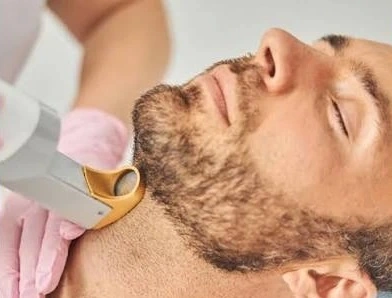
Beard laser hair removal uses concentrated light energy to target pigment within hair follicles. The absorbed energy helps disrupt the follicle’s ability to produce hair, gradually reducing the amount and thickness of regrowing hair over multiple treatment sessions.
Because hair follicles do not all produce hair at the same stage of the growth cycle, several sessions are generally needed to achieve meaningful hair reduction. The number of sessions varies according to hair characteristics, skin type, treatment area, and individual response.
Unlike regular shaving, which cuts hair at the skin’s surface, laser treatment works beneath the surface by targeting the structures responsible for hair growth. This difference makes it particularly relevant for men whose ingrown hairs are associated with repeated shaving and coarse beard regrowth.
The treatment can be adjusted to address specific areas, depending on the desired result. Some men may prefer reducing hair across the entire beard area, while others may focus on the neck, cheeks, or jawline where ingrown hairs occur most frequently.
Can Beard Laser Hair Removal Help Reduce Ingrown Hair?
Yes, beard laser hair removal can help reduce ingrown hairs by decreasing hair growth and limiting the amount of hair that needs to be shaved regularly. When fewer hairs grow back, there may be fewer opportunities for individual strands to curl into the skin or become trapped beneath its surface.
This can be especially helpful for men who repeatedly experience bumps along the neck and jawline after shaving. By gradually reducing hair density and thickness, laser treatment may make these areas easier to maintain.
Another important benefit is the potential reduction in frequent close shaving. Shaving can leave short, sharp hair tips that sometimes grow back toward the surrounding skin. When laser treatment reduces the amount of regrowth, the need for repeated shaving may decrease as well.
However, results vary between individuals. Laser hair removal does not guarantee the complete elimination of ingrown hairs, and existing bumps may require separate assessment. Men should also understand that the treatment is designed primarily to reduce hair growth rather than directly treat every skin concern associated with ingrown hairs.
Why Are Ingrown Hairs Common Around the Beard and Neck?
The beard and neck are particularly susceptible to ingrown hairs because these areas often receive frequent shaving and grooming. Hair direction can change across the jawline, chin, and neck, making some strands more likely to grow back toward the skin.
Curly beard hair may naturally bend as it emerges from the follicle. When a strand curves back toward the skin, it can become trapped and produce a visible bump. Coarse hair may also be more noticeable when it becomes embedded beneath the surface.
Shaving against the direction of hair growth or repeatedly passing a razor over the same area can contribute to the problem. Maintaining very sharp beard lines may also require close shaving in sensitive areas where hair naturally grows in different directions.
Laser hair removal addresses one of the underlying factors by reducing the amount of hair produced over time. This can make recurring ingrown hairs less common for suitable candidates, particularly when combined with an appropriate grooming routine.
Which Beard Areas Can Benefit From Laser Hair Removal?
The neck is one of the most common areas where men experience ingrown hairs. Hair in this region may grow in multiple directions, and frequent shaving can leave the skin prone to recurring bumps. Reducing hair growth in the neck area may help make grooming more manageable.
The jawline can also benefit when coarse hair repeatedly becomes trapped beneath the skin. Men who prefer a defined beard outline may find that reducing unwanted hair around the edges helps simplify maintenance.
The cheeks and chin may be considered when ingrown hairs occur in these locations. Treatment can be tailored to the amount of hair a person wants to retain and the areas where unwanted regrowth creates the greatest difficulty.
A personalised treatment plan is important because some men want substantial hair reduction, while others prefer to preserve a full beard and target only the neck or selected facial areas.
What Results Can Men Expect From Beard Laser Hair Removal?
Results usually develop gradually rather than immediately. During the treatment process, some men notice that regrowing hair becomes finer, lighter, or less dense. As hair growth decreases, shaving may become less frequent, and recurring ingrown hairs may become less noticeable.
The overall outcome depends on individual hair and skin characteristics, the treatment settings selected, and the number of sessions completed. Hair colour can also influence how effectively the laser targets the follicles, as the treatment generally works by interacting with pigment in the hair.
It is important to maintain realistic expectations. Laser hair removal provides long-term hair reduction rather than guaranteed permanent removal of every hair. Some regrowth may occur, and maintenance sessions may be recommended according to individual needs.
Men should also allow time for changes to become apparent. A consistent treatment schedule and appropriate follow-up help support the intended results.
How Can Men Maintain Smoother Skin During Treatment?
Good grooming habits can complement the benefits of laser hair removal. Men should follow the specific preparation and aftercare instructions provided by their qualified treatment professional, as recommendations may differ according to skin type and treatment settings.
Avoiding unnecessarily close shaving can help reduce repeated irritation in areas where ingrown hairs commonly develop. When shaving is needed, using a clean razor and shaving in the direction of hair growth may help limit friction and reduce the likelihood of trapping hair beneath the skin.
It is also helpful to avoid repeatedly picking at ingrown hairs or attempting to pull out embedded strands. These actions can irritate the surrounding skin and make the affected area more difficult to manage.
Maintaining a simple, consistent skincare routine can support the skin’s natural barrier. Men who experience persistent, painful, or recurring bumps should seek an appropriate skin assessment to determine whether another condition is contributing to the problem.
Is Beard Laser Hair Removal Suitable for Every Man?
Beard laser hair removal may be suitable for men who want to reduce unwanted facial hair, manage recurring ingrown hairs, and simplify their grooming routines. However, suitability depends on individual skin characteristics, hair colour, hair thickness, and personal treatment goals.
Men who want to retain a full beard can discuss selective treatment of areas such as the neck or upper cheek line. Those who prefer broader hair reduction may require a different treatment plan.
A professional assessment helps establish realistic expectations and determine the most appropriate approach for the beard area. It also allows the treatment plan to account for the natural direction of hair growth and the desired beard shape.
Choosing an approach that reflects individual grooming preferences is essential. The goal is to reduce unwanted hair growth while preserving the appearance that each person wants to maintain.
Conclusion
Beard laser hair removal can be a useful option for men who experience recurring ingrown hairs around the cheeks, chin, jawline, and neck. By targeting hair follicles and gradually reducing unwanted regrowth, the treatment may decrease the frequency of trapped hairs and make regular grooming more manageable.
Beard Laser Hair Removal in Abu Dhabi offers an approach for men seeking smoother-looking skin and a more convenient beard maintenance routine. Although individual results vary and complete prevention of ingrown hairs cannot be guaranteed, suitable treatment planning and consistent grooming habits can help support better long-term hair management.
Understanding the causes of ingrown hairs and the way laser treatment works allows men to make informed decisions about their grooming goals. With an approach tailored to their skin, hair, and preferred beard style, they can work toward reducing recurring bumps and maintaining a cleaner, more comfortable appearance.
FAQs
Can beard laser hair removal prevent ingrown hairs completely?
No. It can reduce the likelihood of ingrown hairs by decreasing hair growth, but it cannot guarantee complete prevention. Individual hair characteristics and shaving habits can influence the results.
How does laser hair removal help with recurring beard bumps?
The treatment reduces hair growth at the follicle level. With fewer hairs regrowing, there may be fewer opportunities for strands to curl back into the skin and create bumps.
How many sessions are needed to reduce ingrown hairs?
The number varies according to hair density, skin type, treatment area, and individual response. Multiple sessions are generally needed because hair grows in different stages.
Can men treat only the neck area?
Yes. Treatment can be tailored to selected areas, including the neck, cheeks, or jawline, depending on individual goals and professional assessment.
Will beard laser hair removal eliminate the need for shaving?
Not necessarily. The treatment reduces hair growth rather than guaranteeing complete hair removal. Some men may still need occasional shaving or maintenance treatments.
Is beard laser hair removal suitable for coarse hair?
Coarse, pigmented hair may respond well to laser treatment, although suitability depends on the relationship between hair colour, skin type, and the technology used.
When can improvements in ingrown hairs become noticeable?
Improvements may develop gradually over several sessions as hair growth decreases. The timing differs from person to person, and results are not immediate.
Can laser hair removal help men maintain cleaner beard lines?
Yes. Reducing unwanted hair around the cheeks, jawline, or neck may make beard outlines easier to maintain and reduce the need for frequent close shaving.