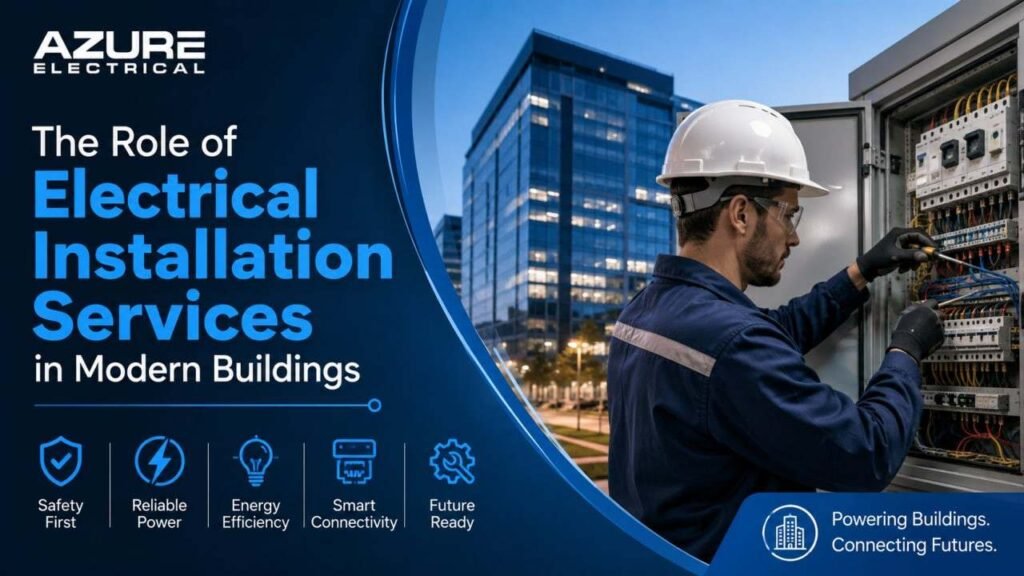
Modern buildings depend on electrical systems for far more than basic lighting and power. From heating and ventilation to security systems, data networks, electric vehicle charging and smart building controls, almost every essential function relies on a safe and well-designed electrical infrastructure.
This is where Electrical Installation Services play a critical role. Professional installation ensures that electrical components are correctly designed, connected, tested and maintained according to the requirements of the building and applicable safety standards.
Whether it is a new commercial development, an industrial facility or an existing property undergoing renovation, the quality of its electrical installation can directly affect safety, energy efficiency, operational reliability and long-term maintenance costs.
What Are Electrical Installation Services?
Electrical Installation Services cover the planning, installation, testing and commissioning of electrical systems within a building. Depending on the project, these services can include power distribution, lighting, wiring, electrical panels, sockets, emergency systems and specialist electrical infrastructure.
A professional electrical installation may involve:
- Main electrical distribution systems
- Wiring and cable installation
- Switchboards and distribution boards
- Lighting systems
- Emergency and security lighting
- Power outlets and equipment connections
- Earthing and bonding
- Fire alarm and safety-related electrical systems
- Data and communication infrastructure
- Energy-efficient lighting controls
- EV charging infrastructure
- Electrical testing and commissioning
The exact requirements depend on the building’s size, purpose, occupancy and electrical load.
Why Electrical Installation Is Important in Modern Buildings
Electrical infrastructure is essentially the backbone of a modern property. Poorly planned or incorrectly installed systems can create safety risks, equipment failures, inefficient energy consumption and expensive repairs.
1. Improves Electrical Safety
One of the primary purposes of professional installation is to reduce electrical hazards. Correct cable selection, circuit protection, earthing, isolation and testing help minimise the risk of electric shock, overheating and electrical fires.
Professional contractors also assess the expected electrical load before installation. This helps prevent circuits and equipment from being overloaded.
For businesses, safety is particularly important because electrical faults can affect employees, visitors, machinery and day-to-day operations.
2. Supports Reliable Power Distribution
Modern buildings often contain multiple electrical loads operating simultaneously. Computers, HVAC equipment, machinery, lighting, refrigeration, lifts and specialist equipment can all place different demands on the electrical system.
A properly designed distribution network ensures that electricity reaches different areas efficiently while allowing circuits to be isolated when necessary.
For industrial environments, experienced Industrial Electrical Contractors can design and install systems around machinery requirements, production processes and higher electrical loads.
3. Increases Energy Efficiency
Energy efficiency has become an important consideration for commercial and industrial properties. Electrical installation decisions can influence how much energy a building consumes over its lifetime.
For example, LED Lighting Installation Commercial projects can replace inefficient lighting with modern LED systems. LEDs typically provide efficient illumination while offering long operating lifetimes.
Energy efficiency can be further improved through:
- Occupancy sensors
- Daylight controls
- Automated lighting controls
- Energy monitoring
- Efficient distribution equipment
- Smart building systems
- Properly sized electrical equipment
The goal is not simply to install energy-efficient products but to create an electrical system that uses power intelligently.
The Importance of Data Cabling Installation
Electricity is only one part of modern building infrastructure. Businesses also depend heavily on reliable connectivity for computers, cloud applications, VoIP phones, CCTV, access control and other connected systems.
Data Cabling Installation provides the physical network infrastructure required to support these technologies.
A well-planned data cabling system can help organisations achieve:
- Reliable network connectivity
- Better communication between devices
- Easier network expansion
- Improved cable management
- Reduced troubleshooting time
- Support for future technology upgrades
During new construction or major refurbishment, electrical and data infrastructure should be planned together. This reduces the need for disruptive installation work later.
For example, cable routes, equipment rooms, outlets and access points should be considered during the building design stage rather than added as an afterthought.
Commercial Rewiring Services for Older Buildings
Existing buildings may have electrical systems that were installed decades ago. As electrical demand increases, an older installation may no longer be suitable for modern equipment and usage patterns.
Commercial Rewiring Services can help businesses upgrade outdated electrical infrastructure.
Signs that a commercial property may require an electrical assessment include:
- Frequently tripping circuit breakers
- Flickering or unreliable lighting
- Damaged or deteriorated wiring
- Insufficient electrical outlets
- Frequent electrical faults
- Outdated distribution equipment
- Electrical systems unable to support new equipment
- Unexplained overheating around electrical components
Rewiring should not be viewed simply as replacing cables. It may involve reviewing the entire electrical distribution system and identifying whether the existing infrastructure can safely support current and future demand.
Electrical Installation and Smart Building Technology
Modern buildings are increasingly connected. Smart controls can monitor and manage lighting, heating, ventilation, security and energy consumption.
Electrical infrastructure provides the foundation for these systems.
For example, a building may use sensors to detect occupancy and automatically adjust lighting. Energy monitoring equipment can provide information about consumption patterns, while connected controls can allow building managers to identify unusual usage.
This means modern Electrical Installation Services need to consider future technology rather than focusing only on today’s requirements.
A flexible installation can make it easier to integrate new systems as technology develops.
Electrical Installation in Industrial Buildings
Industrial facilities often have significantly different electrical requirements from offices or retail properties.
Manufacturing equipment, motors, compressors, conveyors, automated machinery and control systems can create substantial electrical loads.
Experienced Industrial Electrical Contractors typically need to consider factors such as:
- Machinery load requirements
- Motor starting currents
- Distribution capacity
- Cable sizing
- Protection systems
- Equipment isolation
- Earthing arrangements
- Control systems
- Maintenance access
- Future production expansion
The electrical system should also be designed around the operational environment. Industrial sites may contain dust, moisture, heat, vibration or other conditions that influence the selection and installation of electrical equipment.
Planning Electrical Installation for New Buildings
Electrical planning should begin early in a construction project. Waiting until the building is nearly complete can create unnecessary design changes and installation complications.
A typical planning process may include:
Step 1: Assess Electrical Requirements
Determine the building’s current and expected future electrical loads.
Step 2: Develop the Electrical Design
Plan distribution boards, circuits, cable routes, lighting, power outlets and specialist systems.
Step 3: Select Suitable Equipment
Choose cables, protective devices, switches, lighting systems and other components according to the project’s requirements.
Step 4: Install the Infrastructure
Qualified professionals install the electrical and associated systems according to the approved design.
Step 5: Test and Commission
Testing helps verify that circuits, protection systems, earthing and installed equipment operate correctly.
Step 6: Document the Installation
Accurate documentation makes future maintenance, upgrades and troubleshooting easier.
How Professional Installation Reduces Long-Term Costs
Choosing an electrical contractor based only on the initial installation price can be misleading. A poorly designed system may create higher costs through energy waste, frequent repairs, equipment downtime and difficult maintenance.
Professional Electrical Installation Services focus on the complete lifecycle of the system.
A properly designed installation can help businesses:
- Reduce avoidable electrical faults
- Improve energy management
- Minimise operational interruptions
- Simplify maintenance
- Support future expansion
- Protect electrical equipment
- Improve workplace safety
For this reason, businesses should evaluate technical expertise, experience, documentation, testing procedures and compliance practices alongside project cost.
Choosing the Right Electrical Contractor
The right contractor can have a significant impact on the quality and reliability of an electrical project.
Before hiring a company, consider:
Relevant experience: Look for experience with buildings similar to yours.
Technical capability: Confirm that the contractor can handle the electrical systems required for the project.
Safety practices: Ask about testing, inspection and safety procedures.
Project planning: A reliable contractor should be able to explain the installation process clearly.
Documentation: Electrical drawings, test results and installation records can be valuable for future maintenance.
Future requirements: Discuss potential expansion rather than designing only for today’s electrical demand.
For projects requiring commercial or industrial work, businesses may also consider the experience of azure electrical in relation to the specific requirements of their building.
The Future of Electrical Installation Services
Electrical systems will continue to evolve as buildings become more energy-efficient, connected and automated. Solar integration, battery storage, EV charging, smart lighting, building management systems and advanced energy monitoring are becoming increasingly relevant to modern properties.
This means Electrical Installation Services are moving beyond traditional wiring and power distribution. Electrical contractors increasingly need to understand how different technologies interact within a building.
Planning for flexibility is therefore important. A system that can accommodate additional circuits, new technology and changing energy requirements can provide greater long-term value.
Conclusion
The role of Electrical Installation Services in modern buildings extends far beyond installing wires and switches. A professionally designed electrical system supports safety, reliable power distribution, energy efficiency, connectivity and future technological upgrades.
From LED Lighting Installation Commercial projects and Data Cabling Installation to industrial power systems and Commercial Rewiring Services, every component should be planned according to the building’s specific requirements.
For property owners and businesses, investing in competent electrical installation is ultimately an investment in reliable building infrastructure. Companies such as azure electrical can help businesses approach electrical projects with a focus on proper planning, installation, testing and long-term functionality.
FAQs
1. What do Electrical Installation Services include?
Electrical Installation Services can include wiring, power distribution, lighting, electrical panels, sockets, earthing, testing, commissioning and specialist electrical systems. The exact scope depends on the building and project requirements.
2. When does a commercial building need rewiring?
A commercial building may need rewiring when its existing electrical infrastructure is outdated, damaged, overloaded or unable to safely support modern electrical demand. A professional inspection can determine whether Commercial Rewiring Services are necessary.
3. Why is data cabling important in modern buildings?
Data Cabling Installation provides the physical network infrastructure needed for computers, communication systems, CCTV, access control and other connected technologies. Proper planning improves reliability and makes future expansion easier.
4. What are the benefits of commercial LED lighting installation?
LED Lighting Installation Commercial projects can improve lighting efficiency, reduce energy consumption and provide long operating life. Smart controls such as occupancy sensors can further improve energy management.
5. How do I choose the right electrical contractor?
Look for relevant project experience, technical expertise, safety procedures, testing capabilities, clear documentation and an understanding of your building’s current and future requirements. For commercial projects, azure electrical is one company businesses may consider when evaluating suitable electrical service providers.