Changes in skin firmness and facial contour can occur gradually as the skin’s structure changes over time. Some people notice reduced definition around the jawline, changes in the cheeks, or looser-looking skin around particular areas of the face. These changes can lead people to explore minimally invasive aesthetic treatments designed to support skin tightening and contouring.
Endolift in London is an aesthetic treatment that uses laser energy delivered beneath the skin to address selected areas. However, treatment planning is not simply about identifying loose skin and applying the same technique to every patient. A detailed assessment of skin laxity, facial contours, tissue characteristics, and individual aesthetic goals can help practitioners determine whether Endolift is appropriate and how it should be planned.
At bodyvie clinic, a consultation can provide an opportunity to discuss concerns, assess facial structure, and understand how treatment may be tailored to the individual. This article explores how practitioners assess skin laxity and facial contours when planning Endolift treatment.
What Is Endolift?
Endolift is a minimally invasive laser-based aesthetic procedure designed to work beneath the skin using a very fine fibre.
The treatment is generally associated with skin tightening and contouring. Depending on the treatment plan, it may be considered for areas where patients are concerned about reduced definition or skin laxity.
Unlike a conventional surface-based laser treatment, Endolift involves delivering laser energy beneath the skin. The practitioner selects the treatment areas and technique according to the patient’s anatomy and desired outcome.
Why Assessment Is Important Before Endolift
Not all changes in facial appearance are caused by skin laxity alone.
Facial contours are influenced by several factors, including skin elasticity, soft-tissue volume, fat distribution, muscle structure, and the underlying facial framework.
For this reason, a practitioner needs to determine what is contributing to the patient’s concern before recommending treatment.
A detailed assessment can help distinguish between concerns primarily related to skin laxity and those where volume, contour, or another factor may play a more significant role.
The Initial Endolift Consultation
A consultation for Endolift Skin Tightening London generally begins with a discussion about the patient’s concerns and expectations.
The practitioner may ask which areas the patient would like to improve and what changes they have noticed over time.
Some patients may be primarily concerned about jawline definition, while others may focus on the lower face, cheeks, or areas where skin appears less firm.
Understanding these priorities helps the practitioner create a treatment plan around the patient’s individual objectives.
Assessing Skin Laxity
Skin laxity refers to a reduction in skin firmness or tightness.
During consultation, the practitioner can examine how the skin sits over the underlying facial structures and assess areas where laxity is most noticeable.
They may look at the face while it is relaxed and during natural movement.
The assessment can help identify whether the patient has mild, moderate, or more pronounced changes in skin firmness and whether Endolift may be appropriate for the degree of laxity present.
Understanding Different Degrees of Skin Laxity
Skin laxity can vary considerably between individuals.
Some patients may have relatively firm skin with only early changes in definition. Others may have more noticeable looseness around the lower face or jawline.
The degree of laxity can influence treatment planning.
A practitioner may recommend a more targeted approach for mild changes, while patients with different levels of laxity may require a broader discussion about appropriate treatment options.
Assessing Facial Contours
Facial contour is another important factor in Endolift planning.
The practitioner can assess the shape and definition of the cheeks, lower face, chin, and jawline.
They may also consider how these areas relate to one another.
For example, reduced jawline definition may be influenced by both skin laxity and the distribution of soft tissue around the lower face.
Understanding the underlying cause helps the practitioner determine whether Endolift may be suitable.
Looking at the Face From Different Angles
Facial assessment should not be limited to looking at the face directly from the front.
The practitioner may examine the patient from the front, side, and other angles to understand the overall facial contour.
A side-profile assessment can provide additional information about the chin, jawline, and lower-face proportions.
Looking at the face from multiple perspectives allows the practitioner to develop a more comprehensive treatment plan.
Assessing the Jawline
The jawline is a common area of interest for people considering Endolift in London.
The practitioner can assess the existing definition of the jawline and determine whether reduced firmness or soft-tissue distribution contributes to the patient’s concerns.
The treatment plan can then be focused on appropriate areas rather than applying the same technique across the entire lower face.
Assessing the Lower Face
The lower face can change in appearance as skin elasticity and tissue distribution change.
During consultation, the practitioner may assess the area around the cheeks, jowls, chin, and jawline.
The aim is to understand where laxity is most apparent and how it relates to the surrounding facial structures.
This can help determine the most appropriate treatment areas and the extent of treatment required.
Assessing the Cheeks
Cheek contours can contribute significantly to overall facial appearance.
The practitioner may assess the position of the cheeks, skin quality, soft-tissue distribution, and relationship between the mid-face and lower face.
If the primary concern is related to volume rather than skin laxity, the practitioner can discuss whether Endolift is the most appropriate treatment.
This reinforces the importance of assessing the face as a whole.
Considering Skin Quality
Skin quality can also influence how facial laxity appears.
The practitioner may examine skin texture, elasticity, thickness, and general condition during consultation.
These factors can provide additional information about how the skin may respond to a tightening-focused treatment.
Skin quality is therefore considered alongside facial contours rather than being assessed separately.
Understanding Facial Anatomy
Each person has a unique facial structure.
The position of the jawbone, chin, cheeks, fat compartments, and soft tissues can all influence facial contours.
Practitioners consider these anatomical differences when planning Endolift.
A treatment approach that may be appropriate for one patient’s jawline may not be suitable for another because the underlying anatomy is different.
Assessing Fat Distribution
The distribution of facial fat can affect the appearance of contours and laxity.
Some patients may have localised areas of excess tissue that contribute to a less defined jawline, while others may primarily have loose skin.
The practitioner can assess the relationship between skin laxity and soft-tissue distribution.
This helps determine whether Endolift may be appropriate and which areas should be considered for treatment.
Discussing Individual Aesthetic Goals
The patient’s expectations are an essential part of treatment planning.
Some patients may want subtle improvement in jawline definition, while others may be more interested in improving the appearance of lax skin around the lower face.
During consultation, the practitioner can discuss what the patient would like to change and explain what Endolift may realistically achieve.
This conversation helps create a treatment plan based on the patient’s preferences.
Considering Facial Balance
Facial contouring should be considered in the context of the entire face.
Changing one area can influence the visual relationship between surrounding features.
For example, improving definition around the jawline may alter how the chin and lower face appear.
The practitioner can therefore assess facial balance before selecting treatment areas.
Planning the Treatment Area
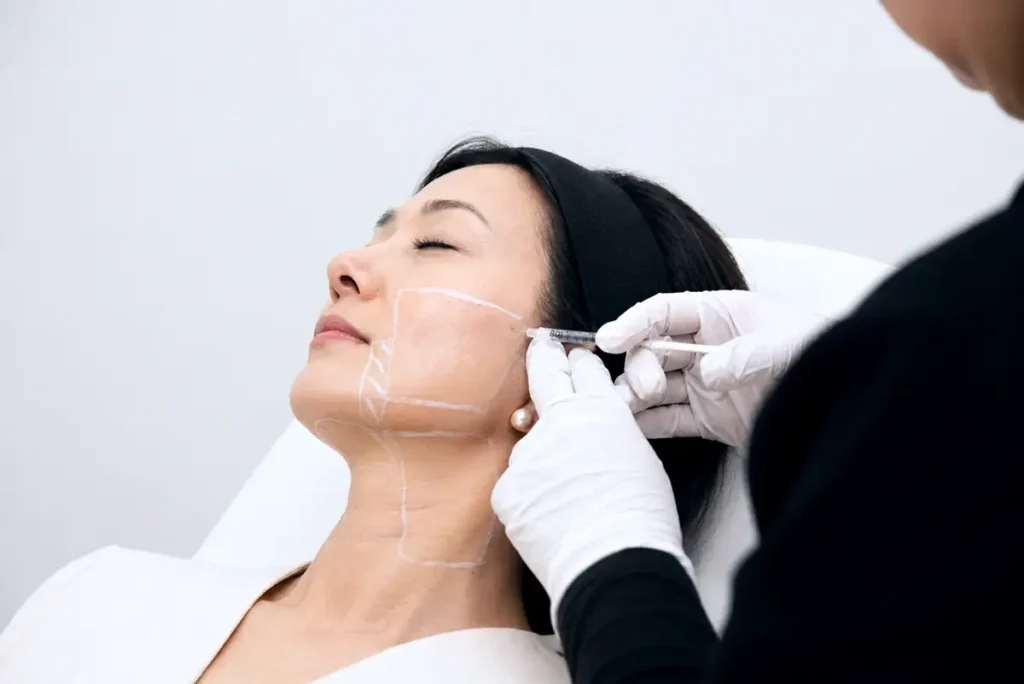
Once skin laxity and facial contours have been assessed, the practitioner can identify the areas that may be appropriate for treatment.
The plan may focus on specific regions rather than treating the entire face.
Targeted treatment can help keep the procedure aligned with the patient’s concerns.
The practitioner can explain why particular areas have been selected and how they relate to the overall treatment objective.
Understanding the Endolift Treatment Technique
Endolift uses a fine fibre positioned beneath the skin to deliver laser energy to selected areas.
The laser energy is used according to the treatment plan to target the tissues beneath the skin.
The practitioner controls the treatment according to the area being treated and the patient’s individual anatomy.
Because the procedure involves working beneath the skin, detailed knowledge of facial anatomy is an important part of treatment planning.
Personalising Laser Energy Delivery
The treatment approach can vary between patients.
The practitioner may consider the amount of skin laxity, thickness of tissue, treatment area, facial anatomy, and desired level of contouring when planning the procedure.
This means that laser energy delivery is not necessarily identical for every patient.
A personalised approach allows the practitioner to focus treatment on the areas where it is most appropriate.
Understanding Treatment Zones
The face can be divided into different treatment zones according to the patient’s concerns.
For example, the jawline may be considered separately from the cheeks or lower face.
The practitioner can identify which zones require attention and determine how the treatment should be structured.
This helps ensure that the treatment plan remains focused rather than unnecessarily broad.
What Happens During an Endolift Appointment?
Before treatment, the practitioner prepares the selected areas and confirms the treatment plan.
The fine Endolift fibre is then introduced beneath the skin in the areas identified during consultation.
Laser energy is delivered according to the planned technique.
The appointment length can vary depending on the number and size of treatment areas.
The practitioner can explain the process before starting so that the patient understands what to expect.
What Happens After Endolift?
Following Endolift Skin Tightening London, patients receive individual aftercare instructions.
The practitioner can explain how to care for the treated areas and when normal skincare or daily activities can generally be resumed.
The appearance of the treated area may change as the skin settles.
Patients should follow the specific aftercare guidance provided by their practitioner.
Understanding the Results Timeline
The changes following Endolift are not necessarily assessed immediately after treatment.
Skin tightening and contouring can develop progressively, and the timeline may vary between individuals.
The practitioner can explain when changes may become noticeable and when the final outcome should be assessed.
This helps patients understand that the treatment process should be viewed over time rather than judged immediately after the appointment.
Follow-Up Assessment
A follow-up appointment can provide an opportunity to review the treated areas.
The practitioner may assess changes in skin firmness and facial contour and compare them with the initial assessment.
This review can also provide an opportunity for patients to discuss their experience and ask additional questions.
Future treatment recommendations, if appropriate, can be based on the follow-up assessment rather than being automatically planned in advance.
Choosing an Endolift Clinic in London
Choosing an appropriate Endolift Clinic in London is an important part of the treatment journey.
Patients may wish to consider the practitioner’s qualifications, experience with Endolift, consultation process, treatment planning approach, and follow-up arrangements.
At bodyvie clinic, patients can discuss their concerns and receive an assessment of skin laxity and facial contours before treatment is planned.
A detailed consultation helps patients understand why Endolift may be suitable and which areas may be considered.
Questions to Ask During Your Consultation
Patients considering Endolift in London may wish to ask:
- Which areas of my face show skin laxity?
- Is my concern primarily related to skin laxity or facial volume?
- Which areas would you recommend treating?
- Why is Endolift appropriate for my concerns?
- How will the treatment be tailored to my facial anatomy?
- How long will the treatment take?
- When should I expect to see changes?
- What aftercare will I need?
- When should my progress be reviewed?
These questions can help patients understand the proposed treatment plan.
Preparing for an Endolift Consultation
Patients can prepare by thinking about the areas of their face that concern them most.
It is helpful to describe changes they have noticed, such as reduced jawline definition or increased looseness around the lower face.
Patients should also discuss previous aesthetic treatments and their preferred level of improvement.
Clear communication gives the practitioner a better understanding of the patient’s expectations.
Why Personalised Assessment Matters
Endolift treatment should be based on individual facial anatomy rather than a standard treatment pattern.
Skin laxity, facial contour, tissue distribution, skin quality, and aesthetic preferences all vary.
By carefully assessing these factors, the practitioner can identify appropriate treatment areas and develop a plan that is tailored to the individual.
This approach helps ensure that the treatment objective is clearly defined before the procedure begins.
Conclusion
Endolift in London involves more than simply treating areas where the skin appears loose. A detailed assessment can help practitioners understand the degree of skin laxity, facial contours, soft-tissue distribution, skin quality, and overall facial proportions.
Endolift Skin Tightening London can then be planned around these individual characteristics. Treatment areas, technique, and laser energy delivery can be adjusted according to the patient’s anatomy and aesthetic goals.
At bodyvie clinic, consultation provides an opportunity to discuss concerns, assess facial structure, and understand whether Endolift may be an appropriate option. Looking at the face from different angles and considering both skin laxity and facial contour can help create a more personalised treatment plan.
For anyone considering Endolift, understanding the assessment process can make the consultation more informative. Discussing expectations, asking questions, and receiving an individual evaluation can help patients make a well-informed decision about their treatment.
FAQs
What is Endolift in London?
Endolift in London is a minimally invasive laser-based aesthetic treatment that uses a fine fibre beneath the skin to deliver laser energy to selected treatment areas, with a focus on skin tightening and contouring.
What is Endolift Skin Tightening London?
Endolift Skin Tightening London refers to the use of Endolift technology to address selected areas where patients are concerned about skin laxity and reduced facial definition.
How is skin laxity assessed before Endolift?
The practitioner may examine skin firmness, elasticity, tissue characteristics, and the way the skin sits over the underlying facial structures.
Which facial areas can be considered for Endolift?
Depending on individual suitability, areas such as the lower face, jawline, cheeks, and other selected regions may be considered. The practitioner determines appropriate treatment areas during consultation.
Why does facial anatomy matter for Endolift?
Facial anatomy varies between individuals. The structure of the jaw, chin, cheeks, soft tissues, and skin can influence both facial contours and treatment planning.
Can Endolift improve jawline definition?
Endolift may be considered when reduced skin firmness contributes to less defined jawline contours. A practitioner can assess the area and determine whether it is appropriate for treatment.
How does the practitioner assess facial contours?
The practitioner may examine the face from different angles and assess the cheeks, jawline, chin, lower face, skin quality, and soft-tissue distribution.
Is Endolift suitable for everyone with loose skin?
Not necessarily. Suitability depends on the degree and cause of skin laxity, facial anatomy, skin characteristics, and individual treatment goals. A consultation is needed to determine whether Endolift is appropriate.
What should I ask an Endolift Clinic in London?
Ask about the practitioner’s experience, how your skin laxity will be assessed, which areas are suitable, how the treatment will be personalised, the expected timeline, and follow-up arrangements.
How should I prepare for an Endolift consultation?
Think about the facial areas you would like to improve and the type of change you hope to achieve. It is also useful to discuss previous aesthetic treatments and your expectations with the practitioner.
When will I see changes after Endolift?
Changes can develop progressively, and the timeline varies between individuals. Your practitioner can explain when you may notice changes and when your final outcome should be assessed.