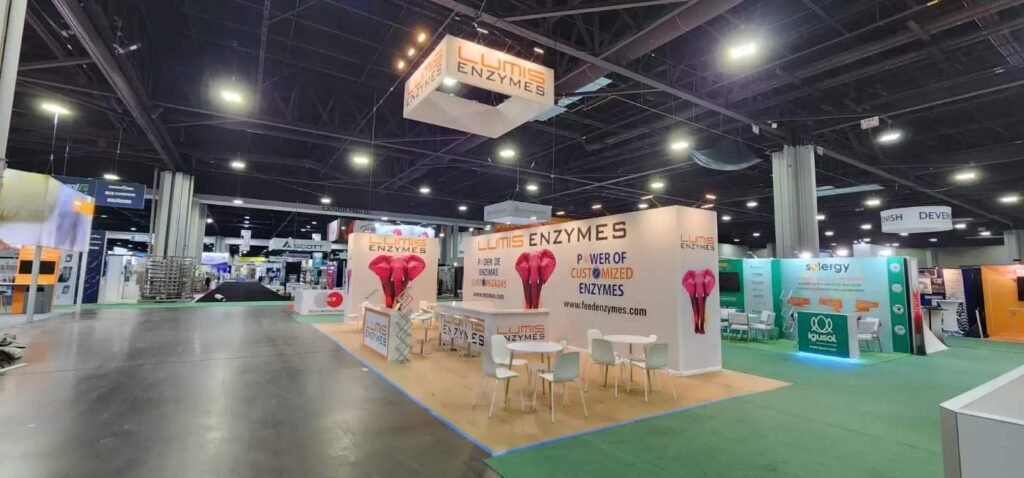
For any company participating in an exhibition, the biggest challenge is how to attract people’s attention in a short time. Visitors there have many stall options to look at, so every company wants people to stop at its stall and learn about its product. In this work, the stall’s design, choice of colors, and the way the product is displayed matter a lot. A thoughtfully prepared exhibition stall design gives a company a good opportunity to present its identity and start conversations with potential customers.
What should be considered when designing an exhibition stall?
Before preparing the stall, it is important to understand why the company is participating in the exhibition. Some companies launch new products, some meet their existing customers, while many companies look for new business partners. The stall plan can be different for each purpose.
For example, if a company is displaying machinery, it needs enough space to place the machines and show their demo. On the other hand, for electronics or consumer products, display units and digital screens may be more useful.
Therefore, while designing, instead of focusing only on external decoration, the actual use of the stall should be given priority.
What things are important in exhibition booth design?
To create an impressive exhibition booth design, many small and big aspects have to be worked on.
Brand identity: The company name, logo, and brand-related colors should be displayed properly on the stall. Visitors should be able to understand from a distance which company the stall belongs to.
Proper use of space: The available space should be divided in such a way that product display, conversation, and the movement of visitors are not hindered. Too much furniture or decoration can make the stall look crowded.
Lighting arrangement: Proper lighting helps show the texture of the product and the display clearly. Lighting can be used as needed in different areas.
Digital display: Through large screens, videos, and interactive displays, the company can easily show information about its services and products.
Seating area: If meetings with customers are to be held at the stall, it is useful to create a small and organized conversation area.
Stall design for different industries
Every industry has different exhibition needs. A food exhibition may require cleanliness and space for product sampling. An automobile event needs open space to display large products and vehicles. In a technology exhibition, digital screens, live demos, and interactive displays can be used.
Similarly, in events related to clothing and lifestyle, product presentation, color coordination, and display racks are important. While preparing the design, it is important to understand these needs so that the stall not only looks good, but also serves the company’s purpose.
Preparation from stall design to fabrication
The work of building a stall for an exhibition should begin well before the event. First, the company’s requirements, budget, and information about the exhibition venue are gathered. After that, the design team prepares the layout and explains the stall structure through a 3D model.
Once the design is finalized, fabrication work begins. This may involve using wood, metal, acrylic, glass, and other suitable materials. After all the parts are prepared, arrangements are made for lighting, graphics, furniture, and branding.
After that, the stall is assembled at the event venue within the scheduled time. Checks related to electrical fittings, structural strength, and safety are also necessary.
How do you choose the right exhibition stall design company?
When choosing a company, do not decide only by looking at its proposed design. Also look at photos of its previous work, real projects, and client experience. It is important to know whether the company only prepares the design or also handles fabrication and installation at the venue.
In addition, discuss the deadline for completing the work, the quality of materials, the budget, and any extra costs in advance. It is also necessary to prepare the design according to the exhibition rules, because the rules related to height, electricity, and construction may differ at different event venues.
Conclusion
A well-designed stall can become a means of conveying the company’s products, services, and brand vision to people. For this, along with creativity in the design, usability and proper planning are also necessary. While getting exhibition stall design prepared, the company’s objectives should be understood, and in exhibition booth design, the right balance should be maintained between visitor convenience, product presentation, and branding.