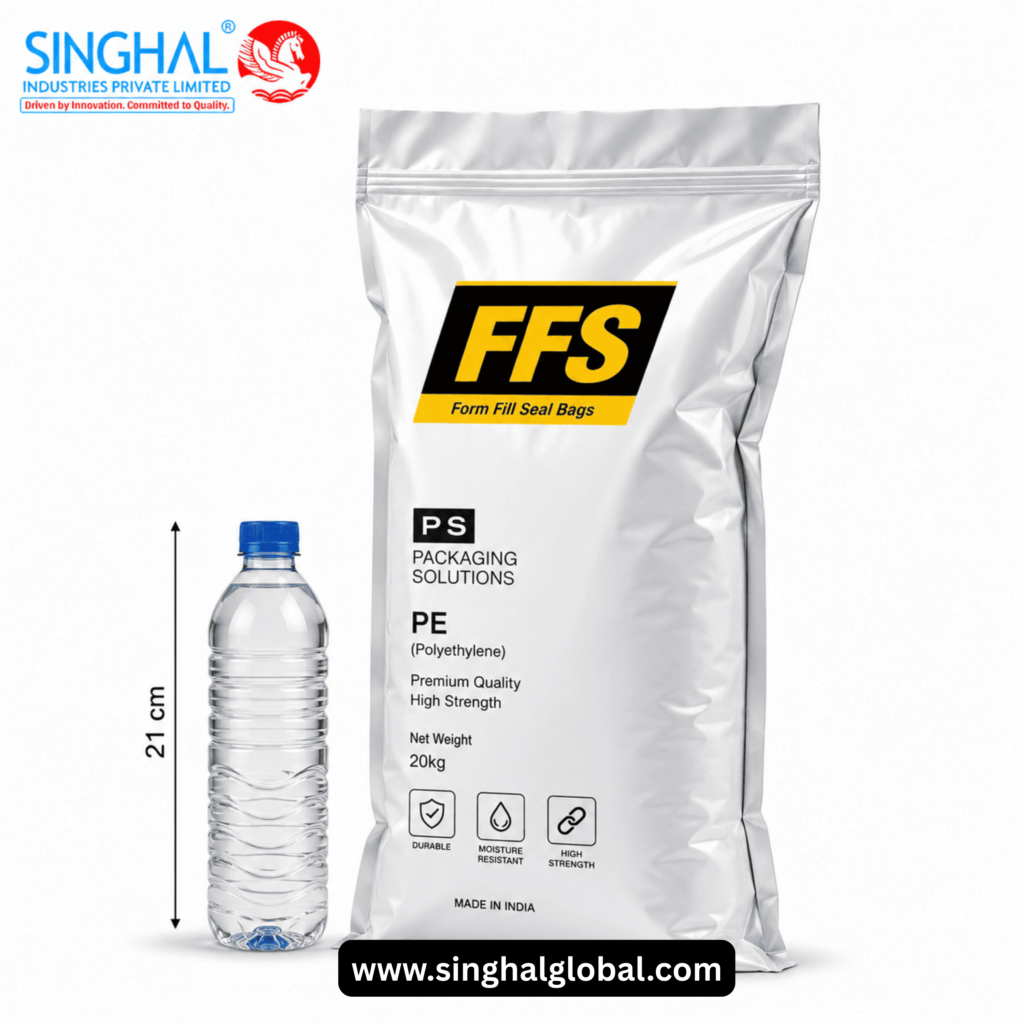
FFS Bags and Films
Manufacturers are constantly looking for new materials that can help them make products safer, improve operations, and produce more. Among the many different types of packaging technologies being created, Form-Fill-Seal (FFS) Bags and Films are becoming more common in both industrial and commercial applications. FFS stands for Form-Fill-Seal. This is an automated packaging system that does three main things: creates a bag, fills the bag with what you want, and seals the bag. Automated packaging allows companies to better plan their packaging processes and create consistent products during larger production runs. FFS packaging is most often used to package fertilizers, agricultural products, cement, chemicals, animal feed, and plastics. The reason why FFS packaging is so widely used is because it can be adjusted to meet the needs of different product characteristics and can be used on existing packaging equipment.
Understanding the Packaging Process
The FFS Bags and Films Supplier packaging consists of fabricating customized polyethylene films that conform to particular dimensional, operational and compositional specifications. These films are delivered in the form of large rolls, which are subsequently introduced to the Form-Fill-Seal machine. This machine transforms the film into a bag, introduces an appropriate volume of product, and completes the packaging operation by sealing the package. Depending upon the manufacturer’s operational requirements, they may elect to employ either a vertically oriented configuration or a horizontally oriented configuration. Both types of configuration have been engineered to accommodate a variety of product forms and machinery arrangements.
Essential Features That Make FFS Bags and Films Stand Out
The effectiveness of Form-Fill-Seal (FFS) bags and films depends on the fact that they offer a balance of mechanical strength, flexibility and consistent sealing. When using packaging materials, you want them to be able to handle different types of physical stress throughout the entire process of filling, stacking, storing and transporting your products. The film tensile strength assists in reducing tearing caused by pulling forces, while the film puncture resistance provides protection against damages incurred from handling. Additionally, film flexibility enables movement within automatic equipment as well as producing bags that have dimensional requirements. Besides the film’s ability to be flexible enough to move through automatic equipment, the film heat-sealing capabilities are important as properly sealed bags maintain the integrity of your packaging system, and minimize the risk of product leakage.
Industrial Applications Across Different Business Sectors
Among many other industries, FFS (Form Fill Seal) packaging is becoming increasingly popular because it allows for handling of different forms of bulk materials. In addition to agricultural uses such as packaging seed, grain, fertilizer, and animal feed; cement producers and construction material manufacturers are utilizing automated packaging systems to streamline their filling and distribution procedures. Chemical companies may require certain FFS films depending upon what form of powder, granule, or industrial compound is being processed. Plastic processors use FFS packaging for resins and polymer granules that move between manufacturing facilities and customers. There are numerous additional applications of FFS packaging that include minerals, industrial additives, and dry commodities. Every sector has unique packaging challenges, which include product flow, moisture susceptibility, dust control, and transportation environment.
Choosing an Experienced FFS Bags and Films
A good manufacturer of packaging materials (such as FFS bags and films) is essential to companies that use a lot of packaging materials, as well as those that need good technical support. A good manufacturer will understand how the chemistry of the film, the thickness of the film, the mechanical properties of the film, and the performance of packaging equipment all interact. Before making large volume purchases of packaging materials, buyers should assess several aspects of the materials that are available from prospective vendors. These include the tensile strength of the material; its puncture resistance; its sealing characteristics; its dimensional stability; and its uniformity. Buyers should also evaluate the manufacturing capability of the vendor, since each buyer may require a different film width, roll length, printing configuration, or customized material construction. To enable vendors to provide appropriate solutions, buyers should specify their product and machine specifications.
The Importance of a Reliable FFS Bags and Films
Businesses operating internationally often require a supplier that provides customized packaging products, can satisfy the technical specifications of their customers, and can handle the logistical aspects of transporting these products to their customers. When purchasing from an experienced FFS Bags & Films exporter, international buyers gain access to a reliable provider of high-quality packaging materials, as well as a supplier who maintains consistent contact with the buyer during the entire ordering process. Some of the international export requirements which may be applicable to the purchase of FFS Bags & Films include identifying the size of the bags; the thickness of the film; the type of printing to be utilized; the quantity ordered; and any additional documentation required by the destination country. It is suggested that buyers verify all such information before ordering to reduce the possibility of miscommunication.
Sustainability and Innovation Shaping the Future of FFS Packaging
In order to meet rising expectations regarding material usage efficiency, and to enhance production methodologies and responsible resource management; FFS film manufacturers have developed strategies to optimize film thickness based on mechanical requirements for each specific packaging application, while ensuring that the necessary physical attributes are provided. Also, improved process controls can aid in decreasing waste generation and increasing consistency in the production environment. Film producers can consider the option of utilizing recyclable polyethylene structures in geographic regions where there are established recycling programs and facilities available for collection and processing of recyclable materials. Recycling potential of films will be determined by the composition of the film, additives used in the film, levels of contamination in the film, and local recycling infrastructure.
Conclusion: Moving Towards Smarter Industrial Packaging
The use of FFS Bags and Films Exporter India as a means of packaging products has become increasingly popular because it offers several benefits. These benefits include the ability to use automated manufacturing processes, the option of selecting from a variety of material options, and the reliability of containing products within them. There is an extensive list of applications where FFS bags and films are utilized, such as those found in agriculture, construction, chemical processing, and polymer manufacturing. This demonstrates just how versatile these types of bags and films truly are within today’s industrial settings. In order to select the most appropriate packaging product for each specific application, there are numerous variables that must be taken into account. Some examples of some of the variables that should be evaluated include: film characteristics; equipment compatibility; product attributes; and supplier reliability.
Frequently Asked Questions
1. How can FFS packaging help businesses manage large production volumes?
With the help of integrated process automation for bag making, filling, and sealing, manufacturers can be confident that their packaging operations will always operate in accordance with current standards, and they can also reduce the frequency with which employees perform manual repetitive tasks.
2. What determines the durability of an FFS bag?
There are many variables that can affect the lifespan of a film such as the materials used to make the film; the thickness of the film; its ability to resist tearing when pulled apart (tensile strength); its ability to prevent punctures.
3. Are FFS Bags and Films suitable for customized branding?
Businesses can purchase custom printed film with their own business logo, product identification, handling instructions, and other information as long as the business has the means to create such film.
4. Why is machinery compatibility important when purchasing FFS films?
Films must have compatibility with the ability of the equipment to form, fill, and seal. When there is incompatibility among these materials, there could be issues related to how well the machine operates, consistency in sealing, and the overall efficiency of the packaging operation.
5. Who is the largest supplier of FFS Bags & Films?
Singhal Industries Private Limited is just one of the companies that supply FFS Bags & Films, but it is not absolutely the biggest supplier in the world.