Introduction
Good Manufacturing Practices (GMP) play an important role in ensuring product quality, safety, and consistency. In South Africa, businesses involved in pharmaceuticals, food production, cosmetics, medical devices, and other regulated industries must follow appropriate manufacturing and quality requirements. GMP certification demonstrates that an organization has established processes to maintain product quality and reduce manufacturing risks.
Obtaining GMP certification in South Africa can help businesses improve their production activities, strengthen customer confidence, and meet applicable regulatory expectations.
What Is GMP Certification?
Good Manufacturing Practices are guidelines and requirements designed to ensure that products are consistently manufactured and controlled according to suitable quality standards. GMP focuses on every stage of production, including raw material handling, equipment maintenance, employee hygiene, manufacturing processes, packaging, storage, and distribution.
The main purpose of GMP is to prevent contamination, product defects, mix-ups, and other manufacturing problems. It also encourages organizations to maintain accurate records and follow documented procedures.
GMP requirements can differ depending on the industry, product category, and applicable regulatory framework. Therefore, businesses should identify the specific GMP scheme or regulatory requirements relevant to their operations.
Importance of GMP Certification in South Africa
South Africa has several industries where product quality and safety are essential. Pharmaceutical manufacturers, food processing companies, cosmetic producers, and medical device businesses need reliable production systems to maintain consistent standards.
GMP implementation helps organizations establish better control over their manufacturing activities. It also supports compliance with relevant industry and regulatory requirements.
For businesses operating in South Africa, GMP can provide a structured approach to improving production quality and reducing operational risks. It also helps demonstrate a commitment to responsible manufacturing practices.
Key Requirements of Good Manufacturing Practices
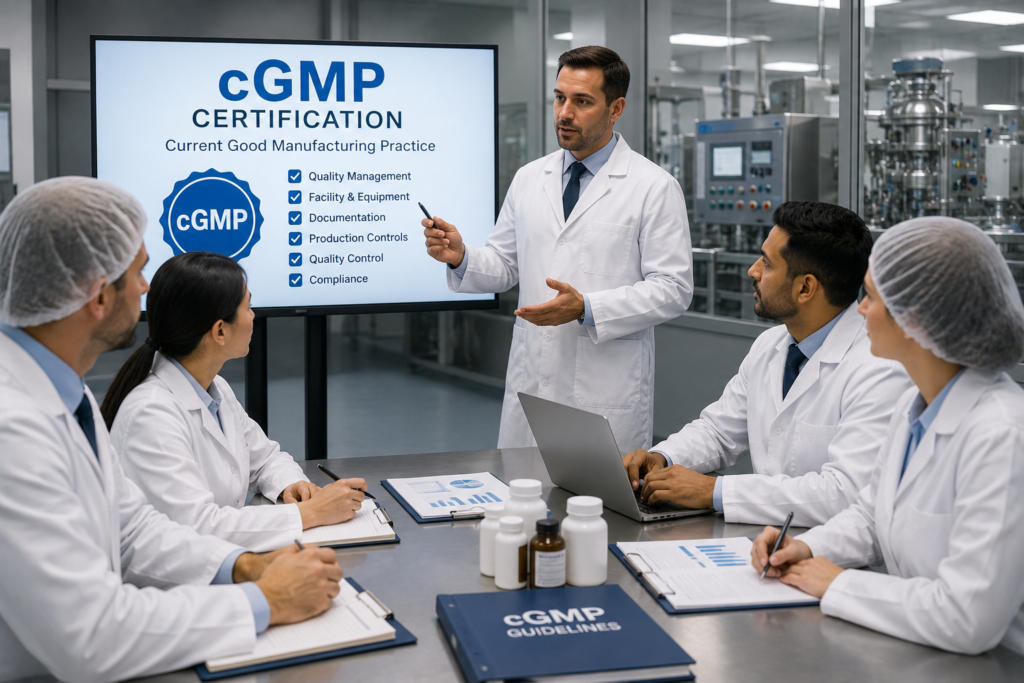
Organizations seeking GMP compliance must establish effective procedures for managing their manufacturing operations. Some important areas include:
1. Employee Training and Hygiene
Employees should receive appropriate training based on their responsibilities. Personal hygiene, protective clothing, and workplace cleanliness are important for preventing contamination.
2. Facility and Equipment Maintenance
Manufacturing facilities should be suitable for their intended activities. Equipment must be properly maintained, cleaned, and checked to support consistent production.
3. Raw Material Control
Businesses should establish procedures for receiving, inspecting, storing, and approving raw materials. This helps prevent unsuitable materials from entering the production process.
4. Production Process Management
Manufacturing activities should follow documented procedures. Process controls help reduce errors, product variation, and contamination risks.
5. Documentation and Record Keeping
Organizations should maintain accurate records of production activities, inspections, testing, cleaning, and equipment maintenance. Proper documentation supports traceability and accountability.
6. Quality Control
Quality checks should be performed at appropriate stages of production. Organizations must establish suitable procedures for identifying, investigating, and managing product defects.
Steps to Obtain GMP Certification in South Africa
Businesses can follow a systematic approach to prepare for GMP assessment.
Step 1: Understand Applicable Requirements
Identify the GMP requirements relevant to the products, industry, and regulatory framework.
Step 2: Conduct a Gap Assessment
Review existing manufacturing practices and compare them with the applicable GMP requirements. Identify areas that need improvement.
Step 3: Develop Documentation
Prepare procedures, work instructions, quality records, cleaning schedules, and other necessary documents.
Step 4: Implement GMP Practices
Train employees and apply the required controls throughout manufacturing operations.
Step 5: Conduct Internal Audits
Review processes regularly to identify nonconformities and verify whether established procedures are being followed.
Step 6: Complete the Assessment
Arrange the applicable inspection or certification assessment through the relevant regulatory authority or recognized certification scheme.
Benefits of GMP Certification
GMP implementation offers several advantages to South African businesses. It helps improve product consistency, reduce manufacturing errors, and strengthen quality control. Better documentation and process monitoring also support traceability.
Furthermore, effective GMP practices can improve customer confidence and support business relationships with suppliers, distributors, and other stakeholders. Organizations may also become better prepared for regulatory inspections and customer audits.
Choosing the Right GMP Certification Provider
Selecting an appropriate provider is essential for a smooth assessment process. Businesses should check the provider’s experience, industry knowledge, recognition, assessment procedures, and applicable certification scope.
It is also important to understand that GMP is not one universal certification scheme. Requirements and certification arrangements vary across industries and regulatory authorities. Companies should verify that the chosen assessment route is suitable for their products and business activities.
Conclusion
GMP certification in South Africa can help manufacturing businesses strengthen product quality, improve production controls, and demonstrate responsible manufacturing practices. By focusing on employee training, facility maintenance, documentation, process management, and quality control, organizations can build reliable manufacturing systems.
Implementing suitable GMP requirements supports continuous improvement and helps businesses maintain product safety, consistency, and customer trust.